
2 Days in Bali: The Perfect 48-Hour Itinerary
2 Days in Bali: The Perfect 48-Hour Itinerary for Best Places to Visit
You'll know you've arrived in Bali the moment the air hits differently—humid, thick, carrying the smell of frangipani and incense. It's not the postcard version that hits you first. It's the organized chaos of the airport, the immediate sensation of being somewhere genuinely foreign, the way motorbikes outnumber cars by what feels like twenty to one. Two days is oddly limiting and oddly generous at the same time. Enough to taste something real, not enough to exhaust yourself chasing the complete experience.
Most people arrive with a mental checklist. Rice terraces. Temples. Beaches. Monkeys. What they discover instead is that Bali rewards the people who slow down, who sit longer at coffee shops than guidebooks suggest, who take the smaller roads and miss the scheduled moment.
What Makes Bali Worth Those 48 Hours
Bali works because it doesn't feel like a museum designed for tourists, even though millions arrive annually. There's an actual culture happening here—ceremonies at temples you stumble upon, markets that exist for locals buying dinner, warungs (small restaurants) where the owner's family eats before you do. The island exists in layers. The surface layer is what everyone photographs. But if you shift your perspective slightly, you find something tactile and immediate.
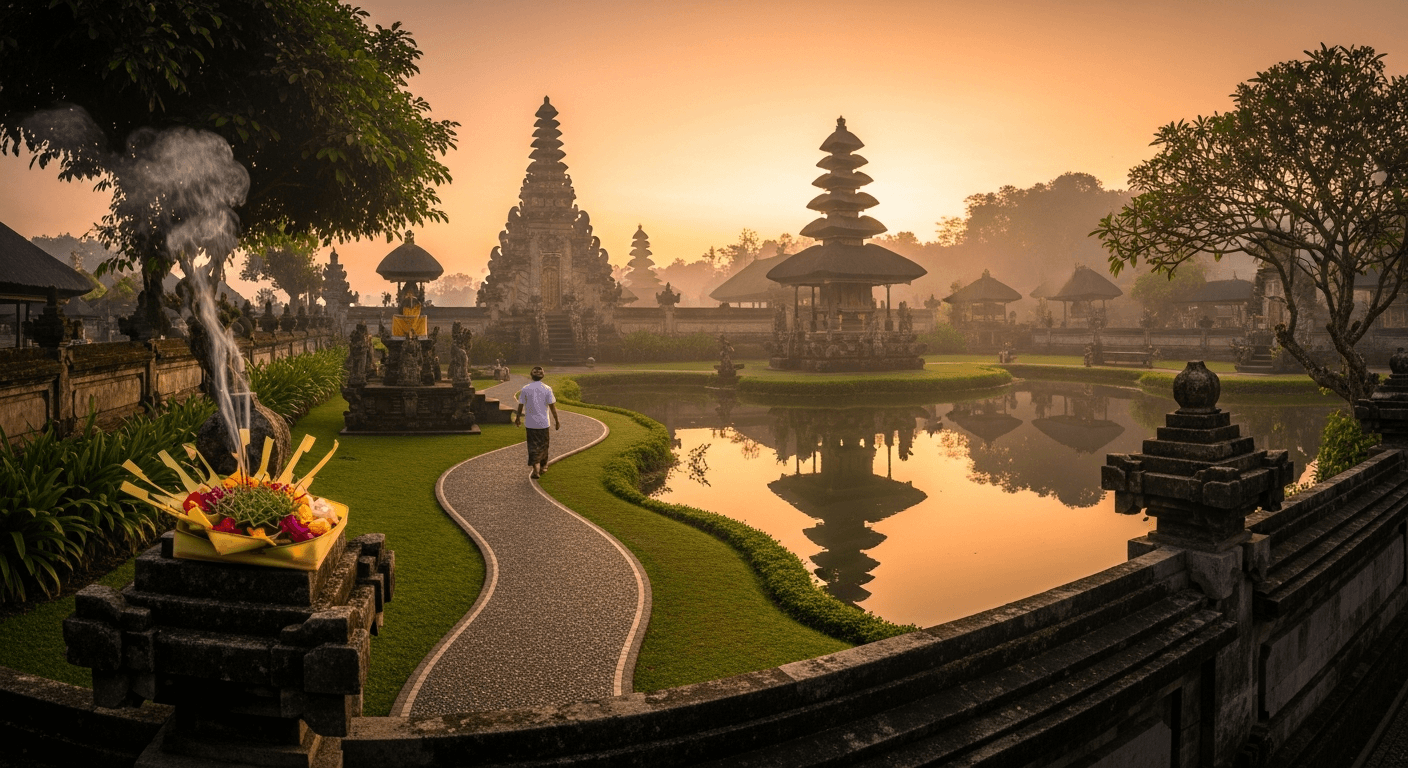
The place has rhythm. You feel it in the way people move, unhurried despite the density. You hear it in the gamelan music floating from temples. You see it in the offerings left daily on doorsteps—small arrangements of banana leaves, flowers, and rice, renewed each morning. These aren't performance. They're routine. Bali's magnetism comes from the fact that it's a working island, not just a resort destination, even though resorts dominate the coastline.
Two days lets you brush against three different versions of Bali: the spiritual interior, the agricultural landscape, and the beach culture. You won't go deep into any of them, but you'll understand why people return.
A Practical 48-Hour Route
Day One: Ubud and the Interior
Start in Ubud if you're arriving fresh. Most international flights land in Denpasar (south), so take a car or ride-share (roughly 90 minutes, traffic dependent). Skip the rush and leave early.
Ubud isn't a city in the conventional sense. It's a town of about 30,000 where tourism has layered itself over traditional Balinese life. The main streets are crowded with yoga studios, boutiques, and restaurants, but step into side streets and you're in a different place—residential, quiet, genuinely local.
Spend your first afternoon walking. There's no monument here that demands attention. Instead, drift through the Art Market (Pasar Seni Ubud)—a covered market selling crafts, textiles, and souvenirs where haggling is expected. Then move to the Monkey Forest Sanctuary, which is less about monkeys (though they're there, and they're thieves) and more about forest temples integrated into jungle landscape. The monkeys are habituated but not tame. They'll steal your sunglasses. The temple structures are understated, peaceful, and worth the entry fee.
Eat dinner somewhere simple. Warung Biah or Warung Petanu are reliable. Order nasi campur (rice with vegetables and protein) or gado-gado (vegetables with peanut sauce). This isn't Instagram food, but it's the baseline of how people eat here. Cost: $2–4 per person.
Sleep in Ubud. A mid-range guesthouse runs $25–50 per night.
Day Two: Rice Terraces and Temples
Morning departure: rent a scooter (if comfortable) or hire a driver (better choice if you're not experienced). Head to Tegallalang Rice Terraces, about 15 minutes north.
The photographs don't lie, but they flatten the experience. The actual thing is geometric, humid, and strangely humbling. Locals work in the fields while tourists pose. There's no way around the tourism here, but you can minimize it by arriving before 9 a.m. Walk into the terraces themselves (there are paths). Sit for twenty minutes. The sound is mostly water and insects. The light at that hour is soft. This is where the postcard clicks into reality.
From Tegallalang, drive to Tegenungan Waterfall. It's not remote (there's a parking lot), but it's uncrowded if you visit mid-morning. The waterfall itself is modest—maybe 30 feet—but worth the 20-minute detour. Locals swim here. The water is cold and clean.
Lunch in the town of Ubud or a nearby warung. Avoid the restaurant obvious ones unless necessary.
Afternoon: Temple time. Goa Gajah (Elephant Cave Temple) is the most visited but worth seeing. The carving around the entrance is intricate—a face carved into the cliff itself, serving as the mouth of the cave. The interior is cool, slightly damp, and genuinely atmospheric. Prayer ceremonies happen here, and you might encounter them. Be quiet and respectful. Admission around $4.
If you have energy, drive to Tirta Empul, a water temple about 20 minutes away. This one is spiritual and photogenic simultaneously. Balinese people bathe in the spring water pools for purification. Tourists come for the architecture. Both activities happen in the same space. The water is cold, temple etiquette applies, but it's an odd, genuine experience—one of the rare places where visitor and local activity genuinely coexist.
Return to Ubud by evening. Rest or walk the central streets. Ubud's restaurant scene is legitimate—you'll find good food from practically any cuisine if you want it, but eating local remains the better choice.
Alternative for Beach-Minded Travelers
If you'd rather beaches than terraces: spend Day One in Ubud as above, then move south to Seminyak or Sanur for Day Two. Seminyak beaches are crowded and lined with bars. Sanur is quieter, more lived-in, with actual fishing boats and local activity. Either way, you're trading interior culture for coastal rhythm. It's a different 48 hours but valid. Most people split the difference—one day interior, one day coast.
Planning Your Visit
Best Time
Bali's dry season runs May through September. Temperatures hover around 75–85°F year-round, but humidity is the real factor. Dry season feels more bearable. Wet season (December–February) brings rain, fewer tourists, and lower prices. Both work, depending on your tolerance for weather and crowds.
Getting Around
Grab and Gojek are the ride-share apps. Motorbike rental is cheap ($5–8/day) but requires confidence on chaotic roads. Most visitors hire drivers for 8–10 hours ($40–60). The money is worth it. Balinese driving is aggressive and traffic follows logic known only to locals.
Money and Costs
Indonesian Rupiah only (roughly 15,500 IDR to $1 USD). ATMs are everywhere. Budget $40–60 per day if you're eating local and staying mid-range. Double that if you want Western comfort.
Crowds
July and August are peak season. Ubud and major temples are busy. Monkeys at the sanctuary don't care about crowds and will still steal from you. If you can travel shoulder season (April–May or September–October), do it. You'll encounter fewer tourists without sacrificing weather.
Nearby Places Worth Considering
If you're extending beyond 48 hours:
Mount Batur. A sunrise hike leaving at 3 a.m. Takes 2 hours up, rewards with views over the volcanic landscape. Popular, sometimes overcrowded, but genuinely worth the early wake. About 90 minutes from Ubud.
Amed. A small coastal town on the north side with a laid-back atmosphere, local fishing culture, and snorkeling possibilities. Skip the main resort beaches and stay here instead if beach time is priority. Three hours from Ubud.
Candidasa. Southeast coast, quiet, older expat community, genuine fishing village feel. Less developed than Seminyak, better for actual beach days than Instagram moments. Two hours from Ubud.
Is It Worth 48 Hours?
Yes, but with caveats. Bali doesn't require extended time to feel worthwhile—you'll gather real impressions in two days. You'll taste the culture, see the geography, understand the rhythm. What you won't do is understand it deeply. Two days is a strong introduction, not an immersion.
What makes it worth the trip: the actual ease of travel here (flights are cheap, infrastructure is solid), the genuine coexistence of tourism and local life, the fact that you can have substantive experiences without major expense or logistical difficulty. You'll meet people. You'll see something that contradicts the postcard. You'll return to your daily life with the kind of disorientation that comes from actually leaving.
The crowds aren't avoidable, but they're manageable if you time mornings and avoid peak season. The commercialization is real—Ubud is busy, tourist prices exist—but the underlying culture remains visible if you pay attention.
Quick Facts
- Elevation: Sea level to 3,000 feet (interior highlands)
- Population: ~4 million across the island; Ubud ~30,000
- Language: Indonesian (Bahasa Indonesia); many English speakers in tourist areas
- Currency: Indonesian Rupiah (IDR)
- Time Zone: Central Indonesian Time (UTC+8)
- Visa: 30-day tourist visa on arrival for most nationalities ($25–35)
- Best Months: May–September (dry season)
- Accommodation Range: $15–200+ per night depending on comfort level
Closing Thoughts
Two days in Bali won't change your life, but it will shift something. You'll understand why millions of people keep returning. It's not magic—it's human-scale, genuine, tactile. The island doesn't pretend to be something it's not, even when tourism tries to reshape it. The culture holds. The geography is real. The people are working, not performing.
When you're planning the details, use Touratu's interactive map to explore different routes and timing between Ubud, the rice terraces, and coastal areas. You can also watch travel videos showcasing the actual experience of these places—no filter, no hype, just how it looks and feels when you're actually there. Maps and real footage beat guidebooks for understanding flow and distance.
Loading activities…
