
2 Days in Uttar Pradesh: What to Do and See
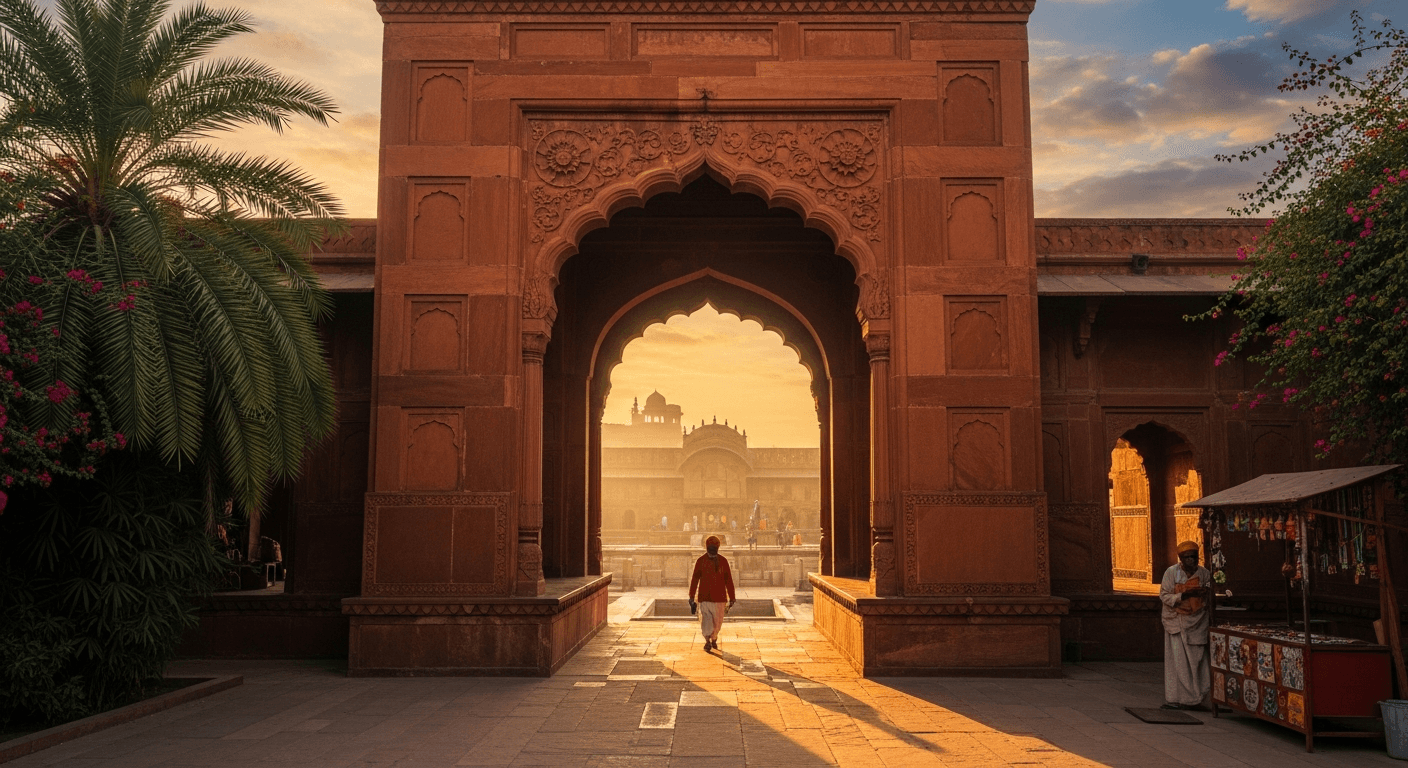
Illustration of Lucknow Gate
2 Days in Uttar Pradesh: The Route That Actually Works
The moment your train pulls into Agra, you'll understand why people spend lifetimes trying to capture the Taj Mahal with a camera. It's not because the photographs fail—it's because the experience exists in a space between what you've imagined and what your eyes are telling you. The light changes everything here, minute by minute. And if you've got only 48 hours in Uttar Pradesh, you need to know exactly how to spend them.
Most travelers arrive with a checklist: Taj Mahal, done. Agra Fort, tick. But they miss the rhythm of the place entirely. They're gone by sunset on day two. This is a guide for people who actually want to be somewhere, not just accumulate photos.
What Makes Two Days in Uttar Pradesh Work
Uttar Pradesh isn't subtle. It's India's most densely populated state, filled with over 200 million people, ancient pilgrimage sites, and monuments that shaped empires. The Taj Mahal gets the attention, but the real prize is understanding how monuments connect to the living, breathing landscape around them.
Two days is awkward—too long to feel like a layover, too short to feel leisurely. But it's precisely long enough to see how a 17th-century mausoleum fits into a modern Indian city, and how that city sits on layers of history going back centuries.
The core appeal: you're moving through spaces that meant everything to people who built them. The Taj Mahal wasn't designed for Instagram. It was designed by a man whose wife died, and he spent 22 years making sure no one would ever forget her. When you stand in front of it without rushing, that intention hits differently.
Your Two-Day Itinerary: How to Actually Do This
Day One: Agra's Monuments and Rhythm
Start early. Not "early" like 8 AM—early like 5 AM. Book a pre-sunrise slot at the Taj Mahal if you can. Most travelers skip this and arrive with crowds at 10 AM. The difference is enormous.
At sunrise, the marble changes color every few minutes. It goes from grey to pink to gold to white, and there's almost no one there except you and maybe 200 other early birds. The guards are still getting coffee. The light is honest. You'll understand why Mughal emperors were obsessed with marble and light and water.
Spend about two hours here. Don't rush. Sit by one of the reflecting pools for 20 minutes. Notice how the building changes depending on where you stand. This isn't a structure you photograph once—it's one you walk around and reconsider.
By 8 AM, head to breakfast. Try a paratha at any busy dhaba—the flatbread cooked on a griddle, filled with potato or cauliflower. It costs almost nothing. Eat sitting down, not while rushing. This is where locals actually are.
By 9:30 AM, walk across to Agra Fort. It's older than the Taj Mahal (built in the 16th century by Emperor Akbar), made of red sandstone, and feels nothing like the white marble perfection next door. The fort is lived-in, weathered, and real. Climb the ramparts. Look across the Yamuna River toward the Taj. From this angle, you'll see why the emperor chose this location—you can see the empire, the river, and the monument all in one view.
Spend two hours here. Hire a guide if you can—they'll explain the politics of the buildings, which room the emperor lived in, which room the harem occupied, how water was brought up five stories. Architecture without context is just shapes.
By 1 PM, eat lunch. Seek out a biryani place—rice cooked slowly with meat or vegetables, subtle spices. This is the closest thing to religious food in Uttar Pradesh. Agra's biryani is less spicy than Lucknow's version, and darker. It matters.
Afternoon: Rest. This isn't laziness—this is how you survive the heat and actually absorb what you've seen. Return to your hotel, sleep, read, sit in an air-conditioned café. Most travelers push through and collapse by evening. Don't do that.
By 4 PM, walk through Taj Ganj, the neighborhood immediately surrounding the Taj Mahal. This is where marble workers, guides, shopkeepers, and families live in narrow lanes. You'll see children playing, women hanging laundry, men smoking and talking. The Taj isn't a museum piece to them—it's their neighbor. The contrast between the monument and the everyday life around it tells you something real about how history works.
For dinner, head to a rooftop restaurant with Taj views. It's a tourist move, but worth it. The building lit up at night is genuinely different from the daytime version. You're seeing the emperor's light show, the original Instagram filter.
Day Two: Movement and Understanding
Don't repeat Agra. Move.
By 7 AM, get to the train station. Take the express to Mathura—it's about two hours east. This is the pilgrimage heartland. Mathura is where Krishna was born, according to Hindu tradition. The city is intense, chaotic, and absolutely worth the early morning.
Once you arrive, grab an auto-rickshaw to Banke Bihari Temple. It's crowded, loud, and designed to overwhelm your senses. This is devotional tourism, not monument tourism. Incense, bells, chanting, bodies pressed together. If you've only seen the Taj, you haven't seen Uttar Pradesh. This is the other side of the coin.
Spend an hour here. You don't need to pray, but observe how faith works in crowded spaces. Watch how families move through the temple, the mechanics of pilgrimage.
By 11 AM, go to Dwarkadhish Temple, another Krishna site. It's less overwhelming, more visual. The architecture is intricate, the colors are bright, and it sits on the banks of the Yamuna River.
Have lunch at a simple vegetarian place nearby. Daal, rice, vegetables, fresh bread. Eat what pilgrims eat.
By 2 PM, catch the train back to Agra (or onward to Delhi if you're continuing your journey). You've moved through two different Uttar Pradesh experiences: the monument of empire and the landscape of faith.
Planning Your Visit: The Practical Part
Best Time
October through March. Temperatures are 15-25°C. April through June is brutal—40-45°C. July through September is monsoon season, which brings humidity and occasional flooding.
How to Get There
Agra is 206 km south of Delhi. Trains run regularly—the Gatimaan Express takes 2.5 hours, the Shatabdi takes 2.5 hours. Book in advance. Flights are rare and expensive. Buses are slower but cheaper.
Where to Stay
Avoid the tourist trap hotels near the Taj gate. Stay in the broader Agra area—you'll find better food and fewer hawkers. Budget options (₹1,000-2,000 per night) are solid. Mid-range (₹3,000-5,000) offers comfort without pretense.
Transport Within Agra
Autos are cheap and negotiable. Taxis run about ₹500-800 for local trips. Your hotel can arrange these. Don't use apps you'd use at home—they're expensive here. Haggle friendly.
Entry Fees
Taj Mahal: ₹250 for Indians, ₹1,650 for foreigners (about $20). Agra Fort: ₹250 for Indians, ₹550 for foreigners. Both are worth it.
Crowds
The Taj handles 7-8 million visitors annually. It's never empty. Early morning (before 7 AM) is genuinely less crowded. Late afternoon (after 4 PM) is also quieter. Avoid 10 AM-3 PM.
Language
Hindi is primary. English is widely spoken in tourist areas, less so in temples and smaller neighborhoods. Download a translation app.
Nearby Places Worth Knowing About
Fatehpur Sikri (40 km from Agra, 1 hour by car)
Emperor Akbar's 16th-century capital, abandoned after 14 years. It's a ghost city of sandstone palaces, courtyards, and geometry. Worth a half day if you have extra time. The symmetry and the emptiness stay with you.
Mathura and Vrindavan (58 km from Agra, 1.5 hours)
Krishna's birthplace and playground, depending on which text you read. Vrindavan especially is overwhelming—temples, pilgrims, devotional songs, everything Krishna. It's religious tourism, not monument tourism. Completely different energy from Agra.
Gwalior (118 km from Agra, 2.5 hours by car)
A fortress city with Mughal and Hindu monuments. Less crowded than Agra. The fort is dramatic, perched above the city. If you're staying longer, it's worth a day trip.
Is It Actually Worth Two Days?
Yes. But not because of Instagram. Two days lets you move slowly enough to notice things. You'll see the same light change over marble surfaces. You'll notice how a monument sits in a living city. You'll eat good food without rushing. You'll understand why people built these things and why millions still come to see them.
One day feels like checking boxes. Three days feels leisurely. Two days is the sweet spot where you're present but still moving.
The Taj Mahal is objectively stunning. But the real experience is understanding it as a human object—something someone built because grief moved them to build something perfect. That understanding takes time.
Quick Facts
- State: Uttar Pradesh (population 200+ million)
- Main city: Agra
- Primary site: Taj Mahal (1653)
- Best time: October-March
- Language: Hindi, English in tourist areas
- Currency: Indian Rupee (₹)
- Visa: Required for most nationalities
Two days in Uttar Pradesh works if you stop thinking of it as a destination and start thinking of it as a pause. A pause to stand in front of a building someone made for love. A pause to move through a pilgrimage landscape. A pause to eat good food and not rush.
When you leave, you won't have conquered the place. You'll just understand it a bit better—why the marble changes color, why the temples are loud, why people keep coming back.
If you want to explore the routes connecting Agra, Mathura, and beyond, check out Touratu's interactive map and travel videos. They'll show you the actual roads, the distances, and how real travelers move through this part of India.
Loading activities…
