
2 Days in Varanasi: Honest Itinerary & Planning Guide
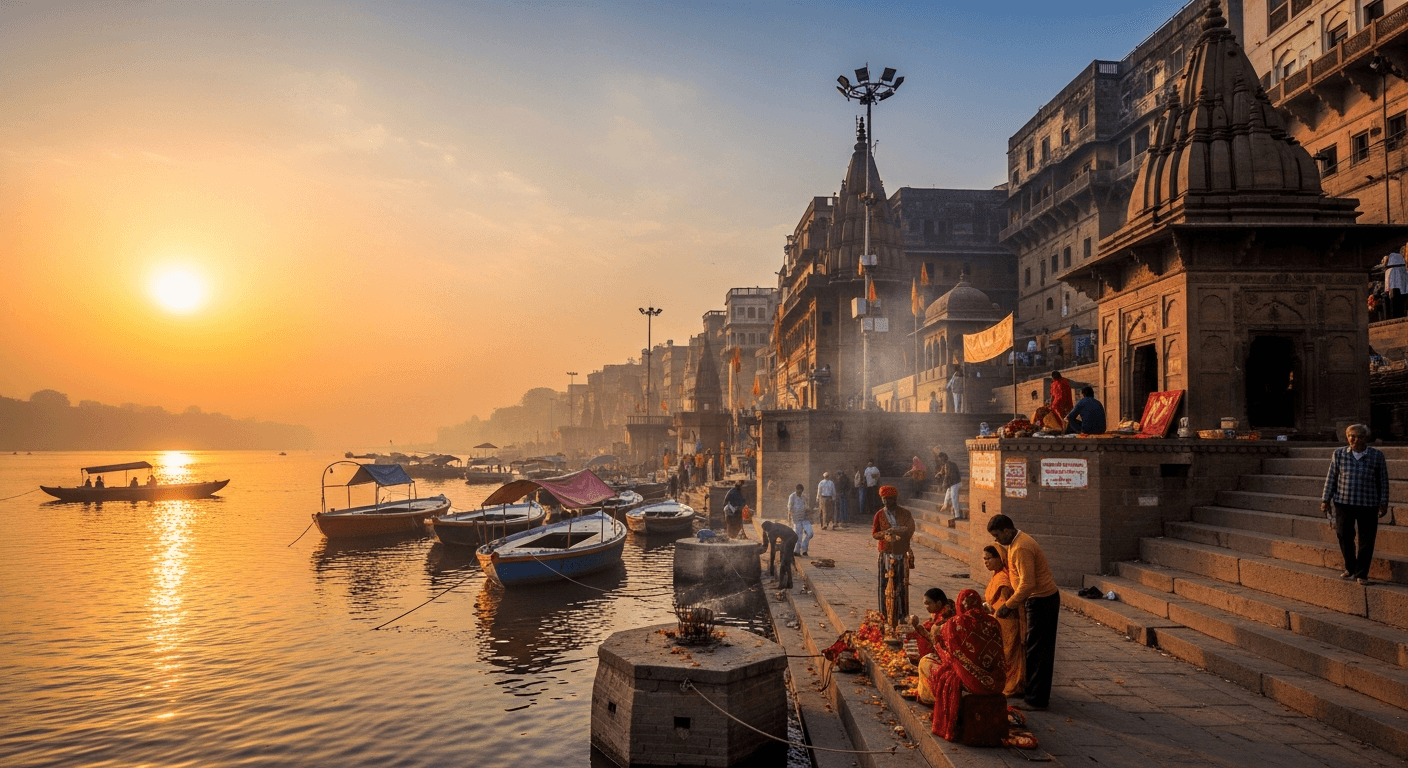
Only 2 Days in Varanasi? Here's Exactly What to Do
The electricity hits you first—before the smell, before the chaos, before you've even stepped off the train platform. It's 5 AM and the station thrums with a kind of organised frenzy that feels almost musical. Porters call out in Hindi, temple bells echo from somewhere invisible, and an elderly man in a cream kurta stands completely still, watching the sunrise with the expression of someone who's been doing this for sixty years. You realise immediately that Varanasi operates on a different frequency than anywhere else you've travelled.
Two days isn't a luxury allocation here. It's a negotiation with time. But if you know what you're actually doing, those forty-eight hours can give you something far more valuable than a photograph album: a genuine sense of what this ancient city believes about death, meaning, and the river that holds all of it.
What Actually Makes Varanasi Memorable
Most travel writing about Varanasi leans heavily on the extremes—the cremation ghats, the spiritual intensity, the sensory overload. These things are real. But the actual experience is far quieter and more complex than that.
What stays with you isn't the intensity of a single moment. It's the accumulation of small observations. It's watching a man perform puja (prayer ritual) at dawn while someone's laundry flaps behind him. It's the precise geometry of flower petals scattered on stone steps. It's overhearing conversations in languages you don't speak and somehow understanding them anyway because the tone of human connection is universal.
Varanasi works because it holds contradictions without apologising. It's simultaneously the most sacred and most practical place imaginable. Pilgrims meditate while vendors negotiate prices. Children play cricket on ghats where the dying come to breathe their last. This isn't spiritual tourism theatre—it's the actual daily negotiation between the spiritual and material that most religions only theorise about.
The Ganges itself is the through-line. It's not clean (historically, it's been considered so spiritually pure that physical cleanliness was beside the point). But as you watch it at different hours—dawn, midday, dusk, night—you begin to understand why Indians have venerated it for millennia. The river absorbs everything: prayers, ashes, waste, and somehow transforms them all into the same flowing continuity.
What to Expect: A 48-Hour Itinerary
Day One: Immersion
Arrive at Varanasi Junction station. Take a taxi (negotiate fare beforehand—expect 300-400 rupees to the old city) or use Google Maps to find a cycle-rickshaw, which takes longer but feels more honest. Your hotel is probably in the old city, in one of those labyrinths where the lanes are barely wider than your shoulders.
Check in. Drop your bag. Don't sleep yet. Eat something simple—momos, chai, a samosa. Walk to the nearest ghat (riverbank). Sit. Observe for an hour without trying to document it. This is important. Most first-time visitors spend their first hour in Varanasi photographing instead of absorbing.
By late afternoon, take a proper ghat walk. Start from Assi Ghat (southern end) and work northward. You'll pass:
- Assi Ghat: Quieter, used by locals for bathing and prayers
- Darbhanga Ghat: Historically significant; has a temple dedicated to Vishalakshi
- Dasaswamedh Ghat: The most famous—where the Aarti (evening prayer ceremony) happens at 6:15 PM
The Aarti at Dasaswamedh is worth seeing, but manage expectations. You'll be crowded. You might be jostled. The experience is more about participating in human ritual than achieving transcendence. Arrive 45 minutes early, sit on the steps, watch the light change. The ceremony itself is brief—ten minutes of coordinated flame-waving and chanting that feels both theatrical and genuinely devotional.
After Aarti, walk northward toward Manikarnika Ghat (the main cremation ghat). You can observe from a distance. Guides will approach you. You can hire one (200-300 rupees for 30 minutes) if you want context, or you can simply observe and draw your own conclusions. There's something to be said for encountering this on your own terms rather than through someone else's narrative.
Return to your hotel. You'll be tired in a way that's less about physical exertion and more about sensory integration.
Day Two: Rhythm
Wake early. 5:30 AM is ideal. Return to your ghat at dawn. Bring tea in a thermos if you can. The morning light on the Ganges has a specific quality that's wasted if you're still thinking about breakfast. Sit for an hour.
After sunrise, eat something proper. Then visit a temple. Kashi Vishwanath Temple is the most famous—it's dedicated to Lord Shiva and is one of Hinduism's twelve Jyotirlingas (sacred sites). Understand that this is not a sightseeing experience. It's a functioning place of worship. There's often a queue (sometimes long). You'll remove your shoes, walk through crowds, and have maybe 10-15 seconds in front of the main shrine. It's not a visual experience. It's a participatory one.
Alternatively, visit smaller temples where you might have more time to simply sit and observe. Sankat Mochan Hanuman Temple is less crowded and has a small courtyard where people actually spend time.
By midday, take a boat ride. Hire a boatman for 500-800 rupees (one hour). Go in the early afternoon when the light is harsh—it's less romantic but you see the ghats as working spaces rather than sets. You'll see launderers, swimmers, pilgrims, and the general machinery of daily life. This is the less-photographed reality of Varanasi.
Afternoon: walk through the old city markets. They're chaotic in a way that requires patience, but they're also genuinely commercial spaces where local people actually shop. You'll find flower sellers, spice vendors, and shops selling religious items. Buy something small—a small bronze Ganesh, some incense, a strand of rudraksha beads—not as a souvenir but as a way of participating in the economy of devotion.
Evening: return to a ghat of your choosing (perhaps not Dasaswamedh, since you did that yesterday). Watch the light change. Eat somewhere simple overlooking the water.
Planning Your Visit
Best Time: October to March. Summer (April-June) is brutally hot and humid. Monsoon (July-September) makes the ghats slippery and navigates are slow.
Duration: 48 hours is honestly the minimum to feel anything genuine. Three days is better. Five days would let you develop an actual relationship with the place.
Getting There: Varanasi Junction is connected to most major Indian cities by train. Flights arrive at Lal Bahadur Shastri Airport (about 20 km away). Trains are often more atmospheric and arrive in the heart of the city.
Accommodation: The old city is where you should stay. It's chaotic but necessary. Budget hotels near Dasaswamedh or Assi Ghat (1000-2500 rupees per night for a decent room) put you in the rhythm of the city rather than isolating you in a resort. Avoid hotels that market themselves as "spiritual retreats"—they're usually overpriced and insulate you from what actually matters.
Crowds: Varanasi is always crowded. The old city is always crowded. Accept this. Off-season (April-June) is emptier but uncomfortably hot. Winter brings pilgrim season, so it's busier but weather is perfect. January is peak pilgrim time.
Money: Bring cash. Many small vendors don't accept cards. Budget 1000-2000 rupees daily for food and local transport if you're eating simply.
Nearby Places Worth Knowing About
Sarnath (13 km away, 30 minutes by car): This is where Buddha delivered his first sermon after enlightenment. It's anchored by impressive Buddhist temples and archaeological sites. If you have even partial interest in Buddhism, half a day here makes sense. It's peaceful in a way Varanasi isn't—sometimes jarring to experience. Hire a car and driver (800-1200 rupees for a half day).
Ramnagar Fort (15 km away, 45 minutes by car): A 17th-century fort across the Ganges, accessible by cable car or ferry. It's less touristy than the main ghats and offers a different perspective on the city. The fort itself is worth exploring if you're interested in architecture. Most people skip this; it means fewer crowds.
Is It Actually Worth Visiting?
Yes, but with caveats.
Varanasi isn't comfortable. It won't feel comfortable. You'll see things that will make you uncomfortable—extreme poverty alongside extreme ritual, death alongside daily life. You can't travel here and remain unchanged, but the change isn't always pleasant or clearly positive.
It's worth visiting because it's one of the few places on Earth where you can observe how a significant portion of humanity actually thinks about mortality, meaning, and spiritual practice. You don't have to be Hindu or spiritual yourself to find this valuable. You're watching civilisation grapple with one of its central questions.
The city also resists the narrative of progress that dominates most travel writing. Varanasi doesn't exist to be improved or Instagrammed. It exists for its own purposes. There's something clarifying about being in a place that isn't primarily concerned with your experience of it.
Is it worth two days? Yes, mostly because it won't confirm any expectations you arrived with. You'll leave confused in a way that's productive.
Quick Facts
- Population: Approximately 1.4 million (the old city proper is far smaller)
- Languages: Hindi is primary; English is spoken in tourist areas
- Religion: Predominantly Hindu; home to one of Hinduism's most sacred pilgrimage sites
- Climate: Subtropical; summers are intense and humid
- Best for: Understanding Hindu ritual and perspective; experiencing sensory intensity; meditation on mortality
- Worst for: Those seeking comfort, isolation, or photographic perfection
Closing
Varanasi operates according to rules that don't apply elsewhere. Two days won't give you mastery or even comfort. But they'll give you something more honest: a genuine encounter with a place that's been asking the same questions about life and death for three thousand years.
To plan your 48-hour route through Varanasi's ghats and explore different pathways through the old city, check out Touratu's interactive map and travel videos. You'll find route options, timing guidance, and real footage of the ghats at different times of day—details that transform a rushed visit into something genuinely memorable.
