
Austria: 20 Reasons Why Travelers Return Again
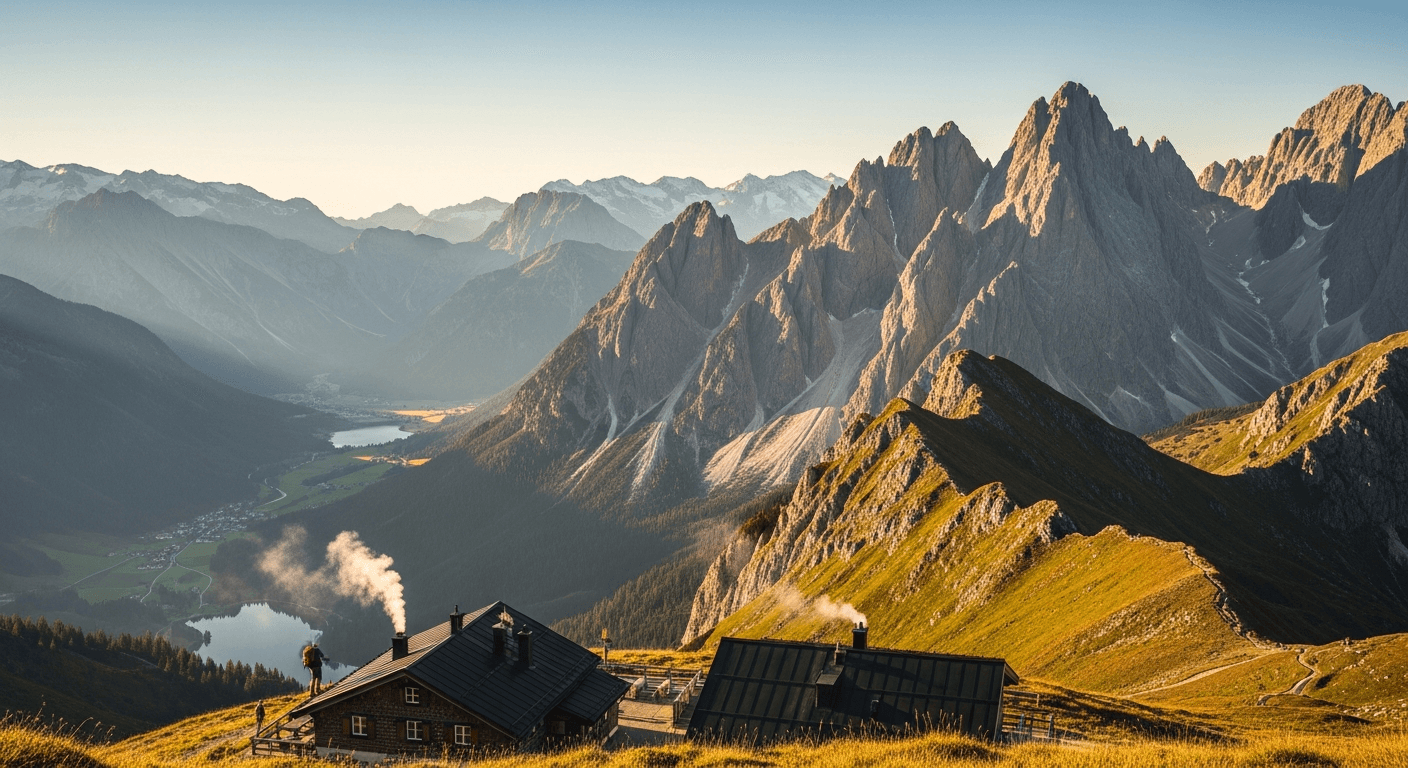
Why Travelers Keep Coming Back to These 20 Places in Austria
There's a particular quality to returning somewhere. It's not the triumphant revisit of the achievement-hunter, ticking off a checklist with finality. It's something quieter—a recognition that you've left a piece of yourself behind, and you're simply going back to collect it. Austria does this to people. Not because of what you should see there, but because of what you feel when you're there.
The country has a way of unfolding differently on each encounter. Vienna's coffee houses taste different in November than they do in July. Salzburg's garden walls offer new conversations depending on who you've become since your last visit. And the Danube—that patient, ancient river—simply continues its grey-green meditation, indifferent to how many times you've stood on its banks. This is why travelers don't just visit Austria once. They return to it like a book they keep finding new passages in.
What follows are twenty places that have earned the loyalty of the restless. Not because they're perfect, but because they're real, layered, and generous with their rewards to those willing to look closely.
The Twenty Places
1. Vienna's Central Cemetery
There's an unexpected democracy in a Viennese cemetery. Tombs of composers sit beside ordinary merchants. Beethoven's monument draws pilgrims; Brahms lies nearby in quieter reverence. Walking these paths in early morning, before the city's traffic bleeds in, you understand why Viennese return here—not just to remember the dead, but to think about their own lives with clarity. The light filters through old chestnuts. The silence is architectural. Photographers find themselves returning for the quality of shadow alone.
Best time: October through April, when tourist groups thin out.
The insider moment: Find the Jewish memorial section. The contrast in how different communities commemorate their dead tells Vienna's entire twentieth-century story.
Photography tip: The late afternoon light on the older gravesites creates drama without artifice.
2. Hallstatt (Beyond the Postcard)
Yes, Hallstatt is crowded. Yes, it's in every tourism board's rotation. But the village itself doesn't care about its reputation. Walk uphill past the lake-view crowds, follow the narrow stone passages where locals actually live, and you'll find cafés where no one is performing for photos. The mountains here feel close enough to touch—and that proximity matters. It changes how your chest feels. Locals trade the view-seekers for the quiet; you can too.
Best time: Early morning before 7 AM, or after 5 PM.
The insider observation: The salt mines that built this town are still operational. Tour them with a local guide, not a bus group.
3. The Wachau Valley
A river valley doesn't need drama to be compelling. The Wachau asks nothing except that you sit with it. Terraced vineyards layer the hillsides like a hand-drawn map. Villages such as Weissenkirchen and Spitz keep time differently—slower, more attuned to seasons than hours. Wine growers here have been doing their work for centuries; their patience becomes contagious. Cycling along the towpath, stopping unplanned at a local buschenschank (wine tavern), you enter a conversation with a place that has already decided you belong.
Best time: Late September into early October. The harvest rhythm is visible; the light has turned golden and honest.
Photography moment: The moment where morning mist lifts from the river and the far vineyards emerge like a memory becoming real.
4. Graz's Schlossberg
This fortress town reinvents itself in your mind each time you climb. The Schlossberg—not quite a castle, not quite a hill—offers views that make sense of Graz's medieval architecture spreading below like an organism that's grown naturally. The city's art scene pulses quietly. Contemporary galleries nestle beside Renaissance courtyards. It's urbane without being showy, cultured without pretension.
Best time: Spring, when the surrounding parks explode into color.
The insider detail: The funicular railroad up the clock tower is nearly invisible to tourists. Locals use it daily.
5. Mellk Abbey
Baroque architecture should, by all logic, be exhausting—all those curves and golds and emotional excess. Yet Melk Abbey transforms that abundance into something meditative. The monastery was rebuilt after fires, bombed in war, and restored again. You feel these resurrections in the stones. The Danube views from the terraces complete a circle the abbey itself has drawn around pilgrimage and persistence.
Best time: Any season works, but June brings softness to the light and fewer school groups.
Photography tip: The aerial view from the terraces looking downriver, particularly in late afternoon, captures the abbey's relationship to the landscape rather than just its architecture.
6. Innsbruck's Golden Roof District
This medieval quarter deserves your time because it rewards careful attention. The Golden Roof itself—that copper marvel ordered by Emperor Maximilian—gleams, but it's the surrounding streets that matter. Shops selling regional crafts, local bakeries, and the genuine rhythm of a working quarter rather than a preserved artifact.
Best time: Winter, paradoxically, when the slopes fill and the old town empties slightly.
7. Lake Bled's Radovljica Detour
Just over the Slovenian border (worth mentioning because travelers often don't realize Austria's proximity to this), but Austrian Carinthian lakes offer similar magic with far fewer crowds. The water reflects mountains with such clarity you begin to doubt which direction is up. Kayaking here in early morning, before the day traffic arrives, realigns something in your internal geography.
8. The Eisriesenwelt Ice Caves
Austria contains an entire palace of ice. Walking through caves where the temperature refuses to rise above freezing, even in summer, connects you to something ancient and indifferent to human presence. The ice formations look like frozen music—abstract, crystalline, belonging to a world humans merely visit.
Best time: Summer, when the contrast between outside heat and internal cold becomes a physical narrative.
9. Salzburg's Mirabell Gardens
Forget the Sound of Music choreography. These gardens were designed to make humans feel small in the best way. The marble staircases, the fountains, the relationship between manicured space and wild sky beyond—it's an argument for what gardens can achieve when built by people who understood proportion. Early morning solitude here changes your breathing.
10. The Ötztal
A valley in the Alps where time moves according to different mathematics. Hiking becomes meditation. The Ötz river follows ancient paths. Villages maintain themselves with no apparent interest in tourism momentum.
Best time: July through September for accessibility; June for solitude.
11. Vienna's Naschmarkt
This market pulses with the city's genuine appetite. Not dressed up for tourists—authentic hunger. Spice merchants, fruit stands, and the daily commerce of feeding yourself. The energy here is honest. The conversations in multiple languages, the democratic mingling of classes, the smell of coriander mixing with fresh bread—this is Vienna's real conversation with itself.
12. Bregenz's Lakeside Position
Austria's westernmost city sits where Lake Constance decides to flow on. The classical amphitheater hosting operas with the lake as backdrop feels simultaneously pretentious and perfect. The contradiction is the point.
Moving Through Austria Like Someone Who Lives There
The rail system is so intuitive that getting lost becomes almost impossible—which is its own gift. You're meant to take the wrong train occasionally; it leads to conversation and discovery. The ÖBB (Austrian Federal Railways) system connects these twenty places with a reliability that lets you plan loosely, knowing the logistics will hold.
Neighborhoods matter. Vienna's districts (the Gemeindebezirke) each have distinct personalities—the 6th is intellectual Vienna, the 7th is where artists cluster, the 9th is student-driven energy. Staying in a local guesthouse rather than a hotel embeds you differently. You'll see how Viennese actually move through space.
Timing your arrival before 10 AM in smaller towns creates a completely different experience than arriving after lunch. Tourist infrastructure awakens later. Local rhythms are still visible.
The Austrian courtesy ritual is real and worth honoring. Greetings matter. "Grüß Gott" (the southern Austrian variation) or "Guten Tag," said with genuine eye contact, opens conversations. Austrians notice when foreigners make the linguistic effort.
Visual Routes to Explore
Discover these twenty Austrian destinations and the paths travelers trace between them on Touratu's interactive map—where you can follow real traveler routes, browse their reels and visual discoveries from each location, and build your own return journey.
Coming Back
Austria doesn't demand that you love it on first meeting. It's patient. It waits for the moment when you realize you've learned something by simply being present in its coffee houses, on its river valleys, or walking its stone streets at dawn. These twenty places accumulate meaning with each return. The Danube doesn't change, but you do. And Austria, with that particular Austrian grace, allows you to become different people there—each version of yourself equally welcome at the table.
Loading activities…
