
20 Best Places in Uttar Pradesh That Travelers Keep Returning To
20 Places in Uttar Pradesh Travelers Keep Returning To — Have You Been to All of Them?
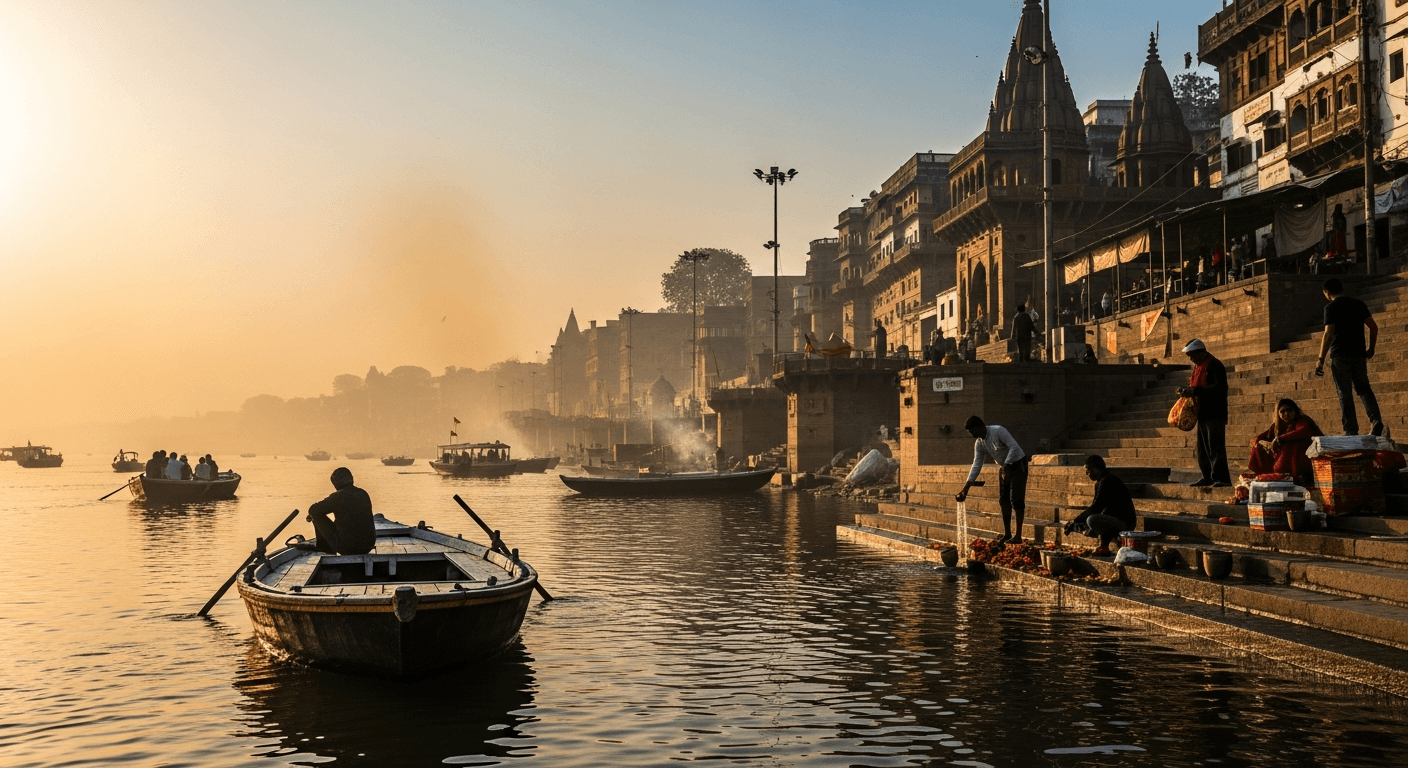
There's a particular quality to the light in Uttar Pradesh that photographers chase and poets have tried to capture for centuries. It falls differently here — softer along the Ganges at dawn, honeyed and thick through the latticed windows of Mughal monuments, almost theatrical as it illuminates the chaos of ancient bazaars. This is a state that doesn't reveal itself quickly. It demands multiple visits, each one peeling back another layer of a civilization that has been continuously inhabited, worshipped in, fought over, and celebrated for millennia.
Uttar Pradesh sits at the heart of India's spiritual and cultural geography, yet it refuses to be easily categorized. The same traveler who loses themselves in the mathematical perfection of Taj Mahal's symmetry might find themselves, days later, watching a cremation at Varanasi's ghats with unexpected calm. The state holds these contradictions without apology — the sacred and the secular, the ancient and the living, the crowded and the contemplative.
What brings travelers back isn't just the famous monuments, though those are reason enough. It's the accumulated details: the taste of kachori-sabzi from a specific stall in Agra's Sadar Bazaar that you dream about months later, the particular silence that falls over Sarnath at closing time, the way boatmen in Varanasi seem to know exactly when you need conversation and when you need quiet. These are places that mark you, that settle into your memory differently than typical tourist destinations.
Varanasi — The Ghats
The first time you see the ghats of Varanasi, you don't quite believe what you're witnessing. The human theatre unfolding along these stone steps — pilgrims bathing, priests chanting, children flying kites, bodies burning, tourists photographing, sadhus meditating, all simultaneously and without apparent conflict — feels like it should be overwhelming. Instead, there's a strange order to it, a rhythm that the city has perfected over three thousand years of continuous habitation.
Dashashwamedh Ghat during the evening Ganga Aarti ceremony transforms into something between a religious ritual and a performance. Priests in saffron move synchronized fire lamps through precise choreography while bells ring and devotees press forward. The faces lit by flame, the Ganges dark beyond, smoke rising into floodlights — it's theatrical in the truest sense, a spectacle that somehow never feels artificial.
Best time to visit: Pre-dawn boat rides (around 5:30 AM) offer the most profound experience, when the ghats are waking up and the light is pale gold. Evening aarti typically begins around 7 PM.
What most visitors miss: The smaller ghats north of Dashashwamedh — particularly Lalita Ghat with its Nepali temple — offer the same river access without the crowds. The cremation ghats of Manikarnika and Harishchandra are open to respectful observers; the experience is sobering rather than morbid.
Visual moment: Shoot from a boat at sunrise, when the entire eastern skyline becomes a silhouette of temples and the water catches fire colors.
Agra — Taj Mahal
Every cynical traveler arrives at the Taj Mahal expecting to be disappointed. You've seen the photographs a thousand times. You know it will be crowded, that the scaffolding might be up, that the reality can't possibly match the mythology. And then you walk through the entrance gate and see it framed in that red sandstone archway, and something shifts. The building shouldn't be that white, that perfect, that impossibly balanced. It looks photoshopped against its own sky.
What strikes most visitors on a second or third visit isn't the mausoleum itself but the details around it — the pietra dura inlay work on the platform, the calligraphy that increases in size as it rises to appear consistent from ground level, the way the mosque and guest house are perfectly identical twins flanking the tomb. Shah Jahan was building grief into geometry.
Best time to visit: Full moon nights (special tickets required) are transcendent but crowded. The sweet spot is the hour after opening (6 AM in summer, 7 AM in winter) when the crowds are still manageable and the morning light is most forgiving.
Insider observation: The black marble patterns in the white marble platform aren't randomly decorative — they map out prayer spaces for worshippers. The reflecting pool is positioned so that the Taj appears to float when viewed from the entrance gate.
Photography note: The classic shot from the Diana bench is worth getting, but turn around occasionally — the view looking back toward the entrance gate, especially in that first golden hour, is equally stunning and almost never photographed.
Agra — Agra Fort
The Taj Mahal casts such a long shadow that many travelers treat Agra Fort as an afterthought, ticking it off their list in an hour before heading to their next destination. This is a mistake. The fort is where the story of the Taj actually makes sense — where Shah Jahan was imprisoned by his son Aurangzeb, spending his final years gazing at his wife's tomb through a single window.
The Musamman Burj, that octagonal tower with the jharokha window facing the Taj, is the most melancholy spot in Mughal India. Stand there at sunset when the distant marble catches the last light, and try to imagine eight years of looking, unable to visit, watching your life's greatest creation slowly blur as your eyesight fails.
Best time to visit: Late afternoon, when tour groups have departed and the light turns the red sandstone almost rust-colored. The fort closes at sunset.
What most visitors miss: The Diwan-i-Khas (Hall of Private Audience) contains some of the finest inlay work outside the Taj. The Nagina Masjid, a private marble mosque for the royal ladies, is easy to walk past but worth lingering in.
Practical tip: The audio guide here is worth the rental — the fort's layout and history are confusing without context, and the guide helps you understand which ruler built what and why.
Lucknow — The Old City
Lucknow has a particular manner that other Indian cities lack — a courtly, unhurried elegance that persists despite modernization. The city was the seat of Nawabi culture, where tehzeeb (etiquette) was elevated to an art form and poetry, cuisine, and refined living reached heights that still influence North Indian culture. Walking through the old city, you catch glimpses of what remains: crumbling havelis with impossibly beautiful plasterwork, bazaars where craftspeople still practice traditional chikankari embroidery, kebab shops that have been perfecting the same recipes for generations.
The Bara Imambara defies architectural logic — it's one of the largest structures in the world built without external support beams, held together by interlocking bricks and the ambition of Nawab Asaf-ud-Daula, who commissioned it partly as a famine relief project. The labyrinthine passages of the Bhool Bhulaiya above it are genuinely disorienting, a maze designed to confuse invaders now delighting tourists.
Best time to visit: The cooler months (October through March) are most comfortable for exploring on foot. Ramadan brings special energy to the old city, with night markets and evening feasting.
Insider observation: The best tunday kebabs — those legendary mutton kebabs supposedly designed for a toothless nawab — come from the original shop in Chowk, not the sanitized tourist branches. Be prepared to queue and to navigate aggressive crowds.
Visual moment: The rooftop view from Bara Imambara at sunset, with the Asfi Mosque and Rumi Darwaza visible against the fading light, is worth the climb through the maze.
Sarnath — The Deer Park
Eight kilometers from Varanasi's chaos lies a different kind of sacred site — quieter, greener, touched by Buddhist serenity. This is where Siddhartha Gautama delivered his first sermon after attaining enlightenment, setting the wheel of dharma in motion. The place still carries that sense of beginning, of something profound being articulated for the first time.
The Dhamek Stupa, built to mark the exact spot of that first sermon, rises 43 meters from manicured gardens. It's more massive than photographs suggest, its cylindrical brick body decorated with stone-carved geometric and floral patterns that date back to the Gupta period. Japanese, Thai, Chinese, and Tibetan temples surround the archaeological park, each nation having built shrines in their own architectural tradition — a global Buddhist community maintaining pilgrimage presence.
Best time to visit: Early morning, when Buddhist pilgrims circumambulate the stupa in walking meditation. The museum opens at 10 AM and closes at 5 PM.
What most visitors miss: The Sarnath Archaeological Museum houses the original Lion Capital of Ashoka — the four-lion sculpture that India adopted as its national emblem. Seeing it in person, understanding its scale and craftsmanship, is unexpectedly moving.
Practical tip: Sarnath works well as a half-day excursion from Varanasi. The auto-rickshaw negotiation can be tedious; fix the price before departing and expect to pay extra for waiting time.
Fatehpur Sikri — The Abandoned Capital
Thirty-seven kilometers from Agra sits Emperor Akbar's brief dream — an entire city built in red sandstone between 1571 and 1585, then abandoned entirely when the water supply failed. What remains is India's best-preserved Mughal complex, a ghost city frozen at the moment of desertion, where you can still walk through emperors' private chambers and imagine court life at its zenith.
The Panch Mahal, that five-story pavilion with its 176 columns, was designed for royal ladies to catch evening breezes while remaining screened from public view. The Diwan-i-Khas contains Akbar's unusual throne platform — a central pillar connected by four walkways to the corners, allowing the emperor to hold audience while remaining physically separated from everyone. The architecture reveals the mind of its patron: syncretic, curious, obsessed with order and symbolism.
Best time to visit: Early morning before the tour buses arrive, or late afternoon when the sandstone glows warmest. The site closes at sunset.
Insider observation: The tomb of Sufi saint Salim Chishti, within the massive Buland Darwaza courtyard, is still an active pilgrimage site. Women tie threads to the marble lattice screens praying for children — the same reason Akbar built here, after the saint predicted the birth of his heir.
Photography note: The Buland Darwaza (Gate of Magnificence) is best photographed from inside the courtyard looking out, with human figures for scale against its 54-meter height.
Mathura-Vrindavan — The Krishna Circuit
These twin towns on the Yamuna River represent the physical geography of Krishna's childhood, and for devotees, walking this landscape is walking through mythology made tangible. Every bend in the river, every village between them, connects to stories that Indians grow up hearing — the butter-thief god, the flute-playing cowherd, the divine lover.
Vrindavan during aarti is overwhelming in the most literal sense. Thousands of pilgrims pack into temples like Banke Bihari, clapping and singing while priests reveal and then screen the deity at intervals — a practice meant to prevent devotees from becoming entranced. The air is thick with incense and marigold, the sound system distorts under volume, and everyone around you is experiencing something you might not share but cannot help being moved by.
Best time to visit: Janmashtami (Krishna's birthday, usually August-September) transforms the towns into massive celebrations, but also brings impossible crowds. Holi here is legendarily intense — prepare to be covered in colored powder and water for days.
What most visitors miss: The older temples along the river — Madan Mohan, Radha Damodar — are less crowded than Banke Bihari and architecturally more interesting. The parikrama (circumambulation) paths around sacred groves are peaceful morning walks.
Practical tip: Dress conservatively, remove leather items before entering temples, and be prepared for aggressive donation requests and shoe-minding scams at larger temples.
Allahabad (Prayagraj) — The Sangam
The confluence of three rivers — Ganges, Yamuna, and the mythical Saraswati — represents the holiest bathing spot in Hinduism. The site is geographically specific: the point where two visible rivers meet, their waters maintaining distinct colors for some distance before mixing. The third river, invisible, is said to join from underground.
Every twelve years, the Kumbh Mela transforms the Sangam into the largest human gathering on earth — a temporary city of millions materializing on the floodplain, then vanishing after the pilgrimage. But even in ordinary times, the Sangam has atmosphere. Boats ferry pilgrims to the meeting point; priests guide bathers through rituals; the water changes color depending on season and rainfall upstream.
Best time to visit: The annual Magh Mela (January-February) is a smaller gathering but still impressive. Avoid monsoon months when the rivers flood dangerously.
Insider observation: The Allahabad Fort, largely closed to the public due to military use, contains an Ashokan Pillar and the underground temple of Patalpuri. Special permissions are required but worth pursuing for history enthusiasts.
Visual moment: The view from boats at the confluence point, where the brown Ganges meets the blue-green Yamuna, is the defining image — water literally carrying different worlds before merging.
Chitrakoot — The Hermitage Hills
Where the Vindhya hills meet the Bundelkhand plateau, this forested region is believed to be where Rama, Sita, and Lakshmana spent eleven of their fourteen years of exile. The landscape here is gentler than dramatic — low wooded hills, the Mandakini River cutting through, small temples tucked into rock shelters. For Ramayana devotees, walking this terrain is a form of pilgrimage; for everyone else, it's a surprisingly peaceful escape from plains tourism.
Ram Ghat, where pilgrims bathe in the Mandakini, comes alive at evening aarti but remains calm by Varanasi standards. The boatmen here tell stories as they row — pointing out the rock where Sita sat, the cave where Bharata begged Rama to return — blending geography with mythology until the distinction ceases to matter.
Best time to visit: September through March offers the most comfortable weather. The Sharavan month (July-August) brings major pilgrimage crowds.
What most visitors miss: The waterfall at Hanuman Dhara, reached by climbing 360 steps, offers forest views and a natural spring attributed to Hanuman. The Gupt Godavari caves, with their narrow rock passages and temple inside, are unexpectedly atmospheric.
Practical tip: Chitrakoot functions better as an overnight stay than a day trip — distances between sites require time, and the pace here rewards slowing down.
Ayodhya — The Ram Janmabhoomi
Ayodhya exists in two registers simultaneously: the contested, politically charged site of recent temple construction, and the ancient pilgrimage town of Saryu River ghats and Ramayana mythology. Both realities are present, and travelers should be aware of both without necessarily centering either.
The Saryu ghats remain the spiritual heart of old Ayodhya. Evening aarti here lacks Varanasi's spectacle but has its own quieter devotion. The old town's narrow lanes contain centuries-old temples, Jain shrines, and the lived texture of a pilgrimage city that functioned long before recent controversies. Walking these lanes provides context the news coverage lacks.
Best time to visit: Ram Navami (March-April) celebrates Rama's birthday with major festivities but intense crowding. Diwali, commemorating Rama's return from exile, illuminates the entire city with oil lamps.
Practical tip: Security around the main temple complex is extensive; expect airport-level screening, phone confiscation, and long queues. Dress conservatively and carry minimal belongings.
Jhansi — The Fort
The fortress city of Jhansi gained its fame from Rani Lakshmibai, the warrior queen who fought the British in 1857 and became an independence movement symbol. Her fort dominates the town from a granite hill — a formidable structure that still carries the energy of its final defense.
Walking the ramparts, you can trace the siege geography: where British forces positioned cannons, which walls they breached, the gate from which the Rani supposedly escaped holding her son, sword in hand. The Son et Lumière show narrates this history against the fort's illuminated walls, dramatic if somewhat dated in presentation.
Best time to visit: October through March avoids the brutal Bundelkhand summer. The light show runs evening shows in Hindi and English at different times.
What most visitors miss: Jhansi functions as a gateway to Orchha, just 18 kilometers away, but has its own archaeological museum and local temples worth a morning's exploration.
Orchha — The Forgotten Palaces
This medieval Bundela capital was frozen in amber when history moved elsewhere, leaving palace complexes, temples, and cenotaphs largely intact but almost entirely empty. Orchha might be the most atmospheric Mughal-era site in North India precisely because no one has decided to restore it properly or promote it heavily.
The Jahangir Mahal, built to honor a single royal visit, combines Hindu and Islamic architecture in ways that feel genuinely experimental. Wall paintings inside the Lakshmi Narayan Temple retain their color after four hundred years. The riverside chhatris (cenotaphs) of Bundela rulers stand reflecting in the Betwa River at sunset, monumentally beautiful and almost always photographed alone.
Best time to visit: The morning light on the palace complex is extraordinary. Plan for sunset at the cenotaphs along the river.
Insider observation: The Ram Raja Temple here is unique — the only temple in India where Rama is worshipped as a king and receives a guard-changing ceremony. The town remains sleepy enough that temple priests have time for conversation.
Photography note: Hire a local guide who can provide rooftop and interior access to locked palace sections; the views from upper floors are worth the negotiation.
Dudhwa National Park — The Terai Wilderness
At the Nepal border, where the Himalayan foothills dissolve into dense sal forests and swampy grasslands, Dudhwa protects what the Gangetic plain once was before agriculture claimed nearly everything. Tigers prowl here, though sightings require luck; the swamp deer and rhinoceros (reintroduced from Assam) are more reliable draws.
The terai landscape has a specific humidity, a greenness that feels tropical despite the latitude. Morning elephant safaris move through grass taller than the elephants themselves. Birdlife explodes at dawn from the network of rivers and wetlands. This is wildlife tourism without the crowds of Ranthambore or Corbett — you might have entire sectors to yourself.
Best time to visit: November through April, with February and March offering the best elephant grass (cut down in winter, just tall enough for visibility). Monsoon closes the park.
What most visitors miss: The Kishanpur Wildlife Sanctuary within the larger reserve has the highest concentration of tigers. The drive from Lucknow (4-5 hours) passes through some of the most unspoiled agricultural landscapes in UP.
Practical tip: Book forest rest house accommodation months in advance through the official website. Private lodges exist but are limited.
Kushinagar — The Parinirvana Site
The historical Buddha died here — or rather, attained mahaparinirvana, the final release from the cycle of rebirth. Kushinagar carries that ending energy: quieter than Sarnath, more meditative than Bodh Gaya, a place where the fundamental fact of mortality meets the promise of liberation.
The Mahaparinirvana Temple houses a fifth-century reclining Buddha statue depicting the moment of death — the figure's expression serene, positioned to face west toward the setting sun. Pilgrims leave offerings and sit in extended meditation. The surrounding archaeological park contains the stupa marking the cremation site and scattered remains of monastic buildings.
Best time to visit: Buddhist holy days bring pilgrimage activity but retain contemplative atmosphere. Early morning offers solitary access to the main temple.
Practical tip: Kushinagar connects awkwardly to other destinations — the nearest railway station is Gorakhpur, about 50 kilometers away. Most visitors combine it with Lumbini (Nepal) and Sarnath in a Buddhist circuit.
Jaunpur — The Sharqi Architecture
The Sharqi sultans who ruled from Jaunpur in the 15th century developed a distinctive architectural style — massive tapering gateways (propylons), mosques with monumental facades, a specific silhouette against the Gomti River. The city's major monuments are rarely visited despite being extraordinary.
The Atala Masjid incorporates Hindu architectural elements openly — its facade built on the platform and columns of a demolished temple, the fusion visible and unbothered about its composite origins. The Jama Masjid's central gateway is one of the most imposing in Indo-Islamic architecture. The Shahi Bridge, built in the Akbar period, still carries traffic over the Gomti.
Best time to visit: The cooler months allow comfortable exploration of the spread-out monuments. Friday prayers at the mosques bring architectural context alive.
What most visitors miss: Jaunpur was traditionally called the "Shiraz of India" for its medieval centers of learning. The old city retains narrow lanes and 15th-century gates worth wandering.
Meerut — The Uprising's Origin
Meerut isn't on any tourist itinerary, which is precisely why it matters. This cantonment city is where the 1857 uprising began — where Indian soldiers refused to use rifle cartridges rumored to be greased with cow and pig fat, where the spark was lit that would burn across North India. The sites are unmarked or poorly maintained, but standing where history pivoted carries its own charge.
The Shaheed Smarak complex commemorates the uprising with monuments and a museum, though the presentation is dated. The Augarnath Temple, where the first shots were fired, is an active place of worship rather than a memorial. St. John's Church contains graves of British soldiers killed in the initial uprising — history told from all sides.
Best time to visit: Anytime, though summer is brutal. Meerut works as a day trip from Delhi (70 km) for history enthusiasts.
Practical tip: Hire a knowledgeable local guide — the sites don't explain themselves, and their significance requires context.
Mirzapur — The Vindhyachal Corridor
Where the Vindhya Range meets the Ganges, temple complexes dot the hills along the river, drawing pilgrims to Shakti (goddess) worship sites that predate recorded history. Vindhyachal, the most significant, houses the Vindhyavasini Devi temple — one of India's most important goddess shrines.
The pilgrimage landscape here feels older than Hinduism's formalized traditions — tantric undertones, goddess worship forms that anthropologists still study, a sacred geography of caves and rock outcrops and river confluences. The annual Navaratri celebrations bring millions; the rest of the year, the sites maintain their power without the crush.
Best time to visit: Navaratri (September-October) for maximum intensity; other times for actual space to experience the sites.
What most visitors miss: The carpet weaving tradition of Mirzapur town is centuries old; visiting workshops reveals artisans still practicing techniques unchanged from Mughal times.
Shravasti — The Buddha's Teaching Years
The historical Buddha spent 25 monsoon retreats at Shravasti — more than any other location in his teaching life. The archaeological remains here — the Jetavana monastery complex, the stupa sites, the foundations of ancient teaching halls — represent the physical setting for much of the Tripitaka literature.
Jetavana today is a peaceful archaeological park, the ancient brick foundations rising from lawns where pilgrims walk mindfully. The Ananda Bodhi Tree, grown from a cutting of the original tree under which Buddha attained enlightenment, offers shade for meditation. The scale is modest compared to other Buddhist sites, but the historical significance is immense.
Best time to visit: The cooler months, ideally combined with other Buddhist circuit sites. The site closes at sunset.
Practical tip: Shravasti requires dedicated travel — the nearest railway station is Balrampur, connected to Lucknow. Plan for overnight stays to justify the journey.
Kanpur — The Industrial River City
Kanpur rarely appears on any tourist list, which is perhaps unfair. The industrial city's chaotic energy, its Ganges ghats (particularly the Sarsaiya Ghat), its memorial church and cemetery commemorating the 1857 siege — these speak to a different register of Indian history, the colonial and post-colonial industrial story.
The Allen Forest Zoo, established in 1971, is one of North India's better-maintained zoos. The Nana Rao Park, site of the Bibighar massacre and subsequent British reprisals, carries heavy historical weight. The old cantonment areas retain colonial architecture slowly being absorbed by the expanding city.
Best time to visit: October through February avoids the summer heat and monsoon humidity.
What most visitors miss: The leather markets of Kanpur supply much of India's footwear and leather goods industry — the wholesale markets reveal production at scale rarely seen elsewhere.
Bithoor — The Ganga's Mythological Seat
Just north of Kanpur, this small pilgrimage town claims significance in both Ramayana mythology (Sita's post-exile residence) and 1857 history (Nana Sahib's headquarters). The ghats here are peaceful, the temples less trafficked, the river views contemplative.
The Brahmavart Ghat marks the spot where Brahma is said to have performed a cosmic ritual creating the universe. The Valmiki Ashram locates the site where Sita raised her sons and where the sage composed the Ramayana itself. Historical accuracy aside, the layering of mythology onto geography creates its own kind of meaning.
Best time to visit: Morning for the ghats; the town is small enough to explore in half a day.
Practical tip: Bithoor combines easily with Kanpur — a 25-kilometer auto-rickshaw ride through agricultural landscapes.
Navigating the State
Uttar Pradesh rewards patients who understand its scale. This isn't a state you "do" in a single trip — it's a region that reveals itself across multiple visits, each journey building on the last.
The train network remains the most practical way to move between major cities. The Shatabdi and Gatimaan Express lines connect Delhi to Agra efficiently; the overnight trains between Varanasi and other destinations are comfortable in AC classes. For smaller destinations — Orchha, Chitrakoot, Shravasti — you'll need to embrace the irregular bus networks or hire private vehicles.
The Ganges belt cities (Varanasi, Allahabad, Kanpur, Mirzapur) operate on their own rhythm — expect earlier mornings, later nights, and business hours that shift around temple schedules. The Bundelkhand region (Jhansi, Orchha, Chitrakoot) moves more slowly, more rurally, with fewer infrastructure guarantees but less urban intensity.
Summer (April through June) is brutal across the plains — avoid unless pilgrimage timing requires it. Monsoon (July through September) brings flooding risks and closed wildlife parks but also transformed green landscapes. The sweet months run October through March, with November through February offering the most comfortable temperatures.
Cultural navigation requires reading contexts. Varanasi demands patience with crowds and persistence through touts; Lucknow responds to courtesy and expects a certain manner in return; the Buddhist circuit sites expect respectful behavior and conservative dress; tribal and rural areas require cultural humility about local customs and practices.
Discovering Your Route
Uttar Pradesh contains multitudes — you could spend a lifetime exploring its layers and still find temples you've missed, bazaars you haven't walked, stories you haven't heard. The destinations in this list represent entry points rather than completions, invitations to deeper exploration rather than boxes to check.
For travelers planning routes through this complex landscape, Touratu's interactive maps let you explore how other travelers have actually moved through the state — the reels they've shared, the routes they've traced, the visual discoveries they've made in the spaces between famous monuments. Sometimes the best finds come from following someone else's footsteps until they diverge into your own path.
The state will still be here on your next visit, changed but continuous, its rivers still flowing through the same ancient channels, its temples still chanting the same morning prayers, its bazaars still opening in the same half-light before dawn. Uttar Pradesh asks nothing of its visitors except presence — the willingness to stand in specific places and feel the accumulated weight of everyone who has stood there before, the lives and devotions and departures that have shaped the stones beneath your feet. Whatever draws you here the first time, something else will bring you back.
Loading activities…
