
20 Best Places in Africa That Keep Travelers Coming Back
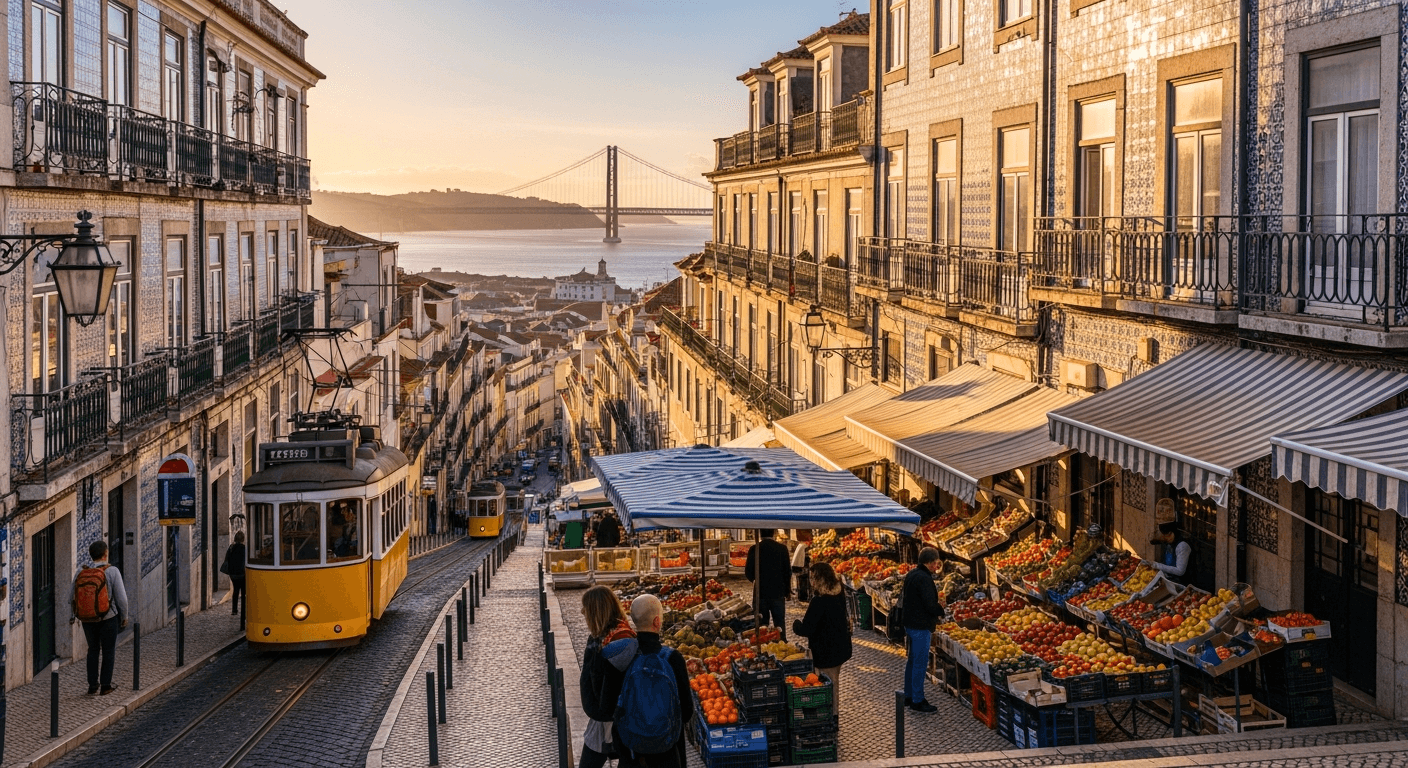
Africa Market
Africa: Why Travelers Keep Coming Back to These 20 Places
The first time you set foot on African soil, something shifts. Maybe it's the quality of the light—that particular golden hour that seems to stretch for hours across the savanna, or the way morning mist rises from rainforest canopies like the continent is slowly waking from a dream. Maybe it's the sound: a lion's distant call carrying across the Serengeti at dusk, the muezzin's voice threading through Moroccan medina alleys, the collision of a thousand conversations in a Lagos market where everyone seems to know exactly where they're going except you.
Africa doesn't reveal itself all at once. It asks for patience, curiosity, the willingness to be genuinely surprised. Travelers who come once often return—not to check off another destination, but because something here got under their skin. The continent's 54 countries hold more ecological diversity, cultural complexity, and sheer visual drama than most people can absorb in a lifetime of visits. From the ochre dunes of Namibia to the stone churches carved into Ethiopian highlands, from Cape Town's urban sophistication to the unchanged rhythms of Maasai villages, Africa resists easy categorization.
These twenty places represent something deeper than tourist popularity. They're the destinations where travelers consistently report transformation—where the experience exceeds expectation, where return visits reveal new layers, where the memory lingers years after the passport stamp has faded.
1. The Serengeti, Tanzania
The first wildebeest you see is unremarkable. The ten-thousandth changes everything.
Tanzania's Serengeti ecosystem operates on a scale that recalibrates your sense of nature. This isn't a zoo expanded to landscape size—it's watching life unfold according to ancient patterns that predate human memory. The Great Migration, involving nearly two million wildebeest, zebras, and gazelles moving in an endless circuit following the rains, represents the largest terrestrial mammal movement on Earth.
What photographs can't capture is the sound: the collective breathing of a herd stretching to the horizon, the strange grunting chorus that carries for miles, the sudden silence when a predator appears. The Serengeti teaches you to wait, to watch, to understand that drama happens on its own schedule.
Best Time: December through March for calving season in the southern plains; July through October for river crossings in the north.
Insider Observation: The central Seronera area gets crowded. Request a camp in the western corridor or northern sector for more intimate wildlife encounters and fewer vehicles.
Visual Moment: Sunrise from a hot air balloon over the endless grasslands—the only time you'll grasp the migration's true scale.
2. Cape Town, South Africa
Cities rarely possess this much geographic drama. Table Mountain doesn't just backdrop Cape Town; it dominates the psyche, visible from nearly everywhere, its famous tablecloth of clouds rolling over the flat summit like slow-motion theater.
But Cape Town's pull extends beyond landscape. The Bo-Kaap neighbourhood's candy-coloured houses against Signal Hill. The raw energy of Long Street on a Friday night. The sobering weight of Robben Island, visible from the waterfront, where Mandela's cell still stands as testimony. The Constantia wine estates, among the oldest in the Southern Hemisphere, where afternoon tastings stretch into dinners that stretch into conversations with strangers who feel like old friends by the end.
This is a city of contradictions held in productive tension—extreme wealth alongside profound inequality, colonial architecture housing contemporary African art, European café culture meeting township jazz traditions.
Best Time: November through March for summer warmth; September and October for wildflower season on the Cape Peninsula.
Insider Observation: Skip the Table Mountain cableway during midday crowds. Hike Platteklip Gorge early morning for the summit to yourself, then descend by cable car when legs protest.
Visual Moment: Sunset from Lion's Head summit—a moderate scramble rewarded with 360-degree views of both the Atlantic and Indian Ocean sides.
3. Marrakech, Morocco
The Djemaa el-Fna square doesn't welcome you so much as absorb you. By day, it's manageable—orange juice vendors, snake charmers for tourist cameras, henna artists staking territory. By evening, it transforms into organized chaos: smoke rising from dozens of food stalls, storytellers drawing crowds, Gnawa musicians competing for attention, the call to prayer cutting through everything.
Marrakech's medina operates on logic that takes days to decipher. Alleys twist back on themselves. Riads hide entire gardens behind unmarked doors. The souks organize loosely by trade—leather here, spices there, carpets beyond—but wandering remains the only reliable navigation method.
The city's contemporary side often surprises visitors expecting only tradition. The Yves Saint Laurent Museum and Jardin Majorelle represent French artistic legacy reimagined through Moroccan lens. The Palais Bahia showcases 19th-century craftsmanship that took fifteen years to complete. New galleries in the Mouassine quarter challenge assumptions about North African art.
Best Time: March through May or September through November—summer heat in the medina becomes genuinely oppressive.
Insider Observation: Book a cooking class that includes market shopping with a local guide. You'll learn more about Moroccan culture deciphering spice stall negotiations than any museum visit.
Visual Moment: Rooftop terraces at sunset, when the entire medina turns pink and the Atlas Mountains emerge from afternoon haze.
4. Victoria Falls, Zimbabwe/Zambia
The Kololo people called it Mosi-oa-Tunya: "The Smoke That Thunders." Standing at the edge, you understand the poetry isn't exaggeration.
Victoria Falls spans nearly two kilometers, dropping over 100 meters into the Batoka Gorge. During high water season, the spray rises 400 meters into the air—visible from 50 kilometers away, creating its own microclimate of perpetual rain. You will get soaked approaching the viewpoints. This is unavoidable and eventually hilarious.
The falls straddle Zimbabwe and Zambia, and experiencing both sides reveals different characters. Zimbabwe's Rainforest walk offers more developed viewpoints and the famous Devil's Pool experience (dry season only). Zambia's side provides closer encounters with the eastern cataract and better sunrise light.
Beyond the falls themselves, the Zambezi River upstream offers some of Africa's finest canoeing among hippos and elephants. Downstream, the gorges create world-class whitewater rafting through rapids with names like "The Ugly Sister" and "Oblivion."
Best Time: February through May for maximum water volume and spray; September through December for lower water and Devil's Pool access.
Insider Observation: The full moon rising over the falls creates a rare lunar rainbow—"moonbow"—visible only a few nights each month. Worth planning around.
Visual Moment: Knife's Edge Bridge at sunrise, when the spray catches first light and creates rainbow circles around your shadow.
5. Zanzibar, Tanzania
Stone Town's labyrinthine streets reward aimless wandering. Omani doorways, intricately carved and studded with brass, open onto courtyards where spice traders once negotiated fortunes. The architecture layers cultures: Arab, Indian, Persian, Portuguese, British, African—all compressed into coral-stone buildings that seem to lean into each other like old friends sharing secrets.
The island's history carries weight. The slave market that once operated here shaped East African history for centuries; the Anglican Cathedral built on its site doesn't let visitors forget. Freddie Mercury's birthplace draws music pilgrims to a modest house near the seafront. The sultans' palaces crumble photogenically along the waterfront promenade.
But Zanzibar's beaches—particularly along the east coast—offer guilt-free relaxation. Powdery white sand, water that cycles through improbable turquoise shades with the tides, fishing villages where life moves according to dhow sailing schedules rather than tourist itineraries.
Best Time: June through October for dry season; December through February offers warmth but occasional short rains.
Insider Observation: Spice tours vary wildly in quality. Seek out community-run cooperatives rather than large commercial operations—the knowledge runs deeper, and income stays local.
Visual Moment: Forodhani Gardens night market, when the waterfront fills with grilled seafood smoke and lantern light.
6. The Maasai Mara, Kenya
The Mara operates as the Serengeti's northern extension, but crossing the border changes the character. Kenya's reserve feels slightly more intimate—smaller, more densely packed with wildlife, and home to some of Africa's most experienced guides.
The Great Migration's river crossings typically occur here between July and October, when massive herds face the crocodile-infested Mara River in scenes that define nature documentary drama. But focusing solely on migration misses the reserve's year-round richness. Big cat density here rivals anywhere on Earth—lion prides lounging in afternoon shade, cheetahs scanning the grasslands from termite mounds, leopards materializing at dusk.
Equally compelling: the Maasai communities bordering the reserve maintain traditional practices while adapting to conservation economies. Visiting a village involves more commerce than many travelers expect, but conversations about land rights, wildlife coexistence, and cultural preservation reveal complexities that game drives can't capture.
Best Time: July through October for migration crossings; January through March for calving and predator activity.
Insider Observation: Hot air balloon safaris here feel less crowded than Serengeti equivalents, and often include wildlife sightings impossible from ground level.
Visual Moment: Dawn on the Mara Triangle side, where hot air balloon trails dot the horizon and hyena calls fade with the darkness.
7. Sossusvlei, Namibia
Some landscapes photograph so well they seem unreal. Sossusvlei's dunes—among the world's tallest, reaching over 300 meters—glow deep orange against improbably blue skies. The color comes from iron oxide slowly rusting over millions of years, creating pigments that shift from apricot at midday to deep rust at sunset.
Deadvlei, a white clay pan dotted with 900-year-old camelthorn tree skeletons, has become one of Africa's most photographed locations. The trees died when the river course shifted but remain preserved by the extreme aridity—frozen moments standing against constantly shifting dunes.
Getting here requires commitment. The gravel roads from Windhoek take six hours minimum. The predawn start to reach the dunes at first light tests vacation priorities. But standing atop Big Daddy dune as the sun crests, watching shadow patterns carve the landscape into abstract geometry, justifies every hour of travel.
Best Time: May through October for mild temperatures; April and November offer shoulder season value with acceptable conditions.
Insider Observation: Most visitors climb Big Daddy and descend into Deadvlei. Consider climbing Dune 45 for sunrise first, then driving to Sossusvlei for the more demanding Big Daddy ascent—the angles reward patience.
Visual Moment: Deadvlei at midday, when the sun directly overhead creates surreal flat light that makes photographs look digitally manipulated.
8. The Okavango Delta, Botswana
Water defines everything here, which seems paradoxical in landlocked Botswana. The Okavango River never reaches the sea; instead, it spreads across the Kalahari Desert, creating a 15,000-square-kilometer wetland oasis that pulses with seasonal floods.
Mokoro excursions—traditional dugout canoes poled by local guides—offer a perspective impossible in vehicles. Gliding silently through papyrus channels, you're eye-level with hippos, beneath elephants wading across your path, close enough to water lilies to catch their scent. The birdlife alone justifies visits: over 400 species, from tiny malachite kingfishers to massive saddle-billed storks.
The delta's luxury camps set industry standards for sustainable tourism and understated elegance. But the experience doesn't require five-star budgets. Community campsites and mid-range mobile safaris access the same wildlife corridors.
Best Time: May through September as floodwaters peak and wildlife concentrates on islands; December through March for lush green season and dramatic skies.
Insider Observation: Request a walking safari with a qualified guide. Moving through the delta on foot transforms the experience from observation to participation.
Visual Moment: Sunset from a mokoro, when the water turns gold and animal silhouettes sharpen against the fading light.
9. Lalibela, Ethiopia
Eleven churches carved directly into rock, hewn from living stone in the 12th century, representing one of Christianity's most extraordinary architectural achievements. Lalibela wasn't built—it was excavated, chipped away from volcanic tuff until entire buildings emerged from the earth.
King Lalibela reportedly commissioned these structures after a pilgrimage to Jerusalem became impossible due to Muslim conquest. His solution: recreate the Holy City in Ethiopian highlands. The churches connect through tunnels and trenches, organized around a stream called the Jordan River, complete with representations of Golgotha and the Tomb of Christ.
These aren't museum pieces. Ethiopian Orthodox priests still conduct dawn services attended by white-robed pilgrims who've walked for days to worship. Joining a Timkat celebration (Ethiopian Epiphany) or Meskel (Finding of the True Cross) offers glimpses into living medieval Christianity—incense smoke, liturgical chanting, processions that haven't fundamentally changed in 800 years.
Best Time: September through March for dry season; January for Timkat celebrations, September for Meskel.
Insider Observation: The famous Bet Giyorgis (Church of St. George), carved in perfect cruciform shape, gets crowded mid-morning. Arrive at 6 AM for quiet contemplation and better photography.
Visual Moment: First glimpse of Bet Giyorgis from above—the cross-shaped roof emerging from the excavated pit remains genuinely shocking.
10. Kruger National Park, South Africa
Africa's most accessible safari destination has earned its reputation through consistency rather than exclusivity. Nearly two million hectares of protected wilderness, well-maintained roads navigable in standard vehicles, and infrastructure ranging from basic campsites to luxury lodges make Kruger approachable for self-drive adventurers and first-time safari visitors alike.
The Big Five congregate here in healthy numbers, but Kruger's diversity extends far beyond trophy species. Over 500 bird species, 147 mammal species, and countless reptiles and amphibians reward patient observers. The southern regions around Skukuza and Lower Sabie offer concentrated wildlife and easier navigation. The northern Pafuri region, less visited, reveals different ecosystems and the fever tree forests that inspired Rudyard Kipling.
Self-driving Kruger creates different rhythms than guided safaris. You set the pace, decide which waterhole deserves an extra hour, make your own discoveries. The trade-off: missing tracks and behaviors that trained eyes would catch. Consider combining approaches—self-drive exploration punctuated by guided bush walks and night drives.
Best Time: May through September (dry season) for concentrated wildlife at water sources; December through March for lush landscapes and newborn animals.
Insider Observation: The camps' early morning departure times exist for a reason. Leave at gate opening—the first two hours after dawn offer the best sightings and coolest temperatures.
Visual Moment: Sunset over the Olifants River from the lookout point—elephants crossing below while the sky turns amber.
11. Essaouira, Morocco
After Marrakech's intensity, Essaouira feels like exhaling. This Atlantic coast fishing town moves at gentler rhythms—medina streets you can actually navigate, beaches that stretch for miles, ramparts perfect for watching sunset paint the fishing fleet golden.
The town's hippie past still influences its character. Jimi Hendrix supposedly visited in the late 1960s (locals claim he wrote "Castles Made of Sand" here, though evidence is thin). The annual Gnaoua World Music Festival each June transforms the medina into open-air concert venues. Artists and craftspeople fill workshops along the Skala de la Ville fortifications.
The wind that made Essaouira important for trade makes it crucial for kitesurfing. The beach south of town hosts training schools and experienced riders exploiting consistent Atlantic gusts. Non-surfers might find the wind annoying; consider it part of the town's personality.
Best Time: April through June and September through November for pleasant temperatures; June for the Gnaoua Festival; July and August get crowded.
Insider Observation: The fish market operates at the port end of town. Point at your selection, they'll grill it immediately, and you'll eat overlooking the boats that caught it hours earlier.
Visual Moment: The purple walls of the medina catching late afternoon light from the ramparts—the color shifts from lavender to deep plum.
12. Etosha National Park, Namibia
The salt pan gives Etosha its name and character. This vast white depression—visible from space, covering nearly 5,000 square kilometers—dominates the park's center, creating landscapes that feel lunar when dry and attract massive flamingo flocks when rains bring shallow flooding.
Etosha operates differently from East African parks. Waterholes, rather than rivers, concentrate wildlife. The strategy: choose a productive waterhole, turn off the engine, and wait. Animals arrive according to their own schedules—zebras at midday, elephants in afternoon, lions after dark at floodlit camps like Okaukuejo.
The black rhino population here, one of Africa's most significant, can be surprisingly accessible. Night game drives focus specifically on rhino tracking, and the floodlit waterholes at major camps regularly host visits. Seeing a rhino materialize from darkness, approaching water with prehistoric deliberation, creates lasting impressions.
Best Time: June through November when animals concentrate at remaining water sources; October and November offer highest wildlife density but significant heat.
Insider Observation: Book accommodation inside the park rather than lodges outside gates. The experience of watching wildlife at floodlit waterholes from your camp—a nightcap in hand, the Milky Way overhead—justifies the premium.
Visual Moment: The Etosha pan at midday, when heat mirages create impossible images of wildlife floating above the white surface.
13. The Pyramids of Giza, Egypt
Four and a half thousand years of tourism have worn paths into the plateau. Aggressive vendors and persistent camel drivers test patience. The sprawl of Cairo presses against the site, KFC signs visible from the Sphinx. None of this diminishes the pyramids themselves.
Stand at the base of the Great Pyramid of Khufu—146 meters of limestone blocks averaging 2.5 tons each, assembled with precision that modern engineers still debate replicating—and ancient achievement becomes viscerally real. These structures were already 2,500 years old when Cleopatra lived. They've watched Rome rise and fall, empires cycle through Egypt, and somehow remained.
The experience rewards strategy. Predawn visits beat both crowds and heat. The Solar Boat Museum, housing a reconstructed 4,600-year-old vessel found buried near the Great Pyramid, offers air-conditioned respite and genuine wonder. The Sound and Light show feels dated but provides after-dark access impossible otherwise.
Best Time: October through April for tolerable temperatures; arrive at gate opening (8 AM) or book special dawn access.
Insider Observation: The interior chambers, while impressive, involve crowds, heat, and claustrophobic passages. Unless you specifically want to enter a pyramid, allocate time instead to the plateau views and less-visited workers' tombs nearby.
Visual Moment: Sunset from the viewpoint beyond the third pyramid—when the day-trippers leave and the structures turn gold against darkening sky.
14. Fès, Morocco
If Marrakech is Morocco's showpiece, Fès is its soul. The medina here—UNESCO-listed, essentially unchanged since medieval times—operates as the world's largest car-free urban zone. Over 9,000 alleys wind between tanneries, mosques, madrasas, and workshops where craftspeople practice trades passed through centuries of family tradition.
The Chouara tannery, with its honey-coloured vats of pigeon droppings and plant dyes, provides the defining Fès photograph (and smell). But the medina's deeper layers reveal themselves slowly: the carved plaster of the Bou Inania Madrasa, the blue-and-white tiles of Dar Batha Museum's courtyard, the Zawiya of Moulay Idriss II where pilgrims press hands against the wooden screen surrounding the saint's tomb.
Getting lost here isn't a risk—it's the point. The medina defeats GPS, rewards curiosity, and eventually delivers you somewhere you didn't know you wanted to find. Hire a guide for the first day to understand the layout, then explore solo.
Best Time: March through May and September through November; summer heat in the enclosed medina becomes oppressive.
Insider Observation: The tanneries offer fresh mint to combat the smell, but don't linger long—the workers inhaling those fumes daily didn't sign up for tourist gawking. Respect their space.
Visual Moment: Dawn from the Merinid Tombs above the medina, when the morning call to prayer echoes from dozens of minarets simultaneously.
15. Hwange National Park, Zimbabwe
Hwange doesn't attract crowds like Kruger or the Mara, which is precisely its appeal. Zimbabwe's largest national park supports one of Africa's greatest elephant populations—over 40,000 in peak season—without the vehicle congestion of better-marketed destinations.
The park's waterhole system, many artificially pumped to sustain wildlife through dry months, creates predictable gathering points. But Hwange's guides, trained in some of Africa's most rigorous programs, turn game drives into ecological education. You'll learn to read animal behavior, understand predator-prey dynamics, identify birds by call.
Walking safaris here achieve particular intensity. Moving through wilderness on foot, following elephant trails, reading signs of lion passage from the previous night—the vulnerability changes everything. Your senses sharpen. Distances compress. Every sound carries potential significance.
Best Time: August through October for maximum wildlife concentration; May through July for pleasant temperatures and fewer visitors.
Insider Observation: The Painted Dog Conservation centre near the park offers insight into African wild dog research and rehabilitation. These endangered animals, with Africa's highest hunt success rate, deserve more attention than the Big Five typically allow.
Visual Moment: Elephants at Nyamandhlovu Pan at dusk—sometimes hundreds gathered, silhouetted against sunset, the sound of their communication rumbling through your chest.
16. Mount Kilimanjaro, Tanzania
Africa's highest peak rises improbably from the savanna—a snow-capped equatorial anomaly visible for hundreds of kilometers. Climbing Kilimanjaro doesn't require technical mountaineering skills, but don't mistake "walkable" for "easy." The summit stands at 5,895 meters. Altitude sickness doesn't discriminate by fitness level.
Multiple routes traverse different ecosystems during the ascent: rainforest giving way to heath, then alpine desert, then arctic conditions at the summit. The Machame Route, while demanding, offers the most dramatic scenery. The Lemosho Route provides better acclimatization for summit success. All routes converge for the final midnight push to Uhuru Peak, timed for sunrise over Africa.
Standing on the roof of a continent as the sun breaks over Kenya—glaciers impossibly gleaming in the tropics, the curvature of the Earth visible at the horizon—justifies every painful step. The descent reveals how thoroughly altitude dulled your senses; colours brighten, hunger returns, the world sharpens.
Best Time: January through March and June through October for dry conditions; full moon periods offer additional night ascent illumination.
Insider Observation: Book an extra acclimatization day on whichever route you choose. Summit success rates increase dramatically with proper altitude adjustment.
Visual Moment: Sunrise from Stella Point or Uhuru Peak—watching Africa wake up beneath you, shadows pulling back across Tanzania.
17. Luxor, Egypt
If Giza represents ancient Egypt's raw power, Luxor showcases its sophistication. This temple-laden city, built on ancient Thebes, served as Egypt's capital during the New Kingdom—the era that produced Tutankhamun, Ramses II, and the architectural ambition that still stuns.
The East Bank holds Luxor Temple (particularly magical at night when illuminated) and the sprawling Karnak complex, where 134 massive columns in the Hypostyle Hall create a stone forest of hieroglyphic-covered giants. The West Bank, across the Nile, contains the Valley of the Kings—60-plus royal tombs carved into limestone cliffs, their walls painted with afterlife mythology that retains astonishing color despite millennia.
Hot air balloon rides at dawn have become almost obligatory, and deservedly so. Floating above the West Bank as sunrise reveals the Colossi of Memnon, the mortuary temples, the mountains hiding royal tombs—ancient Thebes makes sense from above in ways ground-level visits can't convey.
Best Time: October through April for cooler temperatures; November through February offers the mildest conditions.
Insider Observation: The Valley of the Kings tombs rotate closures for preservation. Tutankhamun's tomb, while famous, offers less artistic merit than Ramses VI or Seti I—check which tombs are open and prioritize accordingly.
Visual Moment: Hot air balloon sunrise over the West Bank—when the temples and valleys emerge from darkness and the Nile catches first light.
18. Chefchaouen, Morocco
The blue town has become Instagram-famous, which creates reasonable skepticism. But standing in Chefchaouen's medina—every surface painted in shades from powder blue to deep indigo—the appeal transcends social media. The colour exists for practical reasons, supposedly: repelling mosquitoes, representing sky and heaven, or introduced by Jewish refugees in the 1930s. The effect creates something surreal.
Unlike Marrakech and Fès, Chefchaouen's medina encourages relaxation over exploration. The alleys reveal themselves without stress. Cafes invite lingering. The surrounding Rif Mountains offer hiking when you've absorbed enough blue. The pace suggests mountain town rather than tourist destination.
The town's former role in Morocco's kif (cannabis) culture still echoes—offers come frequently, politely, easily declined. The Spanish influence from proximity and colonial history shows in architecture and cuisine. Regional goat cheese and fresh mountain vegetables distinguish local food from coastal Moroccan cooking.
Best Time: April through June and September through October; summer brings heat and crowds, winter brings rain.
Insider Observation: The famous blue photography spots get crowded midday. Wake early or stay late—dawn light hitting the blue walls creates images no midday sun can match.
Visual Moment: The medina from the Spanish Mosque viewpoint at sunset—the entire town glowing blue against darkening mountains.
19. Lower Zambezi, Zambia
The Zambezi River downstream from Victoria Falls creates one of Africa's most intimate safari experiences. The Lower Zambezi National Park, facing Zimbabwe's Mana Pools across the water, operates with limited concessions and controlled visitor numbers.
Canoeing here achieves something safaris can't—silence and proximity. Paddling past elephant herds drinking at river's edge, watching hippos surface metres away, drifting quietly enough to hear fish eagles call across the water. The vulnerability of being in a canoe rather than a vehicle changes the dynamic; you're a participant in the ecosystem, not an observer.
The camps here tend toward luxury, capitalizing on exclusivity. But the experience justifies the investment: exceptional guides, low vehicle density, multiple activity options (canoeing, fishing, walking, traditional game drives), and front-row seats to river wildlife theatre.
Best Time: May through October for dry season access; July through September offer peak conditions.
Insider Observation: Tiger fishing on the Zambezi attracts serious anglers—these powerful fish provide some of Africa's best freshwater sport fishing. Even non-anglers might try a session.
Visual Moment: Canoeing at sunset, when the river turns golden and elephants create silhouettes against the Zimbabwe escarpment.
20. Djoudj National Bird Sanctuary, Senegal
Africa's safari image centres on big mammals, which makes Djoudj a revelation. This Senegalese wetland, where the Sahara meets the Senegal River, hosts over three million migratory birds during winter months—one of the world's most significant bird aggregations.
Pink flamingos by the thousands create living blankets on the water's surface. White pelican colonies nest in numbers that seem impossible until you're surrounded by them. European migrants escaping northern winters join African resident species in a density that overwhelms even casual observers.
The experience requires specific timing and tolerance for heat. Pirogue boat trips through the channels offer closest approaches. The scale becomes apparent only gradually—realizing that what looked like shoreline vegetation is actually solid masses of birds.
Best Time: November through April for peak bird populations; December through February offers optimal conditions.
Insider Observation: Combine Djoudj with visits to Saint-Louis, the colonial former capital of French West Africa, for architectural contrast and Senegalese culture.
Visual Moment: Sunrise boat trip through the pelican colony—thousands of birds lifting off simultaneously as light breaks over the wetlands.
Practical Notes for African Travel
Moving between these destinations requires understanding Africa's particular rhythms. Domestic flights often prove more efficient than overland travel, but regional airlines operate on schedules that reward flexibility. The Johannesburg hub connects much of Southern and East Africa; Nairobi serves East African circuits; Casablanca and Cairo gateway North Africa.
Visas vary dramatically by nationality and destination. Some countries offer arrivals visas; others require advance applications taking weeks. Check requirements months ahead, especially for multi-country itineraries. The new East African Tourist Visa covers Kenya, Uganda, and Rwanda on single application—a genuine convenience for regional exploration.
Safari costs correlate roughly with exclusivity. Botswana and Rwanda command premium prices through deliberate low-volume, high-value tourism models. Kenya, Tanzania, South Africa, and Zimbabwe offer ranges from budget camping to extreme luxury. Namibia's self-drive possibilities create middle-ground options.
Health precautions require attention without paranoia. Malaria prophylaxis remains essential for most sub-Saharan destinations. Yellow fever vaccination certificates are mandatory for many border crossings. Comprehensive travel insurance with evacuation coverage should be non-negotiable.
The timing question—when to visit which destination—deserves serious consideration. Dry seasons concentrate wildlife but also tourists. Green seasons offer discounted rates, dramatic skies, and different ecological rhythms at the cost of sometimes challenging conditions.
For travelers beginning to plot their African routes, Touratu's interactive maps offer a way to visualize these destinations in relation to each other—seeing how traveler paths connect, discovering visual reels from recent visitors, and finding those smaller moments between major stops that often become trip highlights.
Africa's hold on returning travelers isn't easily explained. The continent resists reduction to highlights and must-sees. Perhaps it's the directness of nature here—life and death playing out on the savanna in ways that sanitized environments hide. Perhaps it's the warmth of human connection, the hospitality cultures that make strangers into guests. Perhaps it's simply scale—the sense of space, of possibility, of landscapes that dwarf human concerns.
What begins as curiosity often becomes something else: an ongoing conversation with a continent that always has more to say. The first visit scratches surfaces. The second begins relationships. The third and fourth reveal that understanding Africa isn't a destination—it's a direction of travel that never quite arrives.
Loading activities…
