
Cuba: 20 Places Travelers Return to Again
Cuba: Twenty Reasons the Island's Spell Never Fades
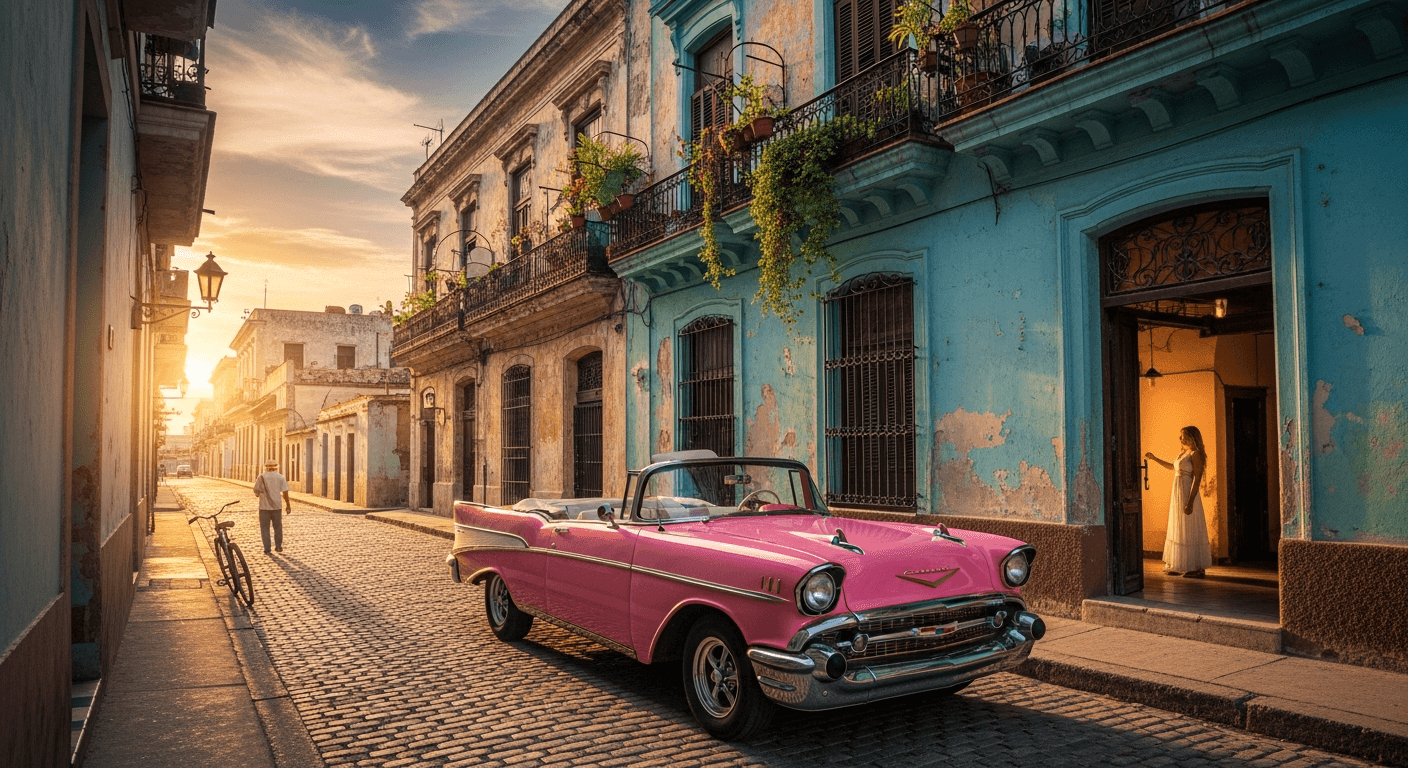
There's a particular quality to late afternoon light in Cuba—the kind that turns crumbling colonial facades into amber, that catches the rust on vintage American cars and makes it look like art. You notice it first in the streets, the way it floods between narrow buildings, how it transforms peeling paint into something that feels alive rather than abandoned. This is the light that keeps travelers returning, not because Cuba is pristine or easy, but because it's real in a way that contemporary travel destinations often aren't. The island doesn't perform for you. It simply exists, complex and contradictory, and somehow that honesty becomes magnetic.
Cuba exists outside the velocity of modern tourism. There are no resort chains reshaping coastlines, no Instagram-optimized experiences manufactured for social feeds. Instead, there's the genuine chaos of a place that has developed along its own terms for sixty years—a living archive where time moves differently, where conversations still happen in doorways, where music isn't background ambiance but the substance of daily life. That's what draws people back, again and again. Not the idea of Cuba, but Cuba itself.
1. Old Havana's Waterfront at Dusk
The Malecón at sunset is neither postcard nor performance—it's where Havana breathes. Locals lean against the seawall, couples share small gestures, musicians appear with instruments as light softens to gold. What makes this moment resonate isn't the architectural decay (though that's undeniably present), but the continuity. Your grandmother's grandmother likely stood in this same spot, watching the same sea. The buildings behind you—some barely standing—hold stories in their stones. Best visited in winter months (November through March) when the light lingers longer and the heat doesn't demand immediate escape. Photography moment: position yourself against the weathered wall with the city's silhouette behind. The texture of deterioration becomes texture of history. Practical note: the Malecón can feel unsafe after dark; arrive early and depart before dusk fully surrenders to night.
2. Trinidad's Cobblestone Silence
Trinidad stopped in 1850-something, architecturally speaking, and the town is unapologetic about it. Red tile roofs, painted wooden shutters, streets so narrow that sunlight never quite reaches street level. Walk here at midday when tourist groups have retreated to restaurants, and you'll find something rare: a colonial town that hasn't been sanitized for consumption. The Museum of the Fight Against Bandits occupies a former convent—the context matters here, the weight of history doesn't dissolve just because it's now a museum. Best in spring (April-May) when crowds thin but weather remains cooperative. Insider observation: the Plaza Mayor is beautiful, yes, but the real experience happens in the streets radiating outward, where residents actually live their lives in these impossibly romantic spaces. Practical consideration: hire a local guide for the Manaca Iznaga valley walks outside town—they offer perspective you won't find in guidebooks.
3. Viñales Valley's Agricultural Simplicity
Mogotes—those dramatic limestone formations rising from tobacco fields—shouldn't work. Geologically, they seem implausible. But they exist here, and farmers work around them as though monumental geology is just part of the commute. The valley hasn't industrialized its agriculture; oxcarts still pull loads, families still hang tobacco leaves to cure in hand-built barns. There's nothing cutesy about this—it's simply how farming happens here. Visit in late autumn (October-November) when tobacco harvest begins and the valley's purpose becomes visible. Photography moment: early morning mist around the mogotes, before clarity fully arrives. Practical insight: stay in local casas rather than resort compounds—the difference in experience is profound. One meal prepared by your host family will teach you more about Cuban food culture than any restaurant.
4. Cienfuegos' Bay-View Sophistication
Cienfuegos announces itself differently from other Cuban cities. There's a Parisian aspiration here—wide avenues, a proper plaza, proportions that suggest urban planning rather than organic growth. The bay provides a natural anchor; watching the light reflect off water at the Prado feels like standing in a 19th-century engraving that somehow remains alive. The city deserves a full day of wandering without agenda. Best in dry season (December-April). Insider tip: the working waterfront near the castle ruins is where real life happens—fishermen, informal trade, the actual function of the city rather than its carefully tended appearance. Most tourists never venture there.
5. Santiago de Cuba's Musical Roots
Santiago pulses differently than Havana. The city is more African in its cultural resonance, more Caribbean in its rhythm. Walk through the compact colonial center and you'll hear music pouring from doorways, from bars, from living rooms. This isn't performed music—it's woven into the architecture of daily life. The Carnival in summer is extraordinary if you can tolerate the heat and crowds, but honestly, a regular Saturday night at a local venue offers something more authentic. Visit in winter if possible; the heat in Santiago can be genuinely punishing. Photography moment: musicians in mid-performance, face concentrated and eyes closed—capture the moment music becomes prayer rather than entertainment. Insider note: eat at state-run cafeterias rather than private paladares if you want to understand contemporary Cuban food culture and economics.
6. Cayo Coco's Contradictory Beauty
A string of barrier islands with sand that looks artificially white, waters that seem color-graded. Cayo Coco exists in tension—it's where mass tourism concentrates, yet the beaches genuinely transcend resort marketing. The key is staying outside the all-inclusive compounds, taking a scooter ride to the island's far ends where development thins and the space feels like actual Caribbean coastline rather than product. Best December through April. Practical reality: this is where you go for oceanic beauty without pretense of discovering anything. It's the accessible reward after exploring more complex parts of the island.
7. Santa Clara's Mausoleum Contemplation
The Monument to Che Guevara rises outside the city proper—a gleaming marble figure against the sky, surrounded by the enormous mausoleum where his remains rest. It's unavoidably political, undeniably powerful, and worth confronting directly. Inside the museum, the artifact collection traces the campaign through careful curation. The experience challenges you to sit with complexity rather than collapse it into simplicity. Best visited in morning light when crowds are minimal. Insider perspective: stay in the city proper afterward and eat lunch at a modest restaurant; the contrast between the monument's monumentality and the actual texture of ordinary Cuban life clarifies something important.
8. Baracoa's Caribbean Exoticism
The easternmost city, isolated from the western island for decades, Baracoa developed its own cultural flavor—more tropical, more Afro-Caribbean, less embedded in American-Spanish colonial narrative. The Yumuri River descends through lush vegetation; the beaches have sand the color of cocoa. This isn't Instagram Caribbean—it's too genuine for that. Best in summer (though hot) for the full lushness of vegetation; December-March if you prefer comfort. Practical note: getting here requires commitment (a challenging mountain drive or a flight), which is precisely why it's been preserved differently from more accessible destinations.
9. Guardalavaca's Coastal Generosity
North coast beach town—less developed than western resorts, more atmospheric than you might expect. There's a sweetness here, a Caribbean ease that feels earned rather than manufactured. The all-inclusive resorts exist but haven't swallowed the town whole. Walk away from the resort zones and find actual beaches, actual local restaurants, actual commerce that doesn't depend on tourism. Winter months (January-March) offer perfect beach conditions.
10. Matanzas' Overlooked River City
Tourists rush through en route to Varadero, which is exactly why Matanzas matters. Two rivers converge here, creating a natural harbor that shaped centuries of history. The city has architectural dignity without pretense, a riverfront that's genuine rather than landscaped. Practically speaking, you need a car to get here, which eliminates casual tourist traffic. The regional park outside town (Los Terrazas) offers cave systems and waterfalls if you need structured beauty.
Getting Around, Timing, and the Texture of Movement
Traveling in Cuba means surrendering to a slower rhythm. Buses run on schedules that prioritize locals over tourists; trains operate with a charming unreliability. Hire a car with a driver if budget allows—the conversation during hours of driving between cities teaches you more about contemporary Cuba than any museum. Seasons matter: November through April offers perfect weather and lower heat; May through October brings rain and tremendous humidity. If you travel in hurricane season (June-November), expect weather drama but also significantly fewer tourists.
Havana's neighborhoods each have distinct character. Centro Havana feels lived-in and complex; Vedado has intellectual life and university energy; Playa requires more time but reveals itself generously. Stay in casas particulares (private homestays) rather than hotels when possible. The families renting rooms care about your experience—they're not trained hospitality workers but actual humans sharing their homes. That difference is everything.
Etiquette matters subtly. Cubans are proud and generous; they appreciate genuine curiosity more than admiration. Ask questions rather than offering praise. Never photograph people without explicit permission. Understand that the political and economic dimensions of Cuban life are complex—resist the urge to solve them in conversation.
Following the Traveler Routes
On Touratu's interactive map, you can trace the routes other travelers have carved through Cuba—not just the major sites but the neighborhood walks, the untouristed restaurants, the routes locals themselves prefer. Layer the visual discoveries from travelers who've recently explored these streets, and you'll find patterns that no guidebook quite captures.
Why People Return
Cuba resists the modern travel imperative to discover and consume and move onward. It demands something different—actual attention, willingness to be uncertain, acceptance that everything won't resolve neatly. Return visitors understand this. They come back not to photograph proof of being there, but to sit with the island's contradictions, to let the light change their understanding of what travel can be. The crumbling buildings aren't tragic—they're evidence of time itself. The music isn't background—it's language. The conversations in doorways aren't quaint—they're actual human connection. That's what brings people back, again and again.
Loading activities…
