
Dudhwa and Pilibhit Tiger Safari Guide
Safari
Forest Safaris in Uttar Pradesh: Dudhwa and Pilibhit Beyond the Tourist Trail
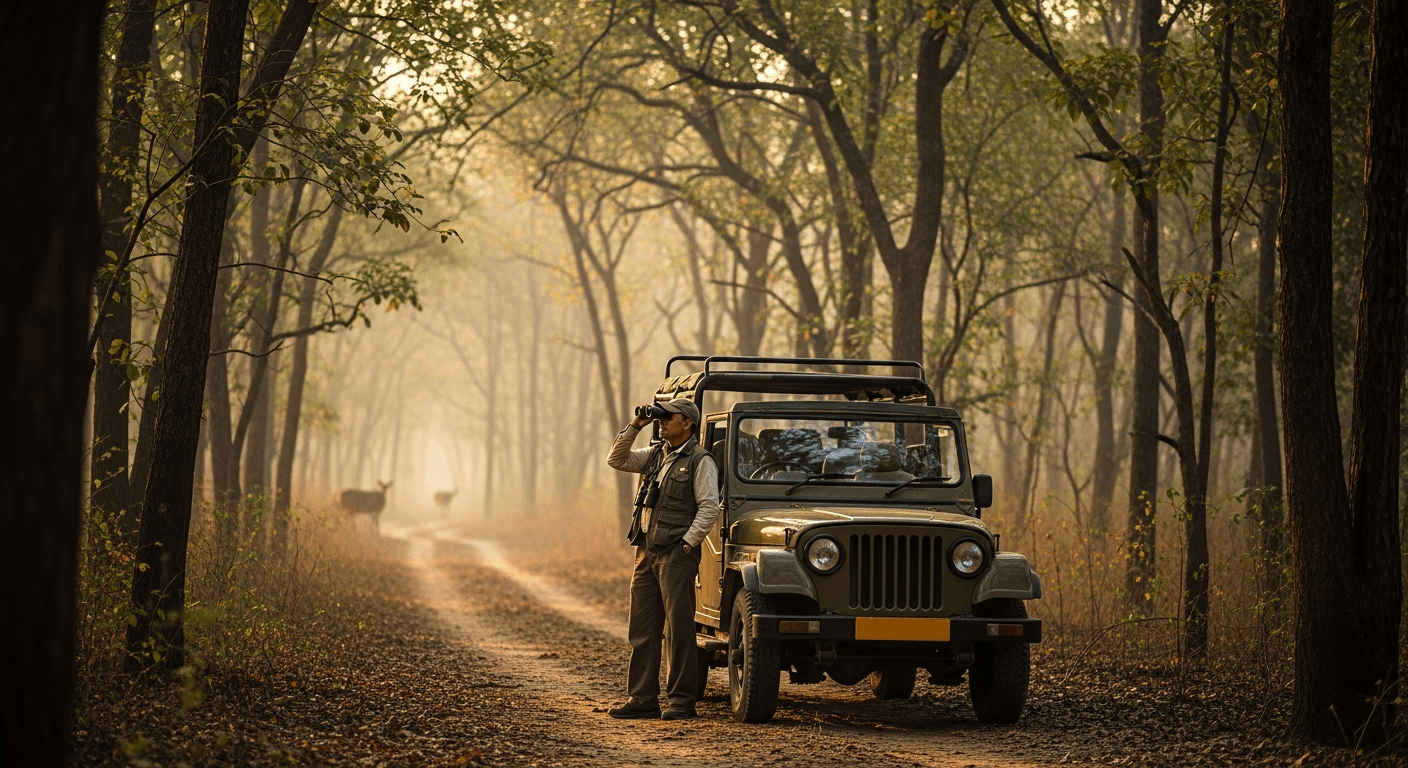
The jeep lurches forward across a dried riverbed, dust coating everything in pale ochre. Your guide, Prakash, cuts the engine abruptly. Ahead, barely visible against the sal forest's texture, a Bengal tiger walks parallel to the track—unhurried, utterly indifferent to your presence. The moment lasts perhaps ninety seconds. Then it melts into shadow. You didn't photograph it. You were too busy holding your breath.
This isn't your typical Indian wildlife experience. There's no dramatic orchestral soundtrack, no manufactured wonder. Just the real, slightly uncomfortable thrill of being in a landscape where you're not the dominant species.
Dudhwa National Park and Pilibhit Tiger Reserve sit in western Uttar Pradesh like a well-kept secret that travellers often skip while racing toward the Taj Mahal. They're working forests—functional ecosystems rather than manicured preserves—and that distinction matters enormously if you actually want to understand why wildlife conservation here is worth your time and money.
What Actually Happens in These Forests
Let's be direct: tiger sightings aren't guaranteed. Over thirty years of visiting Indian national parks, I've learned that wildlife tourism thrives on tension—the probability balanced against the unpredictable. You might spend four mornings on safari and see leopards, wild boar, and sambhar but no tiger. You might see one on your first afternoon. The outcome depends on seasonal patterns, animal movement, and luck's capricious arithmetic.
What is consistent across both reserves is the forest itself. Dudhwa, established in 1977, spans 490 square kilometres of sal forest mixed with grassland. Pilibhit, designated a tiger reserve in 2014, covers 675 square kilometres and represents something ecologically valuable—the last substantial terai forest in Uttar Pradesh. These aren't boutique protected areas shaped for Instagram. They're working landscapes where forest departments manage grazing, monitor poaching, and conduct ongoing research.
The safari experience differs markedly between the two. Dudhwa operates as a more accessible entry point. The park sits closer to the town of Lakhimpur-Kheri, permits are more straightforward to arrange, and the infrastructure—basic though it remains—is more established. You'll stay in government forest rest houses or private eco-lodges clustered nearby. The forest itself is drier than Pilibhit, with more open grasslands where wildlife spotting becomes a matter of patience and early morning positioning.
Pilibhit demands more commitment. The reserve restricts visitor numbers aggressively, maintains limited accommodation within park boundaries, and requires advance bookings through formal channels. This rigidity—which frustrates many travellers—is precisely what's preserved its ecological integrity. The fewer visitors navigating the forest, the less disruption to natural patterns. What you gain in exchange is a genuine sense of entering a functioning ecosystem rather than a theme park.
Both parks harbour the entire terai megafauna roster: tigers, leopards, wild elephants, Indian rhinoceros (in Dudhwa), wild boar, and various deer species. The bird life alone justifies the visit for ornithologists—over 450 species including Bengal floricans, crested serpent eagles, and sarus cranes. But the real value isn't the species checklist. It's understanding how these animals exist in their actual habitat, moving through landscapes shaped by monsoon cycles, prey availability, and territorial imperatives rather than exhibit design.
Planning the Practical Reality
Best time, honestly: November through February. The post-monsoon period offers cooler temperatures, better visibility, and animal concentration around water sources. October can work if you don't mind humidity. Avoid June through September—the monsoons render roads treacherous and wildlife spotting becomes an exercise in frustration. March and April heat intensifies rapidly, making early morning the only viable safari window.
Duration: Allocate a minimum of three days—two full days of safaris with a travel day. That's the threshold where the forest reveals itself beyond random wildlife encounters. Four days is optimal. Less than three feels hurried; more becomes repetitive unless you're seriously invested in bird photography or botanical documentation.
Getting there: Dudhwa sits approximately 110 kilometres from Lakhimpur-Kheri, accessible via Delhi (570 km, 10-11 hours) or Lucknow (270 km, 5-6 hours). The train option exists—Lucknow connects to major Indian cities—but onward transport requires arranging taxis. Pilibhit lies further north, closer to the Nepal border, and involves similar logistics from Lucknow or Dehradun.
Accommodation and booking: This requires advance planning. Dudhwa's forest rest houses book through the Uttar Pradesh Forest Department (often requires connections; a travel operator smooths this considerably). Private lodges like Tiger Camp offer more straightforward reservations. Pilibhit's limited accommodation—primarily forest department facilities—demands bookings weeks ahead. Neither location offers the luxury amenities of tiger reserves in Rajasthan or Madhya Pradesh. Expect functional, occasionally creaking colonial-era infrastructure.
Crowds and reality: Unlike Ranthambore or Bandhavgarh, you won't compete with fifty jeeps for a tiger sighting. Safari groups rarely exceed six people per vehicle. The trade-off is isolation—you're relying on a small team of guides with deep local knowledge rather than a support structure of restaurants, gift shops, and evening entertainment. Bring books. Expect long stretches between wildlife encounters. This appeals to certain travellers and thoroughly frustrates others.
Cost baseline: Budget ₹8,000-12,000 daily for accommodation, safaris, and meals at Dudhwa (including park permits and guide fees). Pilibhit runs slightly higher due to permit restrictions and limited facilities. This remains remarkably affordable compared to Indian wildlife reserves' premium market segments.
The Neighbouring Context
Kalagarh Dam, approximately 40 kilometres from Dudhwa, functions as both a water engineering project and wetland ecosystem. The dam's reservoir attracts waterfowl, particularly during winter migration. It's a half-day excursion if you're extending your trip, offering landscape variation though lacking Dudhwa's predator appeal.
The Nepal border sits close enough that some lodges arrange cross-border day visits to Bardia National Park. This involves bureaucratic navigation and additional permits but provides access to a reserve with different animal populations and forest composition. It's viable only if you have extra days and patience for administrative processes.
Lucknow itself, 270 kilometres south, exists as a logistical hub rather than compelling destination. The Residency holds historical weight if you're interested in 1857 Rebellion context, and the city's Awadhi cuisine merits a day of culinary exploration. But most visitors pass through rather than linger.
Is This Worth Your Time?
The honest assessment: these reserves appeal to a specific traveller profile. You need patience. You need comfort with uncertainty. You need to find wilderness intrinsically valuable rather than as a backdrop for social media validation. If your wildlife experience ideal involves guaranteed sightings, luxury lodges, and evening wine service, the Ranthambore-Bandhavgarh circuit serves you better.
But if you're interested in how wildlife conservation actually functions—the research, the anti-poaching operations, the ecological restoration—Dudhwa and Pilibhit illustrate the work honestly. You'll encounter dedicated forest officers, former poachers now employed as guides, and ecological research that determines management strategies. The forest becomes pedagogical rather than purely recreational.
The tigers, when glimpsed, feel earned. The elephant herds moving through grassland at dusk hold weight beyond visual spectacle. The silence during midday—when animals shelter from heat—teaches something about rhythm different from managed reserves.
Will you see everything you hope to? Probably not. Will you understand the terai ecosystem's complexity and fragility? Absolutely.
Quick Facts
- Best season: November–February
- Park access: Dudhwa more accessible; Pilibhit requires advance planning
- Distance from Lucknow: 270 km (Dudhwa), 310 km (Pilibhit)
- Visa/permits: Indian nationals need state forest permission; foreigners require additional NOC clearance (advance planning essential)
- Wildlife probability: Tiger sightings roughly 40-50% of safaris (seasonal variation significant)
- Accommodation level: Functional to comfortable; luxury unavailable
These forests won't present themselves as spectacle. They'll demand participation, patience, and genuine curiosity about how ecosystems function when humans step back. That specificity—the refusal to perform for casual visitors—is precisely what makes Dudhwa and Pilibhit authentically valuable.
Explore the routes between these reserves and nearby towns using Touratu's interactive map, where you can visualize safari routes, accommodation locations, and travel logistics. Check out our travel videos documenting the forest experience—from early morning safari movements to the logistics of navigating permit processes. Understanding the practical reality before you arrive transforms the experience from surprise adventure into informed exploration.
Loading activities…
