
Why Travelers Keep Coming Back to 20 Indian Places
India: Why Travelers Keep Coming Back to These 20 Places
There's something about India that rewires you. It doesn't happen in the first week or even the first month. It happens somewhere between a chai served in a chipped glass at a Mumbai train station and the moment you realize you've stopped checking your phone in Varanasi. The country doesn't welcome you; it absorbs you. And then it calls you back.
This isn't romance speaking. After decades of travelers crossing its thresholds, India has earned a different kind of loyalty—one built on genuine encounters rather than postcard moments. These aren't the places you photograph and leave. They're the places that change your relationship with stillness, spirituality, color, chaos, and what it means to be present.
What makes a place worth returning to? It's the layers. It's the neighborhood tea seller who remembers your order. It's the way light moves through a centuries-old courtyard at 5 PM. It's discovering something new in the same street you walked yesterday.
The Places That Keep Calling
1. Varanasi — The Oldest Living Questions
There's no diplomatic way to describe Varanasi. It's overwhelming, sacred, chaotic, intimate, and strange all at once. The Ganges doesn't flow here—it breathes. Cremations happen at dawn while pilgrims bathe meters away. Death and devotion share the same ghat stones.
What keeps travelers returning isn't the spiritual tourism angle. It's the realization that Varanasi operates on a logic entirely its own. The confusion you feel on day one becomes clarity by day four. You begin to understand that the seeming disorder is actually profound order—a city organized around metaphysical principles rather than municipal ones. You return because you're still decoding it.
Best time: October to March. November is magnetic.
Insider moment: Stay in the old city, not the Cantonment. Take a pre-dawn boat ride alone. Sit with it.
Photography: The golden hour from the water, cremation pyres at dusk (photograph respectfully or not at all), narrow alleyway portraits at noon when light becomes architecture.
Practical note: Hire a guide for the ghats, but separate from the crowds. Walk the back lanes at 6 AM when locals own the space again. Eat where pilgrims eat, not where tour groups eat.
2. Jaipur — Where Symmetry Still Matters
The Pink City isn't romantic in the conventional sense. It's rational. Planned by Maharaja Sawai Ram Singh in 1727, Jaipur's grid is so deliberate it feels almost meditative. Pink buildings, straight avenues, the same dusty rose everywhere.
People return to Jaipur for the paradox: a meticulously designed city that somehow feels intimate. The City Palace still operates as a residence. The bazaars follow a logic that makes sense once you stop fighting it. You're not discovering hidden Jaipur; you're understanding visible Jaipur.
Best time: November to February.
Insider observation: The real city is in the neighborhoods behind the main bazaar. Skip the Hawa Mahal crowds entirely and notice the architecture of ordinary streets.
Photography: Wide shots of the City Palace courtyard, the geometry of shop-fronts at dusk, textile merchants at work.
Practical: Take an autorickshaw beyond the tourist circuit. Eat at small restaurants in the bazaar (Lassiwala is a rite). Visit the Jantar Mantar at opening time, before crowds.
3. Udaipur — Water as Philosophy
A city built on lakes where mirrors reflect temples. Udaipur is the kind of place that makes you understand why people write poetry badly. But here's why it deserves returns: the romance is incidental. The actual experience is about how a ruler chose to build a city around water instead of stone.
The Lake Palace isn't the point. The point is understanding how water defines movement, light, and daily life. Take the boat routes locals use, not the tourist ones.
Best time: September to March.
Insider move: Rent a bike and circle the lakes at dusk. No destination, just the perimeter.
Photography: Temples reflected in still water at dawn, narrow streets leading to water-level views, the City Palace at angle rather than straight-on.
Practical: Stay near Jagdish Temple, not the lake. The real Udaipur is in the residential neighborhoods, the small temples, the chai stalls where nothing is for sale.
4. Jodhpur — The Blue City's Architecture
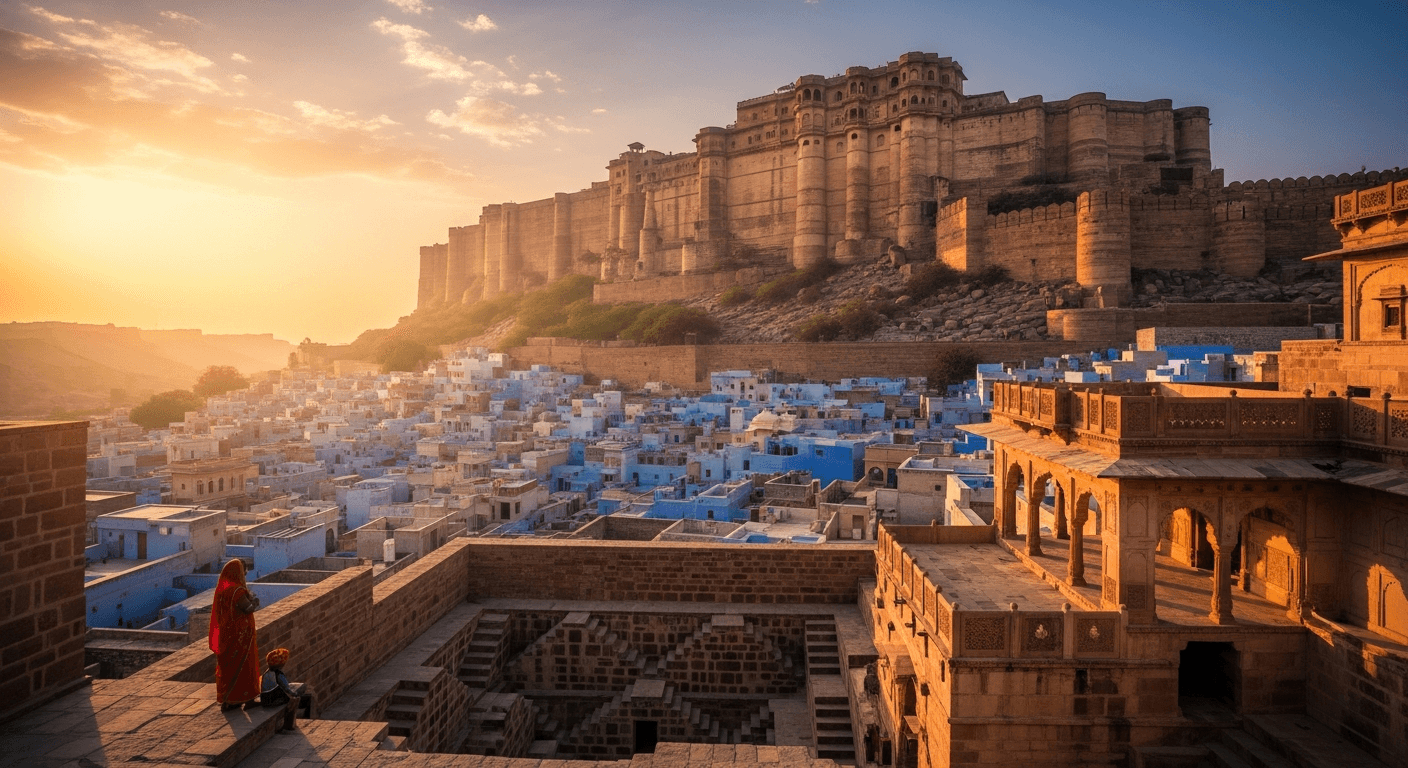
Indigo isn't decoration here. The blue paint protects houses from heat and, historically, marked Brahmin neighborhoods. Jodhpur painted itself blue for practical reasons. Travelers return to understand this distinction.
The fort is grand. The streets are where the revelation happens. You wander blue lanes that seem designed to confuse outsiders and protect residents. On your third return, you finally find the chai vendor who speaks English but pretends not to.
Best time: October to February.
Insider insight: The blue is fading. Some locals are repainting in conventional colors. You're watching heritage vanish and reconstitute itself simultaneously.
Photography: Overhead views of the blue grid, doorways and windows in sharp detail, the contrast of saffron or orange textiles against blue walls.
Practical: Hire a local guide for one walk, then explore solo. The Clock Tower Market is authentic; the rooftop restaurants around Mehrangarh Fort are for tourists.
5. Pondicherry — The French Afterglow
A Tamil Nadu coastal town that France lingered in. Tree-lined boulevards, bougainvillea spilling over colonial walls, and a waterfront promenade where time genuinely seems slower. Pondicherry isn't trying to be European; it's digested Europe into something entirely its own.
People come back because it's a place where you can sit for hours with a book and a coffee without anyone asking if you need anything. The spiritual institutions draw seekers, but the actual draw is simpler: a town that lets you be still.
Best time: October to March.
Insider moment: Walk the backstreets at dusk. Watch fishing families at the harbor. The real Pondicherry is in the Tamil neighborhoods, not the French Quarter (though the French Quarter has its quiet appeal).
Photography: Pastel-washed buildings and shadows, the lighthouse at golden hour, spiritual seekers in ashrams during meditation.
Practical: Base yourself for 3-4 days minimum. Eat at small family restaurants in the Tamil areas. Visit Auroville not for spirituality but for the surreal experience of stepping into architectural idealism.
6. Agra — Beyond the Iconic
Yes, the Taj Mahal exists. And no, you won't avoid it. What keeps people returning is the permission to move past the monument. Agra offers the Red Fort, the smaller mausoleums, the Yamuna riverfront, and bazaars where nobody recognizes you.
You return because your first visit was filtered through expectation. The second visit is yours.
Best time: November to February.
Insider observation: The Taj at sunrise is less crowded than sunset and somehow more intimate. Skip the official viewpoints; find your own angle.
Photography: The Taj from unusual perspectives, the intricate marble work up close, the Red Fort's architecture without figures.
Practical: Stay in Agra 2-3 days. Escape to the east bank of the Yamuna. Eat at Pinch of Spice or street food near the bazaar.
7. Pushkar — The Sacred Fair's Constant Hum
A town that exists in two states: the small spiritual place and the Camel Fair sensation. Most travelers return for the one they missed the first time. The fair happens in November and transforms the landscape into organized chaos.
But Pushkar without the fair is equally profound—a pilgrimage town where Brahma Temple is genuinely revered, where the lake is genuinely sacred, and where tourism is almost accidental.
Best time: November for the fair; May-June for the quiet version.
Insider move: Come during the fair but stay outside the fairgrounds. Experience the spillover energy rather than the official spectacle.
Photography: Camel herds at dawn, Brahma Temple's interiors, pilgrims at the ghats without self-consciousness.
Practical: Book accommodation well in advance. Hire local guides who aren't attached to shops. The vegetarian food here is genuinely exceptional.
8. Kochi — Water and Syncretic Heritage
A port city where spice traders left Portuguese, Dutch, and British fingerprints. The backwaters are the obvious draw, but Kochi's real power is in its compressed history. Walk from a Portuguese mansion to a Jewish synagogue to a Dutch palace to a Syrian Christian church—sometimes in the same hour.
Travelers return because each piece of history is still lived-in, not museumified. People actually pray in these spaces.
Best time: October to March.
Insider insight: The Fort Kochi waterfront is touristy but authentically so. The Mattancherry neighborhood is where the real inheritance lives—antique dealers, spice merchants, families who've been there for centuries.
Photography: Chinese fishing nets at dusk, alleyway doorways and heritage colors, the contrast between old and new structures.
Practical: Stay in Mattancherry, not Fort Kochi. Book a backwater houseboat for one night; they're worth the experience. Eat at locally-run restaurants, not heritage hotels pretending to be museums.
9. Khajuraho — The Temples Beyond Reputation
Built in the 10th century by Chandela rulers, these temples are famous for their erotic sculptures. This notoriety often overshadows the actual revelation: the sculpture quality is extraordinary, the architectural precision is cosmic, and the temples are set in countryside that feels genuinely remote.
You return to Khajuraho when you're ready to see the temples rather than the controversy. Third or fourth visits reveal the astronomical alignments and spatial relationships the builders embedded.
Best time: October to March.
Insider moment: Visit at dawn or dusk when light does the work of revelation. The sculptures and details emerge differently depending on the angle of sun.
Photography: Close architectural details, the temples at different hours (completely different moods), the rural landscape surrounding the temples.
Practical: Hire a knowledgeable guide—preferably an archaeologist or historian. The sculpture isn't prurient; it's cosmological. Visit solo if you can; small groups change the energy significantly.
10. Hampi — The Forgotten Empire's Layers
What was once Vijayanagara, one of the world's largest cities, is now ruins. But "ruins" doesn't capture it. Hampi is a landscape where thousands of stones maintain their original positions, where the Krishna Temple still functions, where monkeys negotiate ancient passages.
The reason for returns: you can't absorb Hampi in one visit. The spatial relationships between structures, the engineering, the sheer scale—it requires multiple days and multiple visits.
Best time: October to February.
Insider observation: Stay in Hampi village, rent a scooter, and make your own route. The official tour circuits miss the architectural relationships that make Hampi comprehensible.
Photography: Wide landscape shots showing the layout, sculptural details on temple walls, sunset from Hemakuta Hill, boulders and architecture in relationship.
Practical: Spend minimum 3 days. Hire guides for specific temples but navigate the landscape independently. The southern parts of the site are less visited and equally significant.
11. Goa — The Complicated Paradise
Goa is easy to dismiss. Beach tourism, parties, hippie clichés. But the actual territory is more complicated: Portuguese colonial heritage, spice plantation history, a unique cultural fusion, and some genuinely remote beaches if you venture beyond the obvious.
People return to Goa when they stop expecting paradise and start paying attention to what's actually there. A coffee plantation. A 400-year-old church. Neighborhoods where nobody speaks English and that's the point.
Best time: December to February.
Insider move: Skip the Baga-Calangute circuit. Go to Arambol, Agonda, or Patnem. Rent a bike and find the back roads. Visit spice plantations in Old Goa.
Photography: Portuguese architecture and decay, beach light at magic hour, plantation canopies, cultural detail shots.
Practical: Stay away from party beaches unless that's explicitly what you want. The real Goa is in the interior villages and smaller beaches. Book guesthouses run by locals, not corporate operations.
12. Darjeeling — The Tea and the Clouds
A hill station where mist is almost a character. Darjeeling is built on impossible slopes where tea gardens cling to mountainsides. The Himalayan range is visible on clear days (rare, which is part of the mystery). You return to Darjeeling because visibility changes everything.
The toy train, the bazaar, the monastic culture, the trekking routes—all secondary to the experience of being at altitude where weather dominates perception.
Best time: September-October and March-May (clear skies more frequent).
Insider moment: Take the toy train, yes, but sit with the passengers, not with other tourists. Spend a morning in the tea gardens at harvest time if you can coordinate it.
Photography: The mist and mountain relationship, tea pickers in morning light, the town's vertical architecture, views from Singamari or Tiger Hill.
Practical: Base yourself 4-5 days. Book a homestay with a family; you'll get knowledge and perspective no hotel provides. Visit tea estates as working spaces, not attractions.
The Navigation of India
Moving through India requires something between patience and surrender. Trains are the nervous system—chaotic by Western standards but deeply logical once you stop fighting the system. The Indian Railways website allows booking in advance; download the Paytm app for instant payments. Between cities, overnight trains are practical and atmospheric simultaneously.
Neighborhoods matter everywhere. The "tourist area" is intentionally separated from actual life. Move slightly off the main drag—two or three blocks in any direction—and you're in the real city. This isn't a matter of authenticity points; it's simply more interesting.
Timing shapes experience entirely. Early mornings (5-7 AM) are when cities reveal their actual rhythms. Evening (5-7 PM) is when light does extraordinary work. Midday is either for rest or for bazaar energy, depending on location. Plan accordingly.
Etiquette is less rigid than it seems. Shoes off in temples, homes, and some restaurants. Ask before photographing people. Vegetarian restaurants exist everywhere; respecting them is straightforward. Right hand for eating and greeting. These aren't rules to resent; they're invitations to participate.
Following the Routes
Touratu's interactive map reveals how thousands of travelers have traced these paths before you—the routes through Jaipur into Pushkar, the Agra-to-Goa trajectories, the slow loops through Tamil Nadu. See where reels were captured, where travelers lingered longest, where the lesser-known photography moments happen. This becomes both navigation and permission to wander your own way.
Why You'll Return
India doesn't answer questions; it multiplies them. Every return is a return to unfinished business with yourself. You might come back for the Taj Mahal the second time, but you'll stay for something unnamed—a conversation with a stranger, a moment of clarity in a crowded street, the realization that you're no longer rushing through experiences.
The places don't change much. You do. And that's why you keep coming back.
Loading activities…
