
Indonesia Travel Guide: 20 Places Worth Returning To
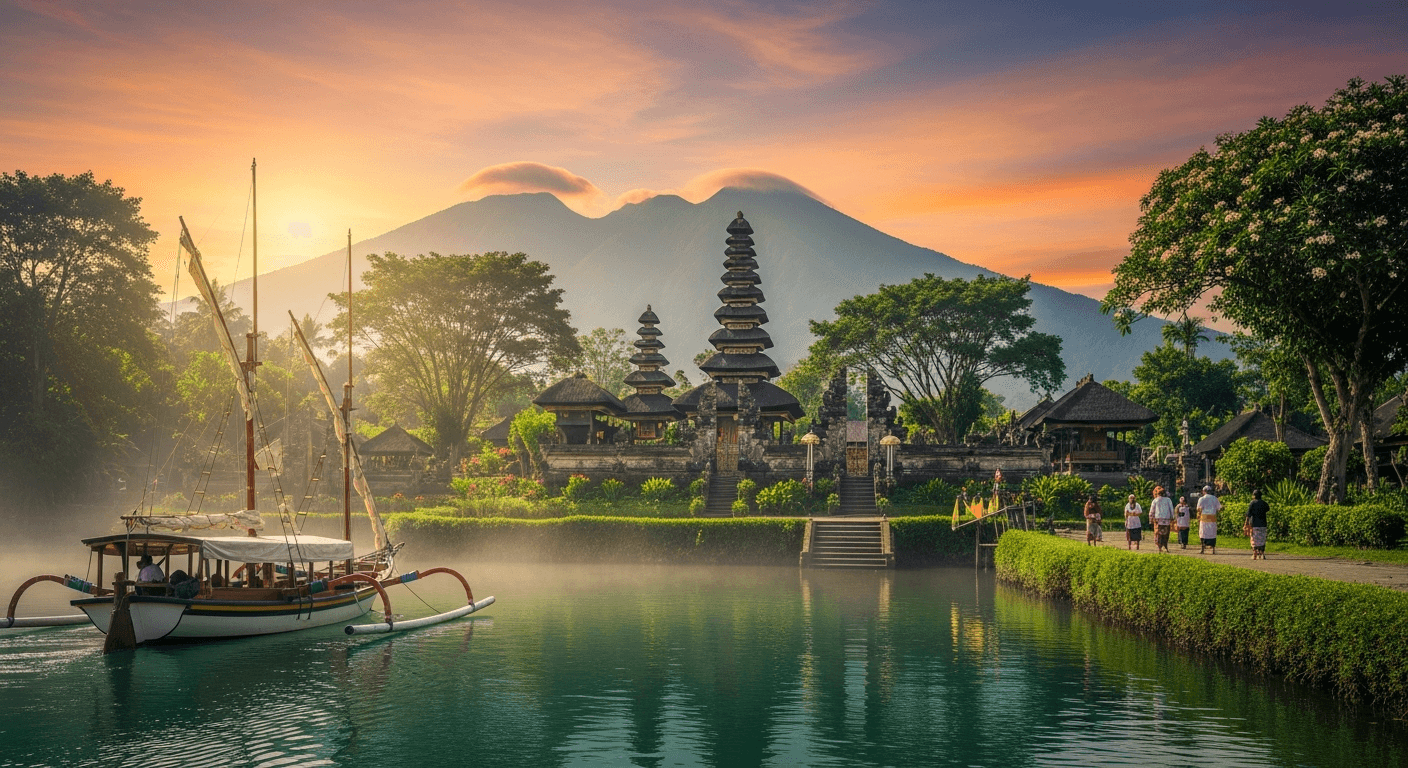
Indonesia: Why Travelers Keep Coming Back to These 20 Places
There's a particular magic to Indonesia that photographs fail to capture—it lives in the pause between monsoon rains, in the way light filters through wet leaves, in the smell of clove smoke curling from a warung at dawn. It exists in the friction between ancient rituals and motorcycle tourism, between islands so small they appear nameless on maps and cities where eight million souls navigate scooters like a choreographed dance. Travelers don't return to Indonesia for postcards. They return because something fundamental shifts after your first monsoon thunderstorm, after you've sat in silence watching a temple ceremony you weren't invited to but somehow belonged to anyway.
This archipelago demands a different kind of attention than most destinations. It refuses to be rushed, won't perform on demand, and reserves its deepest moments for those willing to sit still long enough to notice them. Over years of traveling through these islands, certain places reveal themselves as anchors—not because they're the most famous, but because they change the traveler. These are the destinations that explain why people board planes again and again to return.
1. Ubud, Bali — Where the Jungle Thinks
Ubud doesn't whisper; it speaks in layers. The morning mist hasn't lifted when the sound of water begins—irrigation channels singing through rice terraces, a sound so constant it becomes silence. Beyond the inevitable tourist corridors, Ubud rewards those who wander into its residential neighborhoods before 7 a.m., when locals perform their own rituals and the town belongs to itself.
The real texture of Ubud lives in its markets, particularly Pasar Ubud, where prices are negotiated with genuine warmth rather than performance. The surrounding galleries and artist studios reveal something crucial: Ubud is still a working creative community, not just a museum to creativity. Best time: April to October, though November brings fewer crowds and a particular quality of light.
The photograph moment: Pre-dawn on a rice terrace path, when the paddies reflect the sky like dark mirrors.
Insider observation: Skip the monkey forest at peak hours. Visit at 6 a.m. or 5 p.m., when monkeys are less interested in tourists.
Practical tip: Stay in neighborhoods like Penestanan or Campuhan rather than central Ubud; you'll find better rates and genuine interactions.
2. Komodo National Park — An Encounter with Prehistory
The dragon isn't a symbol here; it's a neighbor. Walking through tall grass knowing a Komodo dragon can move at thirty kilometers per hour introduces a particular kind of clarity to the present moment. This isn't tourism packaging itself as adventure—this is actual wildness, mediated only by a guide's knowledge and your own steady nerve.
The islands shift the conversation between experience and photography. Most visitors focus on Rinca Island, but Padar Island offers different dragons and far fewer crowds. Best time: May to December, with June to August being driest and most challenging for heat tolerance.
The photograph moment: A dragon crossing your path at 200mm focal length, dust rising from its prehistoric gait.
Insider observation: Bring serious sun protection and water. The landscape is exposed, and guides won't slow their pace for comfort.
Practical tip: Hire private guides through your accommodation rather than joining large group tours.
3. Sembalun, Lombok — Elevation and Silence
While climbers obsess over the summit of Rinjani, the real revelation happens in Sembalun village, sitting at altitude where the air thins and the world quiets. Tobacco farmers tend their crops on terraced slopes that fall away toward infinity. Tourism hasn't quite discovered this place, which means you can rent a wooden room and watch sunrises that feel personal.
The trek from Sembalun toward Rinjani's crater rim is less trafficked than the southern route, offering solitude and space for your own thinking. Best time: May to September, when the crater isn't obscured by clouds and humidity sits manageable.
The photograph moment: A farmer silhouetted against morning mist, working slopes that have been worked for generations.
Insider observation: Food options are limited—carry snacks you actually enjoy. The local food is substantial and good but repetitive over consecutive days.
Practical tip: Arrive with acclimatization time. Starting a trek from 1,200 meters requires a day or two of adjustment.
4. Banda Islands — A History Written in Nutmeg
These islands carry weight. Banda was the epicenter of the spice trade that rewrote European history, and the colonial architecture still stands as a palimpsest of conquest. Walking through Fort Belgica feels like walking through the grammar of power—how empires spoke in stone, cannons, and distance.
The islands work best as a slow rotation: boat days between islands, snorkeling in waters so clear you lose depth perception, diving sites where the volcanic wall drops into darkness. Best time: October to April, when seas are calmest and visibility is highest.
The photograph moment: Fort Belgica's cannon facing empty sea, with a single island on the horizon.
Insider observation: Fly in from Makassar, not from Bali. The journey itself becomes part of the experience.
Practical tip: Book accommodation and diving through one operator; independent logistics here are unnecessarily complicated.
5. Kuta Beach, Lombok — Pink Sand and Authenticity**
Before commercialization arrives—and it will—Kuta holds something genuine. The pink sand comes from coral fragments, catching light differently than ordinary beaches. The village behind the beach runs on local rhythms; surfers come for the waves, but most people stay for the unexpectedness.
Unlike Bali's Kuta, Lombok's version still has its roots. You'll share the beach with fishermen, other travelers, and the occasional horse. Best time: June to August for reliable swell and dry conditions.
The photograph moment: Late afternoon light on pink sand with surfers becoming silhouettes.
Insider observation: Eat at warungs owned by locals, not tourist-facing restaurants. Better food, better prices, better conversations.
Practical tip: Rent a scooter and explore westward along the coast—beaches empty out quickly and reward exploration.
6. Raja Ampat Islands — A Different Kind of Paradise**
These islands don't offer the aesthetics of postcard beaches. Instead, they offer something increasingly rare: genuine wonder at natural systems still largely intact. Manta rays gather in certain channels, coral formations surprise divers with their complexity, and the light here seems to navigate differently through the water.
The region operates on different logistics—you're basing from Sorong or Waisai, diving from live-aboard boats or day trips from island-hooked villages. Best time: October to March for flattest seas and clearest water.
The photograph moment: Manta ray gliding beneath you, wing tips moving like slow contemplation.
Insider observation: The drive to Raja Ampat is as significant as arrival. This is remote and it should feel that way.
Practical tip: Hire local guides rather than resort instructors; they know the seasonal patterns that make each area remarkable.
7. Yogyakarta — A City That Keeps Its Secrets**
Yogyakarta presents itself as the gateway to Borobudur, but the city itself holds more texture than most visitors notice. The street food transforms after dark, the university district hums with intellectual energy, and the local arts scene operates without needing tourists to validate it.
The palace (Kraton) still functions as a royal residence, which means it's not quite a museum—it's a living institution with its own protocols and seasons. Best time: May to September, when the dry season makes exploration comfortable.
The photograph moment: Malioboro Street at 6 a.m., before commerce arrives, with morning light turning the street into something almost painterly.
Insider observation: Learn the word "jam karet" (rubber time)—things begin when they begin, and hurrying is exhausting.
Practical tip: Stay in Kampung Taman or Paninsulaan neighborhoods rather than central tourist areas. You'll find real Yogyakarta.
8. Borobudur Temple — Scale and Devotion**
The statistics—five million stones, 505 Buddha statues, eight levels—flatten what Borobudur actually is. Standing at the base, you're not encountering a monument; you're experiencing a three-dimensional mandala designed to transform your spatial consciousness. The architecture teaches; the walk itself is the instruction.
Visit at sunrise not for photographs but for the specific quality of solitude that comes before crowds. Watch the symmetry reveal itself as you ascend. Best time: May to September for reliability; June to July for the fewest visitors.
The photograph moment: A single Buddha face emerging from stone, backlit by early sun.
Insider observation: The terraced walkways are designed to be walked barefoot—many visitors remove shoes once inside.
Practical tip: Hire a guide who knows the astronomical alignments. The temple's orientation teaches geometry through architecture.
9. Gili Islands — The Slowness Argument**
The Gili Islands argue for a particular kind of travel: no motorized vehicles, boats that leave when full, no schedule. This isn't a limitation—it's a feature. Gili Air, the largest of the three, still functions as a working fishing village alongside tourism, creating a rhythm that feels more like life than vacation.
Snorkeling off the beaches yields coral and turtle encounters without the dramatic deep-water intensity of Raja Ampat. Best time: May to November, though the islands work year-round.
The photograph moment: A green sea turtle grazing on seagrass in two meters of water, utterly indifferent to your presence.
Insider observation: Rent a bicycle for the hour-long loop around Gili Air—you'll see where locals actually live.
Practical tip: Bring cash and small denominations. ATMs exist but are temperamental, and many places still prefer rupiah to cards.
10. Candi Dasa, Bali — The Quieter East**
While Ubud and Seminyak perform for tourists, Candi Dasa exists for itself. This fishing village turned gentle resort town offers dramatic limestone cliffs, working rice paddies that begin fifty meters from your accommodation, and restaurants where you're the only customer. The beach eroded decades ago, which kept commercialization at bay—a geographical accident that preserved authenticity.
Diving here accesses lesser-known sites; hiking leads to village terraces few tourists traverse. Best time: April to October for dry conditions.
The photograph moment: A sunrise from your room overlooking rice paddies in mist, coffee steaming in the foreground.
Insider observation: Learn the names of warungs' owners. Relationships here are genuine transactions that expect return visits.
Practical tip: Base yourself here to explore the quieter side of Bali—Seminyak is ninety minutes away but feels like another country.
Getting Around, Finding Your Pace
Indonesia requires negotiation with its own geography. Ferries don't run on posted schedules; they run when they're full. This sounds frustrating until you realize it creates natural pacing—you wait, you sit, you talk to other travelers and locals sharing your journey. Scooters are how most people move through islands, and they demand respect rather than fear; ride defensively, assume everyone else is on their own timeline, and the roads reveal themselves as organized chaos rather than danger.
Neighborhoods matter more than you'd expect. Staying near local markets changes which restaurants you find, which conversations happen, which rhythms you align with. Tourist clusters exist for convenience, but they're also where the most generic versions of Indonesia live. Move two blocks away from the established routes and the islands speak differently.
Timing here isn't about seasons alone—it's about understanding that each place has seasons within seasons. Market days shift according to lunar calendars. Temples have ceremony dates that determine when they feel alive versus empty. Asking locals "When is this place at its best?" yields better answers than guidebooks ever could.
Discover More on Touratu's Interactive Map
The real exploration of Indonesia happens when you zoom beyond these ten destinations into Touratu's interactive map, where thousands of travelers have plotted their own routes, shared reels from moments you haven't imagined, and documented the smaller discoveries between the famous places. Watch how travelers move through these islands, trace the paths that connect them, and see what other adventurers photographed in the spaces between guides' recommended stops.
Why They Keep Returning
Indonesia doesn't let you travel efficiently. It insists on slowness, on sitting with discomfort, on experiencing time differently than your passport country measures it. The islands reward those who argue with their own schedules, who show up ready to change plans based on weather or a conversation overheard at breakfast. This is why travelers keep returning—not because they've conquered a list, but because they've begun to understand how to be present in a place that moves at its own pace. The islands aren't destinations to finish; they're invitations to return to the particular kind of person you become when you're there.
Loading activities…
