
Manikarnika Ghat Varanasi: Visiting India's Sacred Cremation Ground
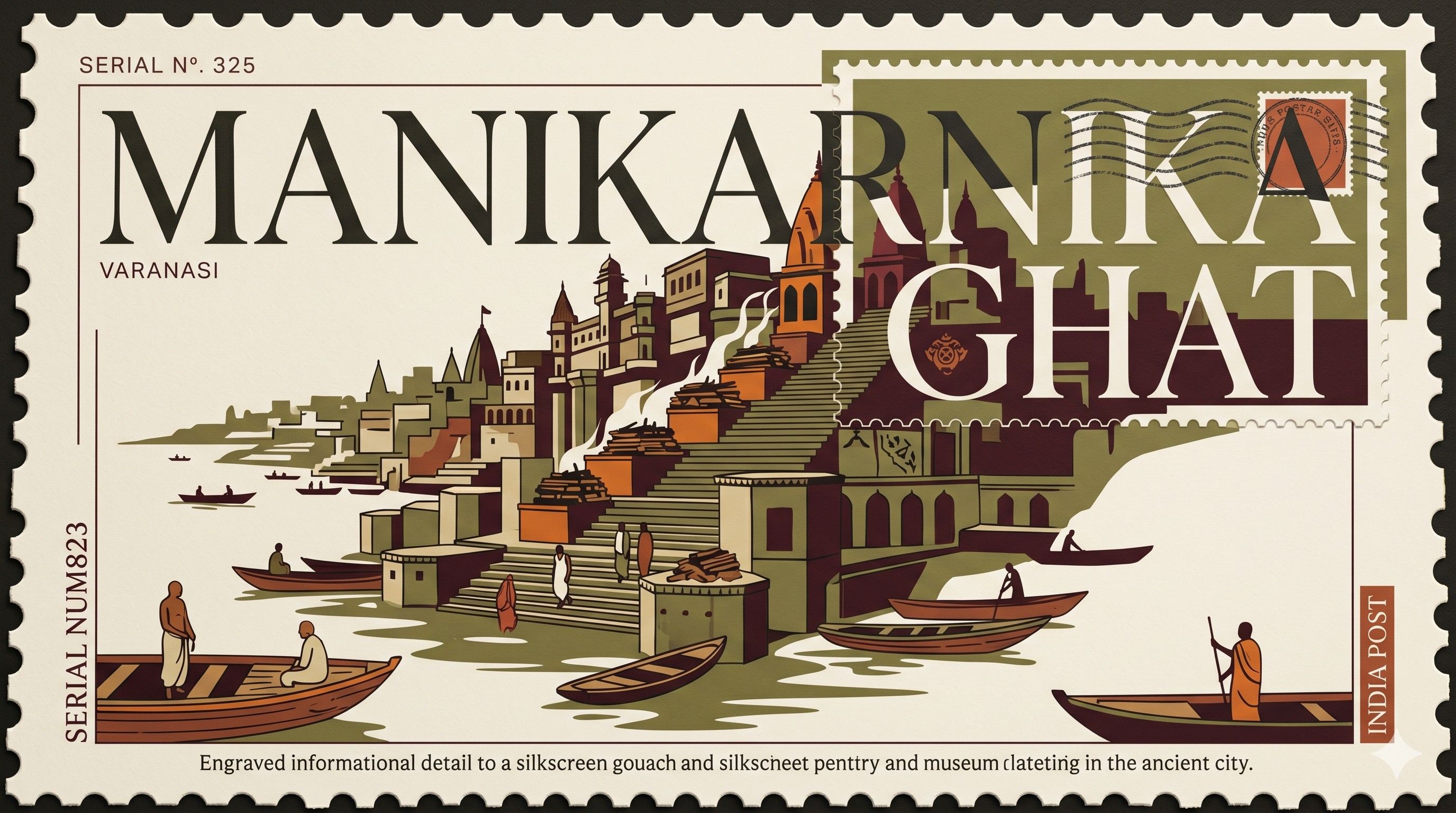
Manikarnika Ghat: Where Fire Never Sleeps in Varanasi
The first thing you notice isn't the flames. It's the smoke — thick, grey-white columns rising against the pink dawn sky, carrying with them something ancient and absolute. I stood on the worn stone steps of Manikarnika Ghat at 5:30 in the morning, watching funeral pyres that had been burning continuously for over three thousand years. Somewhere behind me, temple bells rang. Somewhere ahead, a family was saying goodbye.
This is not a place you visit for beautiful photographs or cultural entertainment. Manikarnika Ghat is where Hindu cremation rituals unfold in plain view of passersby, pilgrims, and yes, travelers — a confrontation with mortality so direct that many visitors find themselves unexpectedly moved, uncomfortable, or both. It remains one of the most spiritually significant sites in India, drawing those who seek to witness something profoundly human rather than merely scenic.
What Makes Manikarnika Ghat Genuinely Extraordinary
Hindus believe that dying in Varanasi and being cremated at Manikarnika Ghat breaks the cycle of rebirth entirely — a direct passage to moksha, liberation from the endless wheel of reincarnation. This belief has kept the fires burning here without interruption for millennia. The ghat's spiritual power isn't legend or marketing; it's living practice, visible every hour of every day.
The architecture tells its own story. Crumbling brick platforms, blackened by centuries of ash and flame, stack upon each other in seemingly haphazard layers. Elaborate old havelis with carved wooden balconies overlook the cremation grounds, their grandeur faded but intact. The famous Tarakeshwar Temple, dedicated to Shiva, sits partially submerged during monsoon months — a reminder that even sacred geography bends to the river's will.
What strikes most visitors is the matter-of-fact atmosphere. There's grief here, certainly, but also a kind of calm acceptance. Families sit together on the steps. Dom Raja workers — hereditary cremation specialists — move with practiced efficiency. Stray dogs sleep unbothered near stacked firewood. Life and death occupy the same space without conflict.
The mythology runs deep. According to Hindu tradition, Lord Shiva's earring (manikarnika) fell here while he carried his wife Sati's burning body across the cosmos. Another version holds that Vishnu dug a pit with his discus to fill with his own perspiration while performing austerities. Either way, this ground has been considered sacred long before historical records began.
What You Can Actually Expect
Arriving by boat offers the gentlest introduction. Most visitors approach from the water during early morning or evening, when the light softens everything and the scale of the ghat reveals itself gradually. You'll see the pyres first as distant orange points, then as distinct fires with figures moving around them, then — as your boat draws closer — as individual ceremonies with families gathered in small clusters.
The smell arrives before details become clear. Wood smoke dominates, mixed with incense, river water, and something else — not unpleasant exactly, but unmistakable. Marigolds everywhere. Stacks of sandalwood and mango wood, sold by weight, waiting near the water's edge.
On foot, the ghat feels more intense. Narrow lanes from the old city suddenly open onto the cremation platforms. You may pass a funeral procession — bodies wrapped in white or gold cloth, carried on bamboo stretchers, accompanied by chanting family members. "Ram naam satya hai" — the name of God is truth — echoes through the alleys as a reminder of the journey's purpose.
The hierarchy of the pyres follows unspoken rules. Those who can afford sandalwood burn near the top of the ghat. Electric crematoriums exist but are rarely used for those who can choose otherwise. Certain categories of people — young children, pregnant women, sadhus, victims of snakebite — are not cremated but immersed directly in the Ganges, their purity already assured.
Photography is prohibited in the immediate cremation area, and this rule should be respected without exception. The restriction isn't about tourism management; it's about basic human dignity. You'll notice most visitors putting cameras away voluntarily before being asked.
The rhythm of the ghat shifts through the day. Early mornings are relatively quiet, with fresh pyres being prepared and night's ashes cooling. By midday, activity increases. Evening brings the most ceremonies, often coinciding with the famous Ganga Aarti at nearby Dashashwamedh Ghat — though Manikarnika's flames continue burning long after the aarti's choreographed lamps are extinguished.
Dom workers may approach visitors, sometimes offering explanations, sometimes asking for donations toward wood for poor families. These interactions can be genuine or transactional; the tone often depends on how you've arrived. Travelers who show quiet respect are generally left alone or engaged thoughtfully.
Planning Your Visit
Timing matters more than you'd expect. The ghat operates around the clock, but early morning (between 5:00 and 7:00 AM) offers the most contemplative atmosphere. Soft light, fewer crowds, cooler temperatures. Evening visits (after 6:00 PM) coincide with peak cremation activity but also with more tourist traffic.
Monsoon months (July through September) partially submerge the lower platforms, pushing ceremonies higher up the ghat. Winter mornings (December and January) bring dense fog that turns the fires into ghostly orange glows — visually extraordinary but cold and damp.
Getting there requires accepting Varanasi's chaos. The nearest major transit point is Varanasi Junction railway station, about 4 kilometers away. Autorickshaws and cycle rickshaws reach the Godowlia Crossing area, from where the ghat is a 10-minute walk through the old city's narrow lanes. Alternatively, boats can be hired from Assi Ghat or Dashashwamedh Ghat for the upstream approach.
Time investment depends on your purpose. A brief boat viewing takes 30-45 minutes. Walking through the ghat and sitting on the steps for observation requires 1-2 hours minimum. Some travelers return multiple times across different days.
Practical considerations: Wear footwear you can remove easily. Dress modestly — shoulders and knees covered. Carry minimal belongings. The lanes leading to the ghat are extremely narrow and often crowded with funeral processions that have absolute right of way.
Nearby Places That Complement This Experience
Dashashwamedh Ghat, just a few hundred meters south, hosts the nightly Ganga Aarti ceremony — a choreographed ritual of lamps, bells, and chanting that draws massive crowds. The contrast with Manikarnika is striking: one ghat celebrates life and devotion through performance, the other through acceptance of ending. Visiting both on the same evening creates a complete picture of Varanasi's spiritual spectrum.
Kashi Vishwanath Temple, accessible through the old city's maze of alleys, is one of Hinduism's most sacred shrines dedicated to Shiva. Recent renovations have opened a grand corridor connecting it to the ghats. The temple's energy is intense — fervent devotion, long queues, priests conducting rapid-fire rituals. It appeals to travelers interested in active worship rather than quiet observation.
The silk-weaving lanes of the Muslim quarter offer something different entirely. Within walking distance of the ghats, Varanasi's centuries-old Banarasi silk tradition continues in small family workshops. Watching weavers work wooden looms provides a meditative counterpoint to the ghats' spiritual weight. The area suits those who want to understand Varanasi as a living city, not just a sacred one.
Is It Worth Visiting?
This depends entirely on what you're seeking.
Manikarnika Ghat suits travelers comfortable with confronting difficult subjects directly. If you approach it with genuine curiosity and respect, the experience can shift something in how you think about mortality, ritual, and what we owe the dead. Photographers who respect the no-camera boundaries often find the surrounding architecture and ghat atmosphere richly rewarding.
It may not suit those who prefer their travel experiences comfortable or picturesque. Families with young children should consider carefully. The sights and smells are intense, and children may find the experience confusing or distressing without adequate preparation.
Solo travelers often connect most deeply here. There's something about sitting alone on the steps, watching the flames, that permits reflection difficult to achieve in group settings. The ghat doesn't demand conversation.
Expect some emotional complexity. Many visitors report feeling surprisingly peaceful. Others feel intrusive despite their best intentions. Both responses are valid. The ghat has accommodated witnesses for centuries; your presence is not disrespectful if your behavior is considered.
Quick Facts
- Location: Varanasi, Uttar Pradesh, India — central riverfront between Scindia Ghat and Lalita Ghat
- Best Time To Visit: October through March for weather; early morning or evening for atmosphere
- Recommended Duration: 1-2 hours for thoughtful observation
- Main Highlights: Continuous funeral pyres, Tarakeshwar Temple, ancient ghat architecture, Dom Raja cremation rituals
- Nearest Transport Hub: Varanasi Junction Railway Station (4 km); Lal Bahadur Shastri International Airport (25 km)
- Ideal Traveler Type: Spiritually curious travelers, solo explorers, those interested in mortality and ritual, respectful observers
Final Reflections
I stayed at Manikarnika longer than planned. Not watching the ceremonies themselves — that felt too personal — but sitting on the upper steps, looking at the river, listening to the bells and chanting mix with boat engine sounds and vendors calling. The fires burned steadily. Families came and went. The Dom workers continued their ancient labor. Life proceeded around death without flinching.
Varanasi offers countless experiences: the chaos of the lanes, the intensity of the temples, the beauty of the evening aarti. But Manikarnika stays with you differently. It doesn't ask you to enjoy it or photograph it or tick it off a list. It simply exists, doing what it has done for three thousand years, indifferent to whether you understand.
For travelers seeking to explore Varanasi's ghats at their own pace — discovering routes others have walked, watching travel videos from those who've witnessed these same fires — Touratu's interactive map offers a way to plan thoughtfully before you arrive and reflect meaningfully after you leave. Some places deserve more than a quick visit. Manikarnika Ghat is one of them.
Loading activities…
