
20 Places in Montenegro Worth Returning To
Montenegro: Why Travelers Keep Coming Back to These 20 Places
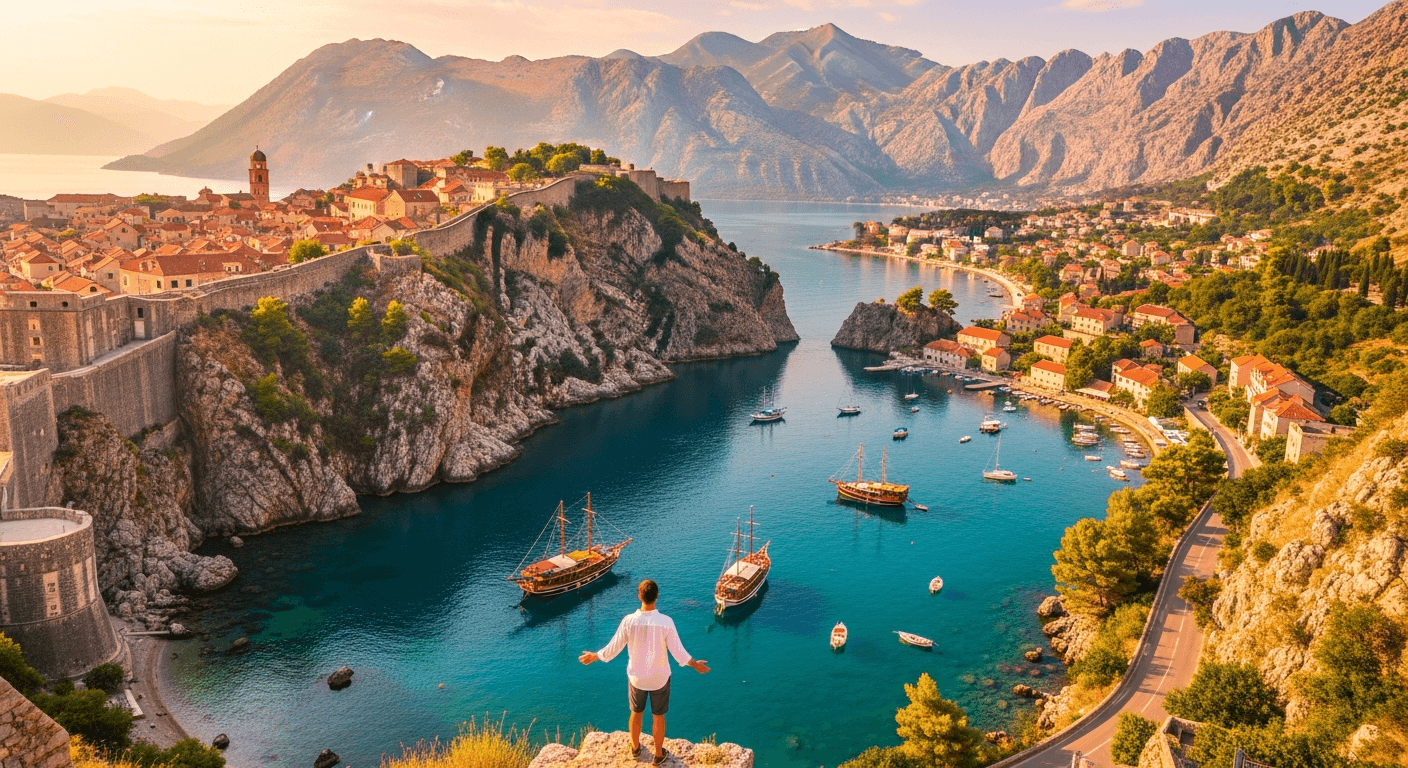
There's a particular quality to light in Montenegro that photographers spend lifetimes chasing. It arrives at dusk—golden, almost amber—and bathes the limestone cliffs in a warmth that feels almost orchestrated. You notice it first from a harbor café in Kotor, your coffee gone cold while you watch it happen, and you understand immediately why people return. Not because they must. Because something here pulls at them.
This is a country that reveals itself slowly. It's not the kind of place that announces itself with fanfare or Instagram superlatives. Instead, it works more like a memory—fragmentary at first, then increasingly vivid with time. The scent of stone and sea. A woman hanging laundry from a weathered window. The specific geometry of light through a medieval gate. After the first visit, travelers find themselves thinking about these small moments more than the obvious ones.
What follows isn't a checklist of obligatory sights. It's an exploration of places that justify repeated pilgrimages—destinations that reveal new dimensions each time you return.
1. Kotor's Bay-Side Wandering
The Bay of Kotor presents itself as one seamless postcard until you actually walk its edges. The old town itself—ringed by walls that climb like stone fingers toward cloud cover—becomes less interesting once you've photographed it. But venture along the waterfront paths beyond the main squares, past the working harbor where fishing boats sit low in the water, and you'll find the real rhythm. A fishmonger hauling his catch. A barber with three customers in a room barely larger than a closet. A woman selling homemade ajvar from a plastic table.
Best time: April through May, when the crowds thin but the light strengthens.
Insider detail: The locals' favorite coffee is taken at Scala, facing the water, early enough that tourists haven't yet arrived.
Photography moment: The stone stairs climbing toward Skurda village at golden hour—dramatic without trying.
Practical tip: Park your car at the southern entrance and walk the entire perimeter. Bring water; bring time.
2. Perast: Where Nothing Has Changed in 300 Years
Perast is what Kotor might have been if the world had forgotten about it. Twenty-five kilometers of coast compressed into a town where baroque palaces face each other across a ribbon of street barely wide enough for two people. You can walk from one end to the other in twenty minutes. That's not the point. The point is returning to the same waterfront café every morning of a three-day stay, learning the barista's name, understanding how light transforms those opposite palaces from cream to amber to purple-gray.
The two islands in the bay—Our Lady of the Rock and St. George—demand a boat trip, but boat trips here feel less like tourism and more like borrowing your neighbor's skiff.
Best time: September, when the summer heat breaks and autumn light arrives.
Insider detail: Stay for dinner at a family-run restaurant rather than the waterfront establishments. The pasta with Adriatic shellfish tastes better in a room with four tables.
Photography moment: The curve of boats reflected in early-morning still water, before the wind arrives.
Practical tip: Book accommodation at least six months ahead if you want summer dates. Better yet, come in shoulder season when the town remembers it's where people actually live.
3. Budva's Coastal Complexity
Budva suffers from a reputation for being the "touristy" option—package-deal crowds, neon signs, nightlife that sprawls until three in the morning. And yes, all of that exists. But beneath the veneer of resort town is a medieval core that's genuinely compelling, and beyond that—along the cliffside paths—some of the most undersold coastal hiking on the Adriatic.
The old town's narrow streets reward getting deliberately lost. The beaches beyond the main drag appeal to travelers who want swimming without the production.
Best time: June or September; July-August is wall-to-wall people.
Insider detail: Skip the main beach and walk south to Slovenska Plaža, where the crowd thins considerably and the water is equally cold and clear.
Photography moment: The weathered wooden doors of the old town, each one a different shade of blue, rust, or faded red.
Practical tip: Avoid Friday and Saturday nights in high season unless the club scene is specifically what you're seeking. Weekday evenings are calmer.
4. Sveti Stefan: The Island Nobody Talks About
The actual island of Sveti Stefan—the hotel that occupies it—is exclusive and expensive, accessible only to guests. But the beach across the channel, where travelers camp and swim, offers an unobstructed view of what makes it architecturally hypnotic: a perfectly preserved medieval fishing village arranged in concentric circles, red-tiled roofs brilliant against stone and sea.
Come for the views. Stay for the realization that you don't need to set foot on the island to experience its peculiar beauty.
Best time: May and October, when the water is swimmable and the beach isn't crowded.
Insider detail: The pebble beach is uncomfortable to walk on barefoot, but swimmers here understand that discomfort is part of the bargain.
Photography moment: Sunset from the beach, with the island's silhouette rendered in shades of gray.
Practical tip: Arrive by mid-afternoon if parking concerns you; the lot fills quickly in summer.
5. Cetinje: Mountain Capital of Time
Cetinje asks visitors to abandon their relationship with efficiency. The old royal capital sits 900 meters above sea level, and the drive alone—a series of switchbacks through forest that opens into high plateau—signals that you've left the coastal ease behind.
The town itself moves at a different speed. Monarchy relics share space with cafés where men in their seventies play chess and nobody considers this a scenic observation—it's simply Tuesday afternoon. The monasteries nearby reward calm, contemplative visits.
Best time: June through September; winters are cold and rainy.
Insider detail: Stay for at least two nights. One night feels like tourism; two nights starts to feel like understanding.
Photography moment: The morning fog rolling across the plateau at sunrise, before it burns away.
Practical tip: Rent a car for this journey; the road rewards attentive driving and allows for stopping whenever you're moved to.
6. Ostrog Monastery: Pilgrimage Without the Crowds
Carved directly into a vertical rock face 900 meters above the Zeta plain, Ostrog strikes visitors as simultaneously absurd and inevitable. How did anyone even build this? Why is it not more famous? The answer to both questions involves a particular kind of Montenegrin stubbornness.
Most visitors hike up from below—a forty-minute climb on a rocky path. The effort matters. You arrive breathless, and that breathlessness shapes what happens next: you sit in the monastery's shadowed courtyard, you watch the light change across the valley below, and for reasons you can't quite articulate, it feels important.
Best time: May through October; winter weather makes the approach treacherous.
Insider detail: Pilgrims arrive at dawn. Come in afternoon, when the energy shifts.
Photography moment: The monastery's white facade against the red-gray stone, taken from the approach path as you climb.
Practical tip: Wear proper hiking boots, even if the path doesn't look like it warrants them. Bring water; bring sunscreen.
7. Durmitor National Park: Where Montenegro's True Character Emerges
Durmitor isn't trying to charm anyone. It's a genuinely wild mountain range with seventeen peaks over 2,000 meters, black pine forests, and glacial lakes that appear beneath morning fog like something out of folklore. The nearby Tara River Canyon claims to be Europe's deepest; whether this is literally true matters less than the visceral experience of standing in it.
This is where travelers discover that Montenegro isn't a coastal phenomenon. It's a mountain country that happens to have a coast.
Best time: July and August, when high trails are snow-free and accessible.
Insider detail: The town of Žabljak serves as a base, but it's a working mountain town, not a resort destination—which is precisely why it works.
Photography moment: The Black Lake at sunrise, before the tour groups arrive.
Practical tip: Hire a local guide for serious hiking. The trails are marked, but a guide reveals the stories that maps can't convey.
Local Wisdom: The Practical Heart of Return Visits
Getting around: Rent a car if you're comfortable with driving mountain roads that occasionally feel narrower than they are. Alternatively, use buses—they're frequent, inexpensive, and driven by people who know every switchback. From the coast to the interior takes roughly four hours. Budget accordingly.
Timing your movements: Montenegrins eat dinner late—nine or ten at night is standard. Lunch arrives at two. Plan activities accordingly. The quiet hours between three and six in the afternoon are when the country exhales; use them for resting, swimming, or sitting with coffee.
Neighborhood etiquette: Say hello when entering shops. Learn to say "hvala" (thank you) and "dobro veče" (good evening). These small acknowledgments matter in ways that feel ancient. People will talk to you longer because you've shown respect.
Currency and practicality: The Euro circulates; ATMs are reliable. Card payments work most places, but bring cash for small purchases and tips. Spring and autumn demand fewer bookings in advance than summer.
Mapping the Routes That Matter
On Touratu's interactive map, you'll find routes traced by travelers who've returned to Montenegro multiple times—their reels, their routes, their visual discoveries marking which coastal drives genuinely reward stopping, which mountain towns sustain longer visits, and which lesser-known paths reveal themselves only to those who venture beyond the obvious circuits.
Why People Return
There's a reason travelers keep coming back to Montenegro. It's not in any single place—it's in the cumulative experience of a country that refuses to be simplified. You return because there's always another café you haven't sat in, another path you haven't walked, another conversation that opens something you thought you'd already understood.
The light will be different next time. You will be different. That's enough.
Loading activities…
