
Data provided by Touratu - Cambodia
Blog
Tourisha
September 14, 2026
storiesBest Places to Visit in Phnom Penh: Top Attractions
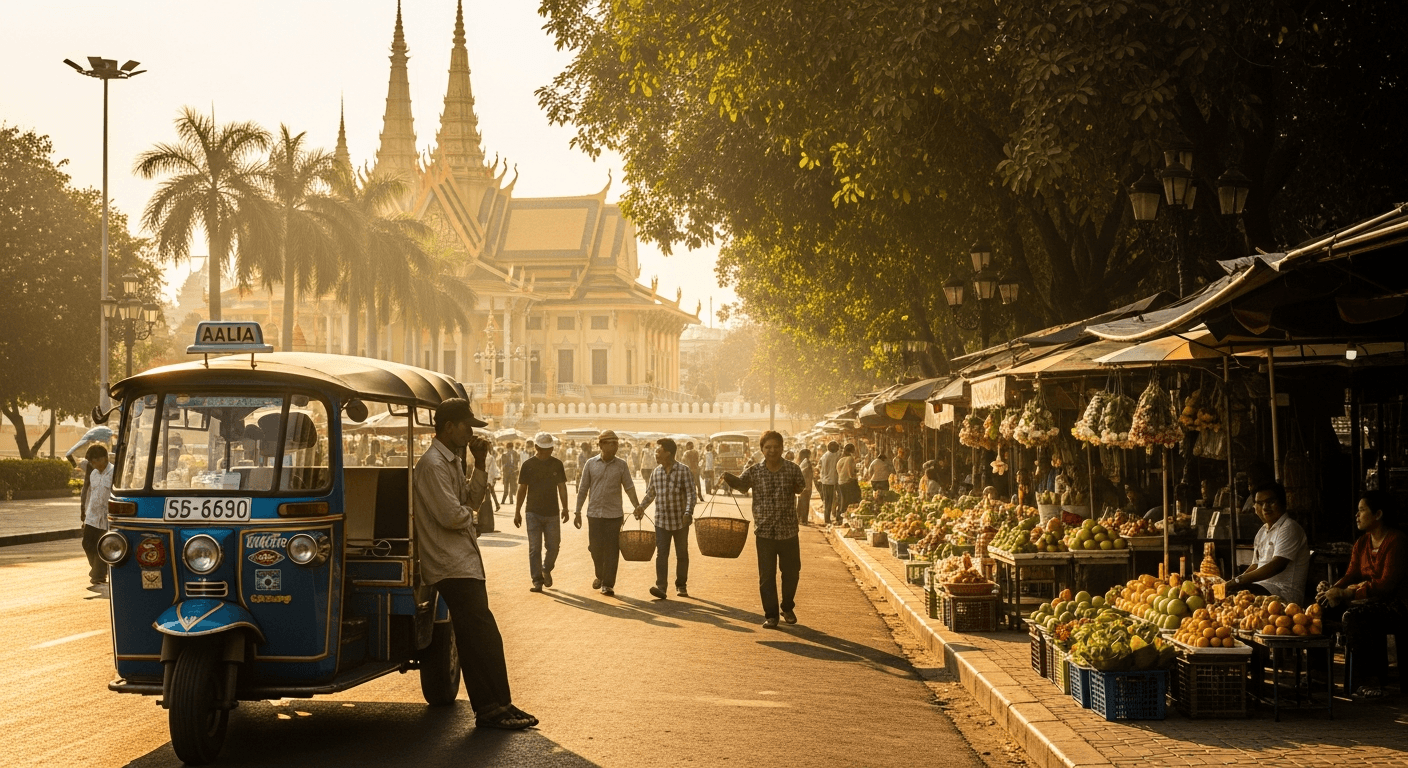
Phnom Penh: Beyond the Guidebook
The Tonlé Sap River at dusk doesn't perform for you. It simply exists—carrying the city's weight on its shoulders while fishermen cast nets that catch nothing but routine. You're standing on a wooden pier that smells of salt and diesel fuel, watching longtail boats tie up for the night, and it hits you that this moment—unglamorous, ungainly, real—is what actually stays with you after you leave a place.
Phnom Penh used to break people. The city's recent history is so catastrophic it makes conventional travel writing feel obscene. But what strikes you when you're actually here, walking Sisowath Quay or getting lost in the tangle of streets behind the markets, is that this isn't a city preserved in trauma. It's a city that's alive—chaotic, ambitious, occasionally messy, mostly generous to visitors willing to move through it without a checklist.
Most travel guides treat Phnom Penh as a checkpoint between Siem Reap and the south. That's a mistake.
What Actually Matters Here
The National Museum is one of those places that justifies itself without fanfare. You walk into a courtyard built around a central pavilion, and the temperature drops ten degrees. The architecture is Khmer classical—no straight lines, everything curves toward grace. Inside, sandstone sculptures from the 7th and 8th centuries face you directly, their expressions neither serene nor suffering, just present. The museum's collection includes pieces ransacked and repatriated, pieces that survived the Killing Fields in attics and hidden rooms. You understand, moving through these galleries, that Cambodia's relationship with its own art isn't nostalgic—it's defiant.
The Royal Palace requires a long walk through crowds of tour groups, but it's worth the patience. The Golden Throne Hall gleams like something from a fever dream—real gold, real proportions that make your sense of scale briefly collapse. You can't photograph inside, which means you have to look with your actual eyes, and that changes how you remember it.
But Phnom Penh's real texture comes from street-level engagement. The Old Market (Psar Chas) operates like a nervous system—cramped alleys where meat vendors share space with flower sellers, where the smell of turmeric and raw pork creates a sensory wall you have to push through. It's not pretty. It's not Instagram-worthy. It's authentic because no one's trying to sell you on it being authentic. This is where locals eat, where prices haven't been inflated for tourists, where you can sit at a plastic stool and have a better meal for two dollars than most restaurants that advertise themselves to foreigners.
Wat Phnom is the city's origin point—the temple that gave Phnom Penh its name. Built on an artificial hill (phnom means hill) in the 14th century, it sits above the city proper like a comma in a sentence that's still being written. The climb is 22 steps, steep enough to feel ceremonial. Monks in saffron robes move through the grounds with unsentimental purpose. Incense rises in front of a giant golden Buddha. It's quiet even when it's crowded, which is the mark of genuine sacred space.
The Killing Fields at Choeung Ek demand separate attention. This isn't content. Visiting requires the acknowledgment that you're standing on a mass grave. The memorial stupa contains over 8,000 skulls arranged by age and sex. There's no way to be "prepared" for this. What you do is show respect, listen to the audio guide (a necessity, not optional), and understand that this happened within living memory—within the memory of people you'll pass on the street afterward. The experience clarifies why so many Cambodians practice a form of Buddhism focused on merit-making and present survival rather than dwelling. It clarifies a lot.
Tuol Sleng Genocide Museum occupies a former high school that became a torture facility. The building itself is ordinary—classrooms with photographs of prisoners on the walls, interrogation rooms that are difficult to look at directly, a tree where children were executed. The museum doesn't dramatize. The architecture does that work already. Again: this happened recently. The generation that built this city learned to survive it.
What to Expect When You're Actually Moving Through This
Phnom Penh's geography isn't intuitive if you're used to grid systems. The city sprawls in a vaguely circular pattern around the rivers, with main arteries radiating outward. Sisowath Quay (the riverside avenue) and Norodom Boulevard are the main axes. Everything else requires a mental compass or a willingness to get lost, which isn't actually dangerous, just time-consuming.
Tuk-tuks are the primary transport. Negotiate the price before you get in—rides are usually $1-3 depending on distance. Grab (the Southeast Asian Uber equivalent) also works if you prefer transparency and AC. Motorbikes are everywhere; don't rent one unless you've driven a motorbike in Vietnam. Phnom Penh's traffic operates according to principles that international driver's licenses don't account for.
The heat isn't a factor in a way that needs discussion—it's just heat, 30+ degrees Celsius most of the year, humid enough to make breathing feel like a conscious effort. Rainy season (May-October) brings afternoon thunderstorms that last 20 minutes and then evaporate. Dry season (November-April) is genuinely pleasant, crowded, and expensive. Shoulder months (April-May, October-November) offer decent compromises.
Eat everywhere. The street food isn't an adventure activity—it's the food system. Nom banh chok (Cambodian noodle soup) from a plastic table on the street is better than the same dish in a restaurant trying to present it. Grilled fish at the markets, sugar cane juice from a vendor with a manual press, mango sticky rice that's actually sticky. Avoid ice in drinks if your stomach is uncertain. Tap water isn't drinkable; everything else is fine.
Accommodation runs the full spectrum—$8 guesthouses in good neighborhoods, $30-60 midrange hotels that are genuinely comfortable, $100+ for the kind of luxury that feels absurd in a city still building itself. The area around Beung Keng Kong is where younger travelers congregate. Daun Penh (central) is more mixed. Riverside is touristy but convenient.
Practical Information
Best time to visit: November-February. Dry, pleasant, doesn't require planning around monsoons.
How long: 2-3 days minimum to see the main temples and museums without rushing. 4-5 days if you want to sit in cafes and move without purpose.
Getting there: Pochentong International Airport has connections to Bangkok, Ho Chi Minh City, Hanoi, and other regional hubs. Buses from Bangkok take 5-6 hours. Flights are usually cheaper.
Language: Khmer is the official language. English is spoken in tourism areas, less so in markets. Learn "hello" (susdei), "thank you" (orkun), "how much" (tlay ponman). It helps.
Currency: Cambodian Riel, though USD is widely accepted. 1 USD = 4000 riel approximately.
Crowds: The National Museum and Royal Palace draw organized tour groups in waves, heaviest 10am-2pm. Visit early or late afternoon.
Places Within an Hour
Tonlé Sap Biosphere: 45 minutes north of the city. Floating villages on the largest freshwater lake in Southeast Asia. The villages themselves are overcrowded with tourists, but the wetland ecosystem is legitimate. Early morning is essential.
Oudong: Former capital, 40 kilometers north. A sprawling temple complex on hilltops with views across agricultural plains. Quiet, monastic, requires a driver willing to navigate rural roads. Worth it if you want to feel the countryside version of Cambodia.
Silk Island (Koh Dach): Accessible by boat from the city. Rural island where silk weavers work, fruit orchards grow, and the pace slows to the point where tourism feels like an intrusion. Better as a day trip via hired boat than as packaged tour.
Is It Actually Worth Visiting?
Yes, but not for the reasons tourism boards suggest. Phnom Penh isn't a checklist destination. It's a city that earned its complexity through genuine suffering and is currently occupied with the work of becoming something else. That process is still visible, still raw, sometimes uncomfortable.
It's worth visiting because you'll encounter recent history not as museum content but as context for why people move the way they do, why rebuilding a culture matters, why survival itself is an act of defiance. You'll eat better food for less money than you expected. You'll get lost in neighborhoods without tourist infrastructure and discover that lost-ness is sometimes the most honest way to travel.
It's worth visiting because it will challenge your assumptions about what makes a place "beautiful" or "worth seeing." Phnom Penh is neither beautiful in a conventional sense nor easy to process. It's necessary.
Quick Facts
- Population: ~2 million in the city proper
- Official language: Khmer
- Religion: Theravada Buddhism (dominant)
- Best neighborhoods: Daun Penh, Beung Keng Kong, Riverside
- Best meal budget: $2-5 per person at street vendors and markets
- Visa: Most nationalities can get a 30-day tourist visa on arrival or online
- Health: Tap water not drinkable; mosquito-borne illnesses exist but are manageable with repellent and vaccination
Phnom Penh doesn't soften itself for visitors, and that's its most honest quality. You navigate it, you eat in it, you sit with the weight of its history, and you leave changed in ways you don't immediately name. The river flows regardless. The temples continue their work. The city builds.
If you're planning to explore Phnom Penh and the surrounding regions, check out Touratu's interactive map to navigate routes between attractions, see distances, and watch travel videos from people who've moved through the city. It's practical planning without the marketing layer.
Loading activities…
