
Portugal: 20 Places That Keep Travelers Coming Back
Portugal: Why Travelers Keep Coming Back to These 20 Places
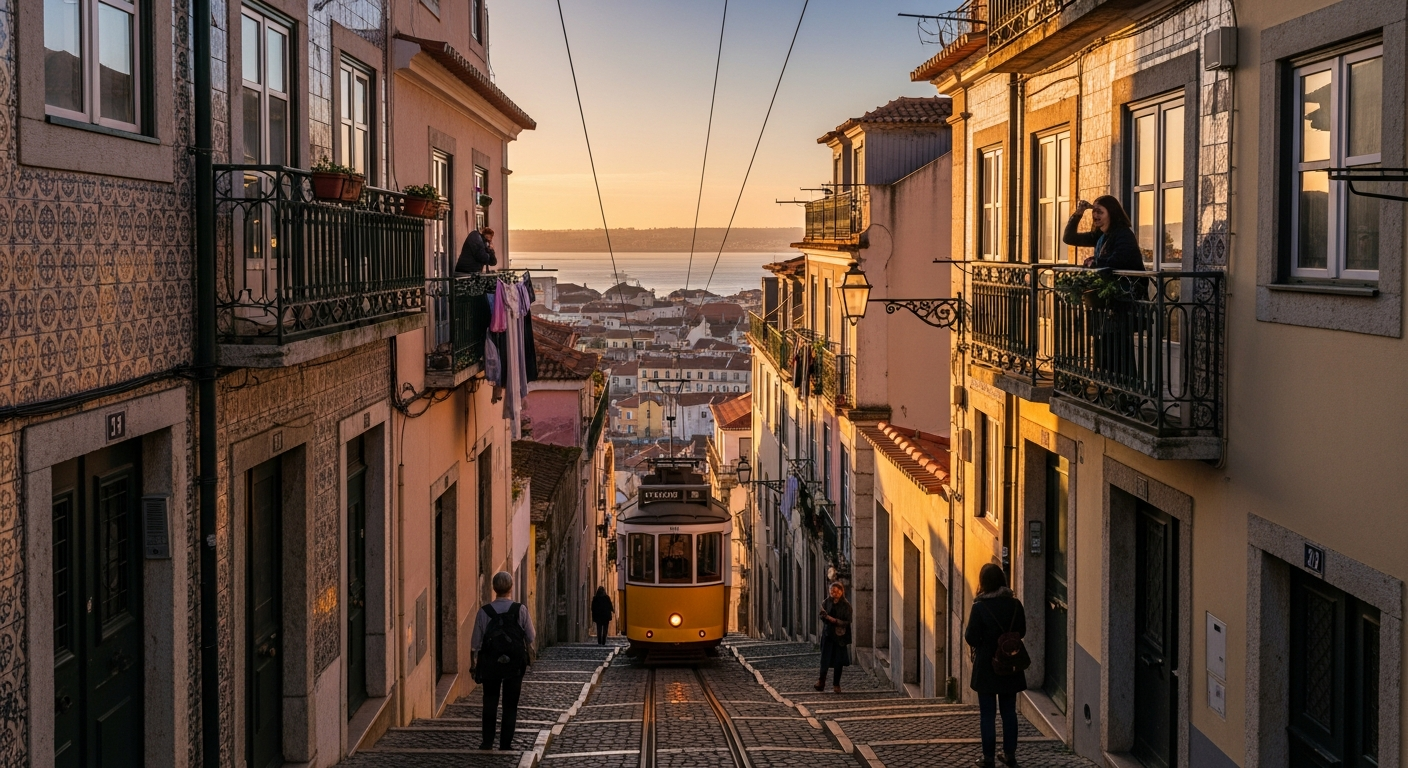
The light arrives first. Before you've fully processed the terracotta rooftops tumbling toward the river, before the scent of grilled sardines reaches you from a side street, before the melancholic pull of distant fado settles into your chest — there's that particular Portuguese light. It's softer than Spain's, less theatrical than Italy's. It gilds everything without demanding attention, turning ordinary moments into something worth pausing for.
Portugal has a way of making travelers possessive. People don't just visit — they return, again and again, quietly hoarding favourite corners and timing their trips around sardine season or the moment the jacarandas bloom purple over Lisbon's hills. This isn't a country that overwhelms you with monuments or exhausts you with must-sees. It seduces through accumulation: the weight of good wine, the rhythm of cobblestones underfoot, the particular pleasure of watching an entire nation pause for coffee at exactly 3pm.
What follows isn't a checklist. It's a map of places that have earned their loyalty — the spots where travelers find themselves booking return flights before they've even left, where photographers never quite get the shot they wanted (and keep coming back to try), where the food tastes better on the third visit because you finally know to ask for the off-menu cataplana.
Alfama, Lisbon
The oldest neighbourhood survives by refusing to modernise completely. Laundry still hangs between windows like festival bunting, elderly women still lean from doorways watching the street theatre below, and the steep staircases that connect its layers still defeat rolling suitcases with quiet satisfaction.
Alfama earned its character through centuries of earthquakes, fires, and the kind of benign neglect that preservation committees now try to replicate artificially. The great earthquake of 1755 destroyed most of Lisbon but spared this hillside — the Moorish foundations held. Walking here feels like moving through geological time, each narrow alley revealing another layer of the city's long memory.
The experience shifts dramatically with the hour. Mornings belong to residents: women scrubbing steps, men nursing espressos at counters barely wide enough for two. By afternoon, tour groups flood the miradors and the calcada stones grow slippery with foot traffic. But after dinner, when the fado houses warm up and the streets empty again, Alfama returns to itself.
Best time: Early morning or after 9pm, when the performative tourism fades.
What most visitors miss: The Feira da Ladra flea market happens Tuesdays and Saturdays behind the Igreja de São Vicente de Fora — arrive before 9am for serious browsing rather than tourist trinkets.
For the photograph: The Miradouro de Santa Luzia offers the obvious postcard shot, but the stairs descending from Largo das Portas do Sol, framed by bougainvillea, capture something more intimate.
Sintra
Some places feel like dreams you've already had. Sintra operates in this territory — fairy tale forests, improbably coloured palaces, mist that appears strategically around turrets. It shouldn't work as anything but kitsch, yet somehow the theatricality feels earned rather than manufactured.
The Portuguese royal family used Sintra as their summer escape, and successive generations kept adding follies and fantasies to the landscape. The result is a UNESCO World Heritage collection that ranges from Moorish castle ruins to a palace a 19th-century romantic apparently designed during a fever dream. The Pena Palace, with its mustard yellows and terracotta reds, looks like it was coloured by a child given no restrictions — and it's magnificent for exactly that reason.
The crowds know about Sintra. Day-trippers from Lisbon arrive by mid-morning, and by noon the palace queues stretch longer than seems reasonable for a Wednesday. But the surrounding forests absorb multitudes, and the less-famous properties — the Quinta da Regaleira with its initiatic well, the Monserrate Palace with its botanical gardens — offer similar wonder with fewer elbows.
Best time: Weekday mornings in shoulder season, or late afternoon when tour buses retreat.
What most visitors miss: The path connecting the Moorish Castle to Pena Palace through the forest is more memorable than either destination.
For the photograph: The initiatic well at Quinta da Regaleira — arrive when it opens to shoot downward without other visitors spiraling through your frame.
Practical note: Buy timed-entry tickets online; showing up hoping for the best means queueing in what Sintra locals call "tourist weather" — whatever the tourists brought with them.
Belém, Lisbon
This riverside district does something difficult: it makes imperial history accessible without sanitising it. The Age of Discoveries launched from these banks, and the monuments here — triumphal, excessive, carved with caravels and rope motifs — celebrate a chapter of history that also brought colonialism and the slave trade. Walking here requires holding both truths.
The Jerónimos Monastery demanded the revenue from spice trade to complete, and the extravagance shows. Manueline architecture treats stone like embroidery, covering surfaces with maritime symbols and botanical details that would embarrass most Baroque churches. The cloister alone justifies the visit — late afternoon light turns the limestone almost amber.
Everyone tells you to eat pastéis de nata at the famous bakery. They're correct. The queue moves quickly, the pastries arrive warm, and yes, they're definitively better than the versions elsewhere. Fight your contrarian instincts on this one.
Best time: Early morning for the monastery, late afternoon for riverside walking.
What most visitors miss: The MAAT museum's architecture is worth the walk even if you skip the exhibits — the undulating rooftop provides a different relationship with the river.
For the photograph: The Torre de Belém at golden hour, shot from the riverside promenade rather than the crowded base.
Porto's Ribeira
Lisbon gets the international attention, but Porto has the soul that serious travelers eventually prefer. The Ribeira district, tumbling down to the Douro River in a cascade of crumbling facades and medieval narrow ways, feels like a city that hasn't decided whether to renovate or simply age beautifully.
The coloured houses stacked above the river have become Portugal's second-most photographed scene after Lisbon's trams. But photographs don't capture the smell of grilling meat from riverside restaurants, or the way port wine barges still float past like ghosts of commerce, or the particular echo of footsteps on stone streets worn concave by centuries.
Across the river, the port wine lodges of Vila Nova de Gaia offer tours that range from educational to simply excuses for tastings. The better approach: choose one historic house, learn properly, taste slowly, and watch the sunset light the Ribeira facades from across the water.
Best time: Late afternoon into evening, when the light works both directions across the river.
What most visitors miss: The streets above the Ribeira — away from the touristic riverside — hold the neighbourhood's real daily life.
For the photograph: The Dom Luís I Bridge's lower deck puts you at water level with the Ribeira facade reflected on calm days.
Livraria Lello, Porto
Yes, it's tourist-marketed. Yes, J.K. Rowling probably didn't actually use it as inspiration for Hogwarts. Yes, you'll pay an entrance fee that converts to a book purchase. Go anyway.
The neo-Gothic interior deserves every superlative. The carved wooden staircase spirals upward like a literary fantasy, and the stained glass ceiling casts the kind of light that makes you believe in magic whether or not you're twelve. Even the tourist management — timed entries, limited capacity — accidentally improves the experience by preventing the worst overcrowding.
Best time: First entry slot of the day, when the light through the ceiling is crispest.
What most visitors miss: Actually buying a book. The Portuguese-language literature section upstairs contains treasures; ask staff for recommendations.
For the photograph: The staircase from the ground floor, but accept that everyone will be attempting the same shot. Consider photographing the ceiling instead.
The Douro Valley
The world's oldest demarcated wine region folds through granite hills in terraces so steep they seem to defy agricultural logic. Port wine requires this difficulty — the schist soil, the temperature extremes, the back-breaking harvest that still happens by hand on slopes too steep for machines.
The valley experience depends entirely on approach. The train from Porto follows the river through tunnels and curves that feel designed for contemplation. Driving allows freedom but demands attention on roads that treat guardrails as suggestions. River cruises offer scenery without agency, though the dinner-cruise versions can feel depressingly packaged.
The quintas (wine estates) that accept visitors range from intimate family operations to luxury hotels where wine tastings come with views worth more than the wine. Booking ahead matters here — dropping in uninvited doesn't match Portuguese hospitality customs.
Best time: September and October for harvest atmosphere, though spring brings the terraces into green that photographs brilliantly.
What most visitors miss: The smaller tributary valleys, where tourism thins and traditional village life continues without tour buses.
For the photograph: The viewpoint at Casal de Loivos near Pinhão offers the classic terraced perspective.
Lagos, Algarve
The Algarve coast divided long ago into family resorts, golf developments, and a few towns that retained character despite everything. Lagos managed the balance — developed enough for convenience, intact enough to reward wandering.
The old town within the walls feels genuinely old, not theme-parked. Churches contain baroque excess, plazas hold morning markets, and the ramparts offer Atlantic views that explain why everyone wants to develop this coastline. Outside the walls, the marina attracts the yacht crowd without overwhelming the fishing-village origins visible in the morning catch auctions.
The beaches here — the grottos at Ponta da Piedade, the cove beaches with their sandstone formations — rank among Europe's most photogenic. But they're also the Algarve's most touristed, and July visits require acceptance of crowds or very early mornings.
Best time: May, June, or September — warm enough for swimming, calm enough for grotto boat tours, sparse enough for beach space.
What most visitors miss: The Batata beach, walkable from town but less famous than Dona Ana, offers similar beauty with fewer umbrellas.
For the photograph: Ponta da Piedade's rock formations at sunrise, before the boat tours arrive.
Óbidos
The walled village trades heavily on charm, and the walls are earning their keep. White houses with blue and yellow trim line cobblestone streets too narrow for cars, and the entire effect resembles a film set for something involving medieval romance.
The tourism knows this. Óbidos has embraced themed festivals — chocolate in March, literature in September, Christmas markets that draw national crowds — and the main street holds more souvenir shops than a village this size should support. Yet the walls themselves are freely walkable, offering rooftop views and a genuine sense of historic fortification, and wandering the residential streets behind the tourist drag reveals a place where people actually live.
Best time: Weekday mornings before the day-trip crowds arrive from Lisbon.
What most visitors miss: The church of Santa Maria contains the tomb of Josefa de Óbidos, Portugal's most celebrated female painter of the 17th century — and her work hangs in the Museu Municipal.
For the photograph: The walls at sunset, shot from outside the main gate with the village rising behind.
Practical note: The ginjinha (sour cherry liqueur) served in chocolate cups is a tourist tradition worth accepting. Don't attempt to walk the walls after multiple cups.
Évora
The Alentejo's main city holds Portugal's best-preserved Roman temple, a cathedral that blends Romanesque and Gothic without awkwardness, and a chapel decorated entirely with human bones. It's a cheerful mix.
The Capela dos Ossos displays the skulls and femurs of 5,000 monks, arranged with an artisan's care and labelled with the welcoming inscription "We bones that are here, for yours await." Portuguese Catholicism has always carried a certain comfortable relationship with death; this takes that relationship to logical conclusion.
Beyond the bones, Évora offers a university town's energy within ancient walls, plazas designed for afternoon coffee, and access to the Alentejo's wine country and cork forests. The pace here is deliberately slower than coastal Portugal — this is the interior, where siesta culture survives.
Best time: Spring, when the Alentejo plains bloom and the heat hasn't yet become aggressive.
What most visitors miss: The cromlech of Almendres, a Neolithic stone circle older than Stonehenge, sits in cork forest outside town and receives a fraction of its English cousin's attention.
For the photograph: The Roman Temple at blue hour, when crowds thin and the stone glows.
The Azores, São Miguel
Mid-Atlantic volcanic islands sound exotic until you realise they're Portuguese territory, reachable by direct flight from mainland Europe, and operating in euros. The Azores offer genuine wilderness without the logistical difficulty of remoteness.
São Miguel, the largest island, concentrates the highlights: crater lakes in shocking blues and greens, hot springs heated by geological activity, and dairy pastures so green they recalibrate your sense of what green means. The landscape shifts dramatically within short drives — one moment coastal black rock, the next jungle valleys, the next alpine lakes.
This isn't beach tourism. The Azores deliver hiking, whale watching, and the particular pleasure of being genuinely far from anywhere while still having good coffee. Visitors arriving expecting Algarve sunshine will be disappointed; those arriving prepared for mist and sudden weather changes will be rewarded.
Best time: May through September for warmest weather, though "warm" remains relative.
What most visitors miss: The Sete Cidades caldera's classic viewpoint is crowded; hike the rim trail for the same lakes from continuously shifting perspectives.
For the photograph: Lagoa do Fogo on the rare clear day — check weather apps obsessively and drive up when clouds lift.
Coimbra
The ancient university town holds more history than some countries. Students still wear black capes, fado here sounds different from Lisbon's version, and the Biblioteca Joanina contains books so valuable that bat colonies are allowed to roost there, eating insects that might otherwise damage manuscripts.
The steep medieval hill town above the river preserves a sense of academic tradition that feels almost monastic. The university, founded in 1290, ranks among Europe's oldest, and the ceremonial buildings — the library, the chapel, the great hall — demonstrate that education once demanded architectural grandeur.
Coimbra fado, performed primarily by men, carries a different mood than Lisbon's — more melancholic, more literary, more connected to student traditions stretching back centuries. Finding an authentic performance requires asking locally; the tourist venues exist but miss the point.
Best time: Academic year (October to June) for student atmosphere; avoid August when the university empties.
What most visitors miss: The Machado de Castro National Museum, built over Roman ruins visible in the basement, contains sculpture collections rivaling any in Portugal.
For the photograph: The university courtyard at sunset, when golden hour light catches the baroque clock tower.
Tavira, Algarve
While the western Algarve battles over-development, Tavira in the east maintains the dignity of a proper Portuguese town that happens to have beaches. Roman bridges, castle ruins, and thirty-seven churches suggest deep history; the riverside promenade and local restaurants suggest a community not yet dominated by tourism.
The beaches here require boats — they sit on the sandbar islands of the Ria Formosa, accessible by ferry or water taxi. This inconvenience filters crowds and preserves something approaching empty sand even in summer. The lagoon itself hosts flamingos seasonally and rewards slow kayak exploration.
Best time: June or September, when beach weather arrives without August's crowds.
What most visitors miss: Ilha de Tavira's far western beaches, reached by walking past where most visitors stop, offer genuine solitude.
For the photograph: The Roman bridge at golden hour, with fishing boats moored along the riverbanks.
Nazaré
Before the big-wave surfers arrived, Nazaré was a fishing village where women wore seven petticoats and fishermen dragged boats onto the beach. Some of that Portugal survives in the mornings, before the surf tourism wakes.
The waves here are genuinely unprecedented — winter swells refracted and amplified by underwater canyons create walls of water that exceed any reasonable definition of surfable. The lighthouse point where professionals attempt these monsters has become a destination for spectators who can't quite believe what they're seeing.
The town itself splits between the beach and the clifftop Sítio, connected by funicular. The upper town holds better restaurants and the famous viewpoint; the lower town holds better fish markets and more authentic atmosphere. Commute between them.
Best time: November through February for serious waves; summer for beach culture without monster swells.
What most visitors miss: The early morning fish auction at the beach, where local restaurants buy their lunch menus.
For the photograph: The lighthouse at Praia do Norte during swell, though telephoto lenses help capture wave scale from safe distances.
Guimarães
The birthplace of Portugal itself — where Afonso Henriques became the first king in the 12th century — Guimarães wears its significance lightly. The medieval centre earned UNESCO recognition, but it functions as a working city rather than a museum piece, with students and locals filling the taverns the castle town requires.
The approach through modern suburbs doesn't prepare you for the intact old town, where stone arcades shelter cafe tables and the castle — simple, unadorned, looking exactly like a castle should — crowns the hill above. Walking the ramparts requires minimal imagination to understand defensive architecture; this was clearly built for survival rather than tourism.
Best time: Weekdays, when tourist coaches give way to local rhythm.
What most visitors miss: The Museum of Alberto Sampaio, housed in a former monastery, contains medieval sacred art that rivals anything in Lisbon's museums.
For the photograph: The Largo da Oliveira plaza in morning light, with cafes just opening and medieval stone framing the scene.
Cascais
The former fishing village turned royal summer resort turned Lisbon day-trip destination has managed each transition with more grace than expected. Cascais offers seaside resort pleasures — waterfront promenades, fish restaurants, beach access — without losing the sense of place that mere resorts lack.
The drive or train ride from Lisbon follows the coast through a succession of beaches, each with distinct character, before depositing you in a town designed for walking. The marina attracts a well-heeled crowd; the old town holds the fishmongers and cafes that remind you this was once a working port.
Best time: Weekdays and shoulder season; summer weekends bring Lisbon crowds seeking escape.
What most visitors miss: The coastal path toward Guincho Beach passes the Boca do Inferno (Hell's Mouth) sea cave and continues through increasingly dramatic coastline.
For the photograph: The Farol lighthouse at sunset, with waves crashing on the rocks below.
Monsanto
The "most Portuguese village in Portugal" — an actual title awarded by the Estado Novo regime in 1938 — built itself among and sometimes under massive granite boulders. Houses use natural rock as walls, sometimes ceilings; the effect resembles a village playing hide-and-seek with geology.
The tourist designation was propaganda, but the village is genuine. The hilltop location near the Spanish border served defensive purposes — the castle above watched approaches for centuries — and the granite integration came from practical material scarcity rather than architectural ambition.
Today Monsanto receives day-trippers but lacks accommodation to hold them, returning to solitude each evening. The climb is worth the emptiness: sunset from the castle ruins, looking across the Beira plain toward Spain, delivers the silence tourism usually erases.
Best time: Late afternoon, staying for sunset after day-trippers depart.
What most visitors miss: The village graveyard, built among the same boulders, offers equally dramatic stone integration.
For the photograph: Houses with boulder-roofs, shot against afternoon light to emphasize shadow and texture.
Madeira, Funchal
The garden island anchored in the Atlantic produces wine, flowers, and the best levada walks in any Portuguese territory. Funchal, the capital, climbs hills in layers: waterfront hotels give way to terraced neighbourhoods, which give way to the cloud forests above.
The levadas — irrigation channels built across centuries to transport water from the wet north to the dry south — now double as hiking paths that traverse landscapes impossible to access otherwise. Some walks tunnel through mountains; others hang on cliffsides above drops that make you grateful for the Portuguese disregard for safety railings.
Funchal itself rewards slow wandering: the market for tropical fruits you've never seen, the Monte Palace gardens reachable by antique cable car, the hotel where Churchill painted during winter escapes. It feels simultaneously provincial and worldly, a paradox the Portuguese perfected.
Best time: Spring for flowers, year-round for hiking; avoid December's New Year's Eve crowds.
What most visitors miss: The old town's painted doors — a district-wide art project that transformed a slightly neglected neighbourhood.
For the photograph: The harbour from the Monte cable car, early morning before haze builds.
Aveiro
The "Venice of Portugal" comparison sells Aveiro short. Yes, colourful moliceiro boats ply canals through an art nouveau city centre, but Aveiro has its own character beyond Italian echoes: salt marshes that supported centuries of commerce, a university that keeps things young, beaches nearby that draw national crowds.
The canal experience can be kitsch — the tourist boats with their cheerfully inappropriate painted decorations, the ovos moles sweets shaped like sea creatures — but the art nouveau facades along the main canal represent one of Portugal's most concentrated collections of the style. This was a wealthy town in 1900, and the architecture shows.
Best time: Late spring and early autumn; summer brings beach traffic that clogsstreets.
What most visitors miss: Costa Nova, the nearby beach village with candy-striped houses, requires a short drive or bus but delivers more photogenic coastline than Aveiro itself.
For the photograph: The canal reflections at blue hour, when the art nouveau facades glow.
Comporta
Portugal's version of the Hamptons, except the beaches are better and the scene is more discreetly stylish. Rice paddies meet pine forests meet empty dunes in a landscape that fashion photographers discovered decades ago and developers are only now threatening.
The area lacks a proper town — scattered villages connected by sandy roads preserve the rural emptiness that earned the reputation. Restaurants here serve rice and fish from immediate surroundings; beach bars play appropriately tasteful music; crowds remain light by Algarve standards.
Best time: June or September; July and August bring the Portuguese summer crowd.
What most visitors miss: The dolphin population in the Sado estuary, visible from boat trips departing nearby Setúbal.
For the photograph: Empty beach at golden hour — the simplicity is the point.
Marvão
The walled village perches on the highest point of a granite escarpment, looking across to Spain from defensive battlements that seem excessive for a village now holding fewer than two hundred residents. The location made sense strategically; today it makes sense photographically.
Arriving by car requires climbing switch-backs through chestnut forests until the village materialises above like something hallucinated. The walls are freely walkable, the castle demands nothing beyond a few euros, and the accommodation options — former convents converted to pousadas, stone houses rented to travelers — offer sleepover access to the views that day-trippers miss.
Best time: Overnight, to catch sunrise from the castle walls.
What most visitors miss: The Roman ruins at Ammaia below the hill, less famous than coastal sites but evocatively empty.
For the photograph: Any view from the castle walls at sunrise, when mist often fills the valleys below.
Local Tips for Traveling Through Portugal
Portugal rewards certain approaches and punishes others. The train network, while not comprehensive, moves you pleasurably between Lisbon, Porto, and the Algarve — the journey itself becomes landscape appreciation rather than transit. Renting cars opens the interior but demands comfort with aggressive drivers and creative parking. In cities, walking and metro systems suffice; attempting to drive through Lisbon or Porto's historic centres will cost you hours and goodwill.
Timing matters more than guidebooks admit. The country operates on schedules that prioritise lunch — the hours between 2pm and 3:30pm see restaurants full and everything else slowed. Planning museum visits for post-lunch hours and meals for traditional times makes life easier. Similarly, August empties Lisbon and Porto of locals while flooding the Algarve with them; visiting cities in August and beaches in shoulder season inverts the crowds.
Coffee culture operates on different rules than elsewhere in Europe. A "café" is an espresso; a "pingado" adds milk; what Americans call "coffee" requires careful specification or resigned acceptance. Ordering at the counter costs less than table service, and Portuguese will take their café standing at the bar in under a minute.
The summer heat in interior regions — the Alentejo especially — reaches genuinely dangerous levels. Planning around it means early morning activity, serious midday rest, and evening wandering. The coast moderates temperatures but introduces tourist traffic; choosing between comfort and crowds defines summer travel here.
Discover More Routes on Touratu
These twenty places represent starting points rather than conclusions. Portugal's pleasures multiply with exploration, and the routes between destinations often reward as richly as the destinations themselves. Touratu's interactive maps let you trace traveler routes through the country, discover reels from the places mentioned here, and find the corners that didn't make lists but captured someone's heart anyway.
Portugal keeps its travelers by offering something genuinely difficult to find: the sense that you've discovered something even while walking paths others have walked for centuries. The country doesn't try too hard. It doesn't perform for you. It simply continues being itself — golden light, sardines on the grill, fado from somewhere uphill, the certainty that the coffee will be strong and the next miradouro will be worth the climb — and trusts that you'll notice.
The return flights book themselves, eventually. The question isn't whether you'll come back, but which village you'll stay in longer next time.
Loading activities…
