
Qatar 20 Places: Why Travelers Return Again
Qatar: Twenty Reasons Travelers Return to This Desert Paradox
There's a particular kind of silence that greets you when you step out of Doha's air-conditioned terminals into the Gulf heat. Not quite emptiness—more like a held breath before the narrative unfolds. Qatar has a way of surprising people who arrive with preconceptions, and perhaps that's why travelers keep finding their way back. What begins as curiosity about gleaming modernity and desert tradition often transforms into something deeper: a genuine affection for a place that refuses to fit neatly into any single story.
The country works on contrasts. You might find yourself negotiating a heritage market at dawn, then inside a museum examining contemporary art that challenges everything you saw three hours earlier. There's an intellectual restlessness here, a refusal to be defined by oil wealth or sporting events. Qatar invites you to move slowly through contradiction, to notice how a single destination can contain multitudes.
Twenty Places That Explain Why Travelers Return
1. The Corniche at That Precise Hour The Doha Corniche rewards patience over hasty check-offs. The real discovery isn't the skyline—it's the particular angle of light around 6:15 AM when joggers, families, and elderly couples share the promenade with an intimacy that contradicts the scale of those glittering towers. There's something democratic about a waterfront where everyone moves at human pace, where conversations happen in ten languages, where you notice architectural details because you're not rushing past them.
Best visited: October through April, when the air doesn't actively punish you for existing outside.
2. Museum of Islamic Art's Courtyard Garden Few travelers venture past the galleries into the geometric tranquility of the courtyard. This is where the museum's true genius lives—in the balance between human scale and calculated precision, in how water moves through space, in the way a single jasmine tree speaks louder than entire exhibitions. Sit on the marble bench facing the fountain. Watch how the light transforms the space throughout the afternoon.
The photography moment: late afternoon, when shadows create geometric patterns on the ground, mirroring the mashrabiya screens.
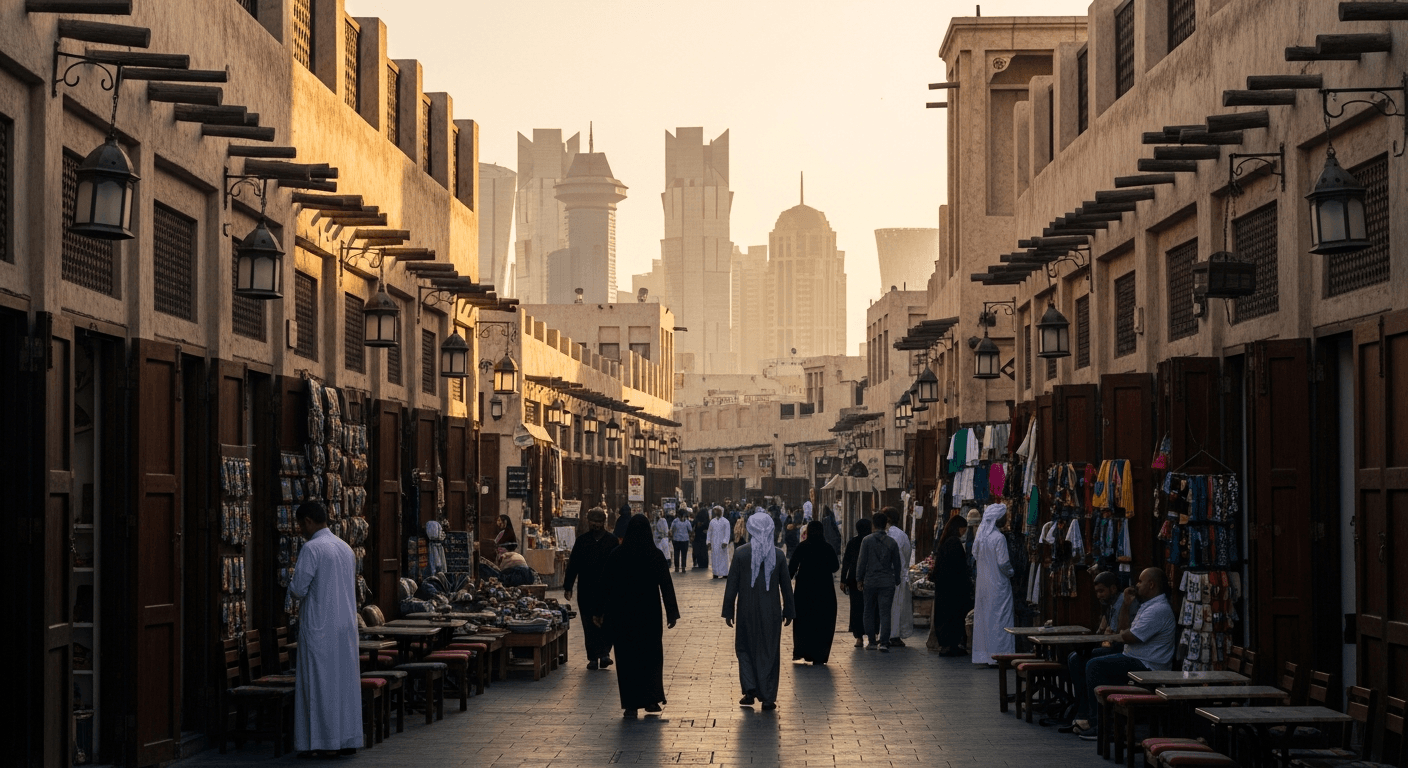
3. Souq Waqif's Spice Quarter at Dusk Most visitors photograph the lanterns and move on. Return travelers know the spice quarter requires sensory patience—the weight of cardamom and oud in the air, the particular timbre of vendors' voices calling across narrow passages, the visual chaos that somehow organizes itself into a rhythm. Come without a shopping list. Come to be disoriented, then gradually oriented by the logic of a place that's been trading goods for centuries.
Insider observation: The young spice merchants speak English beautifully but prefer to conduct business in Arabic. It's not exclusion; it's respect for the language of commerce in their space.
4. The National Museum's Moment of Silence This isn't Instagram-friendly architecture—it's something more unsettling and honest. The way the building frames desert light, the peculiar intimacy of galleries designed for contemplation rather than consumption. The Ottoman firearms collection matters less than the space surrounding it. The pearl diving exhibits resonate because you're experiencing them in genuine quietude.
Best time: Weekday mornings when the place belongs to serious visitors and the echoing footsteps become part of the experience.
5. Lusail Marina's Pre-Sunset Stroll Modern enough to feel contemporary, human enough to avoid sterility. The marina reveals itself best when you're not performing the tourist experience—when you're simply walking, noticing how families navigate the promenade, how the water catches light differently near each building, how a marina can somehow feel intimate despite its ambitious scale.
Photography: Golden hour catches the architectural curves without flattening them into postcards.
6. Al Khor Mangroves by Kayak This requires logistics, but that's precisely why return visitors cherish it. Paddling through mangrove roots as the light fades, surrounded by birds you've never heard before, with mainland Qatar feeling suddenly distant—this is the experience that rewires your understanding of the country. It's not dramatic. It's profoundly quiet.
Practical tip: Book with local operators rather than hotel concierges. The difference is immense.
7. Fort Al Zubarah's Weathered Stories Ruins communicate differently than pristine restorations. This 18th-century coastal settlement speaks through what's missing as much as what remains. Walking the eroded walls at sunrise, when shadows explain the structure better than any placard, you understand why people returned here repeatedly across centuries. The location taught you something about human persistence that new buildings cannot.
8. Inland Sea (Khor Al Adaid) Yes, it's technically in Saudi territory, but the approach through shifting dunes from the Qatari side is what matters. The experience is primal—sand moving beneath your vehicle, that strange inland body of water appearing without announcement, the absurdity and beauty of finding this landscape at all. It's uncomfortable travel, which is precisely why it stays with you.
Best traveled: With experienced guides who know the tidal rhythms and shifting routes.
9. The Pearling Path Trail A walking route that respects what tourism usually ignores: the infrastructure of human movement through landscape. The path connects pearling sites along the coast with the patience of an archaeological walk, not a nature hike. You're not trying to reach anywhere; you're understanding how people navigated this particular piece of earth for specific reasons across generations.
10. Purple Island's Sculptural Solitude An art installation in a landscape where art installations feel counterintuitive. The work—abstract and monumental—speaks precisely because it's not explaining itself. The beach around it remains undeveloped, which means you're sharing space with the sculpture, the sea, and perhaps one other person who understood why this matters.
11. Katara Cultural Village Without Tourist Goals Most visitors treat it as a checklist destination. Return travelers go purposefully for specific events—a poetry reading, a theater performance, a craftsperson's workshop. The village reveals itself when you're not trying to see everything, when you're genuinely waiting for something to begin.
12. Banana Island's Quiet Shoreline An actual island (though technically a peninsula) with a beach that remains genuinely undeveloped. The simplicity itself becomes the revelation—sand, water, minimal infrastructure, travelers who chose this over the marina developments and resort beaches. There's something about returning to foundational geography that clarifies why you're traveling at all.
How to Move Through Qatar Like Someone Who Understands It
The secret to returning isn't efficiency—it's deliberation. Rent a car or negotiate a private driver relationship rather than relying on apps. You'll see the country differently from ground level, at variable speeds, with the freedom to stop when something catches your attention. The metro works beautifully for reaching major destinations, but it won't teach you how neighborhoods connect or why certain intersections feel significant.
Timing is everything, and this isn't about seasons alone. Understand that ramadan transforms the entire social rhythm—everything shifts later, meals become communal in ways they never are otherwise, the country's internal logic becomes visible. Non-Muslims are welcome to observe these rhythms respectfully; hotels adjust service but the experience itself becomes richer. Avoid July and August entirely; the heat isn't romantic at 50 degrees Celsius.
Etiquette here is less about rules and more about recognizing that this is someone's home, not a theme park. Dress respectfully in heritage areas—it's not modesty enforcement; it's acknowledgment that some places remain culturally significant regardless of tourism. Learn three phrases of Arabic. Smile without expectation. Accept tea when offered; refusing is perceived as rejecting connection. Photograph people after asking, not before.
Discover More Routes and Visual Stories on Touratu
On Touratu's interactive map, you'll find traveler routes that string these destinations together with their own commentary and photographs. Watch how different visitors have choreographed their time through Qatar—what sequences feel natural, which neighborhoods connect, what gets discovered only through repetition. The visual reels reveal details that written descriptions cannot: how light moves through Souq Waqif, the particular shade of the sea near the corniche, the architectural proportions that matter but aren't easily measured.
Why They Return
Qatar doesn't perform for tourists. It exists with a kind of self-contained confidence, offering accessibility without demanding enthusiasm. People return because the place trusts them to notice what matters rather than what's impressive. The skylines and sporting events will fade from memory, but the afternoon you spent sitting in the museum courtyard, or the moment you realized the mangroves had become ordinary only because you'd stopped being afraid of them—those become the reasons you find yourself booking another ticket.
The desert doesn't soften for visitors. But if you approach it with genuine curiosity rather than conquest, it becomes the most honest travel companion you'll find.
Loading activities…
