
Ratneshwar Mahadev Temple Varanasi: India's Tilted Temple Guide
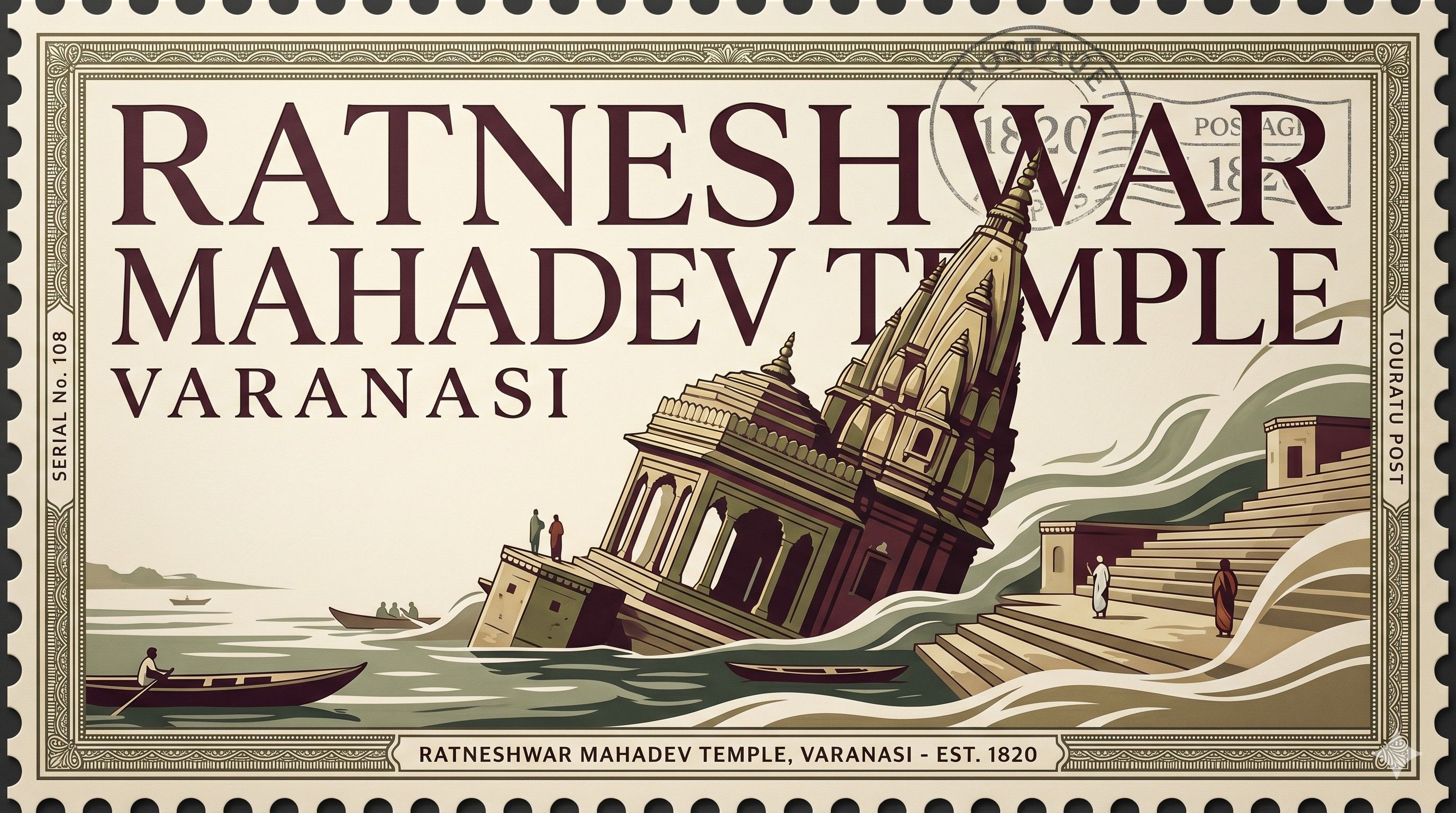
Ratneshwar Mahadev Temple: Where Stone Defies Gravity and Time Stands Tilted
The first time you see it, you'll think your eyes are playing tricks. In a city where temples rise straight toward the heavens, where symmetry and divine geometry define sacred architecture, Ratneshwar Mahadev leans. Dramatically, impossibly, at an angle that makes you instinctively reach for something stable. Nine degrees off vertical—more tilted than Pisa's famous tower—this 19th-century Shiva temple appears to be slowly surrendering to the Ganges, frozen mid-bow toward the sacred river it watches over.
I stood at Manikarnika Ghat on a February morning, the cremation fires sending thin smoke spirals into pale winter light, when someone pointed upward. There, rising from the chaos of burning pyres and grieving families, a temple seemed to be defying every architectural principle. It wasn't falling. It had been leaning for nearly two centuries, holding its impossible posture like a devotee caught in eternal prostration.
What Makes This Place Genuinely Fascinating
The Ratneshwar Mahadev Temple isn't famous despite its tilt—it's famous because of it. But reducing it to "India's Leaning Tower" misses what makes this structure truly compelling. This is a temple whose very imperfection has sparked centuries of stories, scientific debates, and spiritual interpretations that reveal how Varanasi thinks about the relationship between human ambition, divine will, and the unforgiving river that shapes everything here.
Local legend offers the most popular explanation: the temple was built by Rani Bhawani of Bengal as an act of devotion, but her construction crew committed some architectural sin—perhaps building the mother's temple before completing one for Lord Shiva himself. The lean, they say, was instant divine punishment. The temple tilted the moment it was completed, and no amount of human engineering could ever straighten it.
The geological reality is less dramatic but equally interesting. Built on the unstable alluvial soil of the Ganga's banks, the temple likely began tilting gradually as the riverbed shifted beneath its foundation. Some historians believe the structure was actually built deliberately at a slight angle, following tantric architectural principles, and later floods accelerated the lean. Others argue the river's erosion patterns simply claimed one side of its base more aggressively than the other.
What strikes visitors most isn't the tilt itself—it's how the temple continues to function. The Shiva lingam inside remains accessible. Priests still perform rituals. Devotees still pray. The structure has held its lean for generations without collapsing, as if the laws of physics decided to make an exception for this particular corner of Varanasi.
The temple's setting amplifies its strangeness. Manikarnika Ghat is Hinduism's most sacred cremation ground, a place where death and liberation intertwine constantly. Against this backdrop of burning bodies and chanted prayers, a temple that appears to be falling but never falls takes on deeper meaning. Everything at Manikarnika speaks of impermanence—except this structure that refuses to complete its collapse.
What You Can Actually Experience Here
Getting to Ratneshwar Mahadev requires navigating one of Varanasi's most intense environments. You'll likely approach via the narrow lanes descending toward the river, passing through the thick atmosphere of Manikarnika—wood piled high, bodies wrapped in white and gold, families in various stages of mourning and ritual. The sensory intensity is significant. If you're uncomfortable around open cremation, this temple may be difficult to reach.
The temple itself emerges somewhat suddenly, its tilted spire visible through gaps in the ghat's crowded architecture. The lean is genuinely startling in person—photographs don't quite capture how wrong it looks, how your brain keeps trying to straighten what clearly isn't straight.
Mornings offer the softest light and smaller crowds. The temple's orange-red sandstone catches early sun beautifully, and the Ganges behind it often holds a silver-grey quality that creates striking contrast. By midday, the cremation activities intensify, smoke thickens, and the atmosphere becomes more challenging for casual visitors.
Access to the temple interior varies. Sometimes you can enter the small sanctum and see the lingam; sometimes priests restrict entry. The exterior remains the main attraction anyway—that dramatic lean visible from multiple angles along the ghat. Photography is generally acceptable of the temple structure itself, though photographing cremation activities is deeply inappropriate and often prohibited.
The sounds here form their own landscape: crackling fires, rhythmic chanting, the clang of temple bells mixing with boat horns from the river. There's often a drum ceremony in the evenings. The air carries smoke, incense, and something else—that particular Varanasi scent that devotees find sacred and newcomers find overwhelming.
One unexpected experience: watching other visitors react. There's a moment of collective disbelief that happens repeatedly throughout the day—someone new arrives, looks up, tilts their own head as if that might help, and often laughs in surprise. In a place otherwise dominated by death's gravity, that moment of delighted confusion feels almost necessary.
Planning Your Visit Practically
Best time to visit: October through March offers comfortable weather. Early mornings (6-8 AM) provide softer light and fewer crowds. Evening aarti time brings dramatic atmosphere but significantly more people.
How long to spend: The temple itself takes 15-30 minutes to appreciate fully. However, Manikarnika Ghat and its surrounding area deserve at least an hour if you're open to the experience. Many visitors combine this with broader ghat walks.
Getting there: The temple sits within Manikarnika Ghat, accessible by foot through Varanasi's old city lanes (follow signs toward Manikarnika from the main ghat road) or by boat from other ghats. The boat approach offers that iconic tilted-temple view from the water. Auto-rickshaws can drop you at the ghat entrance, but the final approach is always on foot.
Entry and access: No formal entry fee exists for the temple. The ghat area is public. However, "guides" and "helpers" will approach you—some legitimate, some less so. A small donation to the temple is customary if you enter the sanctum.
What to know before going: Manikarnika is an active cremation ground. Cremations happen continuously, sometimes mere meters from where tourists stand. Many visitors find this profound; others find it distressing. Neither response is wrong. If you're uncertain, approach slowly and give yourself permission to leave if needed. Photographing cremations or mourning families is absolutely prohibited.
Practical tips: Wear shoes you can easily remove (temples require bare feet). Carry small denomination notes for donations. Stay hydrated—the ghat area offers little shade. A scarf or light wrap is useful for temple entry and smoke protection.
Nearby Places Worth Exploring
Dashashwamedh Ghat sits a short walk along the riverfront and offers Varanasi's most famous evening aarti ceremony—seven priests performing elaborate fire rituals as crowds gather on steps and boats. The energy is entirely different from Manikarnika: celebratory, theatrical, communal. The contrast makes both experiences more meaningful.
Kashi Vishwanath Temple, one of Hinduism's holiest Shiva temples, lies a few hundred meters into the old city lanes. The recently expanded corridor has dramatically changed access, but the temple's spiritual intensity remains. Non-Hindus may face entry restrictions, so check current policies.
The ghats themselves—Varanasi has 88 of them, stretching along the Ganges for several kilometers. Walking from Assi Ghat to Manikarnika takes 90 minutes at a contemplative pace and offers an education in how the city uses its riverfront for everything from yoga to laundry to prayer to death.
Is This Place Worth Your Time?
Ratneshwar Mahadev Temple rewards a specific kind of traveler: someone who appreciates architectural oddities, someone comfortable with mortality's proximity, someone who finds meaning in imperfection and stories about divine intervention.
If you're visiting Varanasi primarily for its spiritual tourism—the evening aarti, the boat ride, the temple visits—Ratneshwar adds a genuinely unique element. It's the kind of place you'll describe to people back home, trying to explain how strange and beautiful it felt.
If open cremation disturbs you significantly, the temple becomes harder to recommend. You cannot experience Ratneshwar without passing through Manikarnika's intensity. Some visitors find this proximity to death transformative; others find it genuinely traumatic. Know yourself before going.
Photographers will appreciate the visual challenge—capturing that impossible lean against the Ganges, especially from a boat at sunrise, produces genuinely striking images. The structure photographs beautifully at dawn and dusk when the light softens the surrounding chaos.
The temple suits solo travelers and couples more naturally than families with young children, simply because of the environment. That said, death in Varanasi is treated matter-of-factly; Indian families often bring children here without concern.
Quick Reference
Location: Manikarnika Ghat, Varanasi, Uttar Pradesh
Best Time To Visit: October–March; mornings for softer crowds and light
Recommended Duration: 30 minutes to 2 hours depending on ghat exploration
Main Highlights: The dramatic 9-degree lean, historic architecture, Manikarnika Ghat atmosphere
Nearest Transport Hub: Varanasi Junction Railway Station (4 km), Lal Bahadur Shastri International Airport (26 km)
Ideal Traveler Type: Architecture enthusiasts, photographers, spiritually curious travelers, those comfortable with death's proximity
There's a particular light in Varanasi around 7 AM when the sun clears the eastern bank and catches the ghats full-on. The Ratneshwar Mahadev Temple holds that light on its tilted stones, looking—impossibly, beautifully—like it might finally complete its fall into the Ganges any moment now. It won't. It hasn't for two hundred years. But standing there watching, you understand why people return to this city again and again: because nothing here behaves quite the way you expect, and somehow that becomes the truest thing about it.
For travelers planning their own Varanasi exploration—mapping routes between ghats, finding authentic local experiences, watching real traveler journeys through the city—Touratu's interactive map offers a way to discover the holy city through the eyes of people who've actually walked its lanes and watched its temples, tilted and straight, catch the morning light.
Loading activities…
