
Tanzania: Why Travelers Return to These 20 Places
Tanzania: Why Travelers Keep Coming Back to These 20 Places
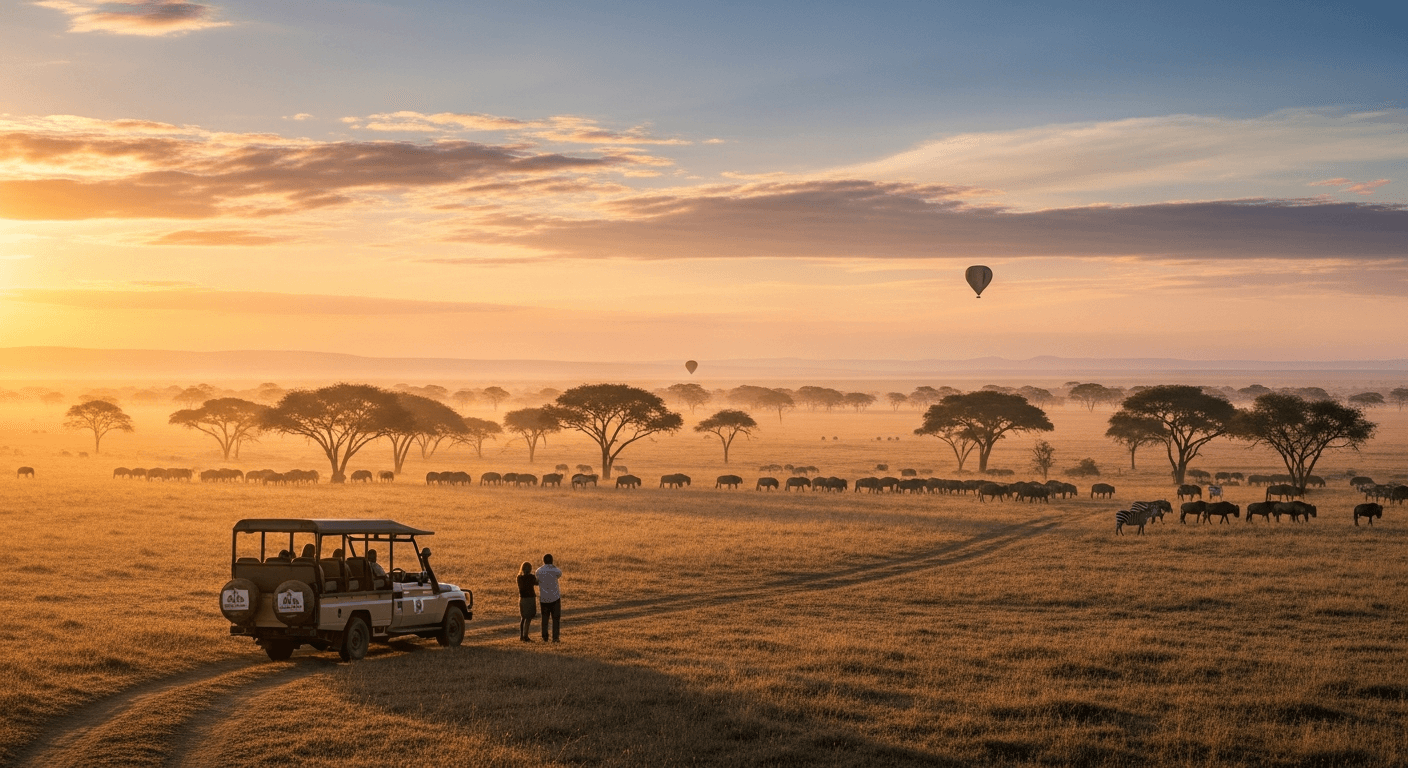
The light in Tanzania arrives differently than elsewhere—not gradually, but all at once, as though someone has struck a match against the horizon. You notice this first thing when you're standing in Dar es Salaam's early morning, watching the Indian Ocean absorb the sun, or later, when you're deep in the Serengeti and the golden hour seems to last forever. It's a quality of light that makes you understand why people return. Not because they've ticked boxes on a list, but because something in the landscape has lodged itself into their memory, asking to be revisited.
Tanzania doesn't announce itself loudly. It invites you into rhythms that predate tourism by centuries—migration routes, trade winds, the patient pulse of seasons that still govern how people move through the land. The returning traveler isn't chasing novelty; they're seeking something closer to recognition. They've felt it once and need to feel it again.
The Places That Call You Back
1. Serengeti National Park — Where Patience Becomes Currency
The Serengeti teaches you that vastness is a form of silence. What strikes returning visitors isn't just the scale—it's the way the landscape remains fundamentally indifferent to your presence. During the Great Migration (June to October), you're witnessing one of Earth's last great animal movements, but the real insight arrives in the quiet moments: watching a lone lion survey miles of grass, or sitting at dusk when the only sound is wind.
The experience transforms across seasons. The southern plains explode with newborn wildebeest in February and March. The northern river crossings deliver the visceral drama everyone imagines. But travelers return for the shoulder seasons, when the crowds thin and you remember why silence matters.
Best time: June-July for dramatic river crossings; February-March for newborn season; September-October for solitude with wildlife.
The light here turns landscape into something almost abstract by mid-afternoon—golden, almost unreal. Photograph the migration at dawn, when the animals move with the sun at their backs, creating silhouettes that need no embellishment.
Practical wisdom: Stay in separate camps for different seasons. The park is enormous; your location determines your experience entirely. Morning game drives, before heat drives animals to shade, yield the best sightings. Bring binoculars better than you think you need.
2. Zanzibar's Stone Town — Where Centuries Remain Visible
Stone Town isn't beautiful in the way postcards promise. It's intricate, weathered, complicated. The narrow streets force you to move slowly, to negotiate doorways and step over things that reveal themselves gradually. The architecture—Swahili, Arab, Indian, Portuguese influences layered across centuries—exists in the walls themselves. Each carved door tells a merchant's story.
Returning visitors stop taking photos and start noticing the details: how light cuts through the narrow alleyways at specific hours, how the call to prayer sounds different from each minaret depending on where you're standing, how evening transforms the seafront.
Best time: July-October for reliably dry weather; December-February for warm currents without excessive heat.
For photography, the blue doors of the old Omani residences photograph beautifully in golden hour, but the real magic happens during blue hour when the stone begins to glow. Wander the Darajani Market area—the activity and color are most vivid mid-morning.
Practical wisdom: Get lost deliberately. The maze-like streets are safer and more interesting than you'll find following a map. Learn to greet shopkeepers in Swahili; they'll remember you and offer real conversation instead of sales pitches.
3. Mount Kilimanjaro — The Slow Ascent as Meditation
People don't return to Kilimanjaro for the summit—they return for the walk. The mountain operates on its own timeline, forcing you to respect altitude and acclimatization. The real journey happens between 3,000 and 5,000 meters, where your body begins to understand limitation and your mind clears of everything except the next step.
The alpine desert around 4,000 meters—the Saddle between Kilimanjaro's two peaks—contains a landscape found nowhere else on Earth. Dark volcanic sand, sparse vegetation, and a quality of light that suggests you're at the edge of something.
Best time: January-February and August-September offer clearest visibility, though any month is viable with proper acclimatization.
Photograph the sunrise from Stella Point (5,756 meters)—the way the shadow of the mountain projects across the clouds below you is geometry that cameras struggle to capture honestly.
Practical wisdom: Don't rush the climb. Five-day routes are better than four-day routes, not just for acclimatization but for actually inhabiting the experience. Hire guides who live locally and know the mountain's temperament. Bring layers more substantial than you anticipate—the temperature drop is severe.
4. Tarangire National Park — The Elephants' Congregation
Tarangire deserves attention beyond its status as a "Serengeti alternative." The park orbits around the Tarangire River, which becomes a lifeline during the dry season, drawing elephants from surrounding areas in concentrations that rival the famous migrations elsewhere.
What sets Tarangire apart is the presence of baobab trees—massive, ancient, almost sentient-seeming. They frame your game drives with natural drama, and wildlife congregates beneath them. It's a landscape composed of verticals and horizontals in ways the Serengeti's horizontal vastness isn't.
Best time: June-October when the dry season concentrates wildlife around the river.
The combination of elephants and baobabs creates natural compositions that require restraint in framing—the temptation to include everything is strong, but the best images isolate an elephant against a single baobab, letting scale do the narrative work.
Practical wisdom: Book a guide who knows the river's patterns across seasons. The best wildlife encounters happen near water sources, and local guides read the landscape like a text.
5. Lake Tanganyika — An Inland Sea with Rhythm
Lake Tanganyika operates according to a different logic than Tanzania's more famous safari destinations. The second-deepest freshwater lake on Earth, it's surrounded by mountains and accessible by water routes that make arrival feel genuinely remote.
Returning visitors seek the lake for its stillness and the villages along its shores—places like Gombe Stream and Mahale Mountains where Jane Goodall conducted her revolutionary chimpanzee research. The experience is quieter, more introspective, less about conquest and more about coexistence.
Best time: May-October for dry season stability and easier lake travel.
Sunrise over the lake from a small boat is photogenic, but the real visual reward is the mountains emerging from mist during morning hours—that transition between night and visibility.
Practical wisdom: Travel by boat is slow and requires patience, but it's the point. Pack more reading material than you think necessary. The rhythm of lake life means flexible schedules matter more than tight itineraries.
6. Ngorongoro Crater — Contained Wilderness
The crater functions like a natural amphitheater where you can observe an entire ecosystem from the rim. Unlike the Serengeti's vastness, Ngorongoro's scale is human, or at least comprehensible. The wildlife exists in layers—lions on the crater floor, flamingos on the soda lakes, hyenas in their established territories.
Returning travelers often combine Ngorongoro with Laetoli to visit the human footprints preserved in volcanic ash—a 3.6-million-year-old record of early humans walking together. The juxtaposition of ancient human presence with contemporary animal abundance creates a profound temporal disorientation.
Best time: June-October for dry season game viewing; December-March for wildflower blooms on the crater rim.
The crater rim at sunrise offers unobstructed views of the interior basin, with wildlife visible in the middle distance. The scale is perfect for understanding the entire landscape in a single frame.
Practical wisdom: Descend early and stay late to avoid the crowds arriving from nearby lodges. The crater floor temperatures rise significantly; bring more water than you anticipate needing.
7. Pemba Island — The Quiet Archipelago
Zanzibar receives the tourists; Pemba receives the few travelers seeking something undeveloped. The island remains primarily coconut plantations and fishing villages, with diving as the primary non-agricultural activity. The beaches have none of Zanzibar's architectural drama but possess a different kind of beauty—simpler, less mediated.
The real gift of Pemba is the absence of expectation. You aren't here because it's famous; you're here because you want to understand what Zanzibari culture looks like before tourism became its primary economy.
Best time: August-September for best diving conditions; June-October for general stability.
Underwater photography opportunities are world-class, but the visual discovery often happens in villages—the geometry of fishing boat repairs, the color of fishing nets against turquoise water.
Practical wisdom: Ferry schedules are unpredictable; build buffer days into your itinerary. Bring cash; ATMs are minimal. Hire a local guide to understand village life; fishermen particularly offer rich conversation and context.
8. Selous Game Reserve — The Untamed Counterpoint
While Serengeti and Ngorongoro receive spotlight, Selous sprawls across vast territory with far fewer visitors. The reserve is Tanzania's largest protected area, characterized by rugged terrain and a sense that wildlife still dictates human presence rather than the reverse.
Game drives here feel genuinely exploratory rather than following established tourist routes. Boat safaris on the Rufiji River offer different vantage points, and the diversity of ecosystems—from riverine forest to open woodland—creates visual variation that the Serengeti's grassland doesn't provide.
Best time: June-October for water concentration and visibility.
The Rufiji River at sunset, with hippos and crocodiles emerging as light fades, offers dramatic compositional possibilities. The riverbank vegetation creates natural framing.
Practical wisdom: Selous requires time investment; it's not a day-trip destination. Book multi-day packages that combine game drives and boat safaris. The roads are rough; expect longer travel times than on more developed reserves.
9. Ruaha National Park — The Wilderness Most Forget
Ruaha remains one of Tanzania's least visited national parks despite containing extraordinary wildlife density and remarkable landscape diversity. The park's name comes from the Ruaha River, which cuts through granite hills and sandstone formations that look like something from a geological textbook.
The park's remoteness means that wildlife behaves without the behavioral adjustment that heavy tourism induces. Lions are more relaxed, elephants move according to their own logic. The experience feels less curated.
Best time: June-September for concentration of wildlife around water sources; November-March when the vegetation is lush (though roads can be impassable).
The granite outcroppings create natural frames and the terrain's variation—from river valleys to elevated plains—means your sightings occur in visually interesting contexts rather than against monotonous backgrounds.
Practical wisdom: Few lodge options exist; book well in advance. The park requires serious commitment in time and logistics, but that commitment is exactly what keeps it from being overwhelmed by tourism.
10. Moshi and Mount Mawenzi — The Second Mountain
While Kilimanjaro claims attention, Mawenzi—Kilimanjaro's jagged eastern peak—offers technical climbing for experienced mountaineers and stunning visual drama for those observing from lower elevations. The town of Moshi, gateway to Kilimanjaro's northeastern approach, has developed a modest tourism culture around the mountain without surrendering its character as a working town.
The surrounding coffee plantations offer cultural context that pure mountain tourism misses—understanding what the region produces, how people live, creates depth of comprehension.
Best time: Same as Kilimanjaro (January-February, August-September), though Moshi town is pleasant year-round.
Mawenzi's jagged ridgeline is visually dramatic, particularly when photographed from lower elevations during golden light, when the peak's texture becomes visible.
Practical wisdom: Stay a day or two in Moshi before or after your Kilimanjaro climb. Visit a coffee plantation as part of your acclimatization day. Local guides in Moshi offer more authentic cultural context than lodge-based guides.
Moving Through Tanzania: Rhythms and Routes
Getting between these places requires patience and flexibility. The road infrastructure has improved substantially, but "road" remains a relative term—what matters is understanding the logic of Tanzanian time. A four-hour journey frequently takes six. This isn't inefficiency; it's the pace at which the country operates, and fighting it creates frustration where adaptation creates unexpected discoveries.
Domestic flights connect the major destinations efficiently. Air Tanzania and Precision Air operate regular routes between Dar es Salaam, Kilimanjaro, and the major safari parks. Flying means losing the ground-level perspective of how the landscape transitions, but it preserves time for actually experiencing destinations.
The Tanzam Railway offers a romantic alternative between Dar and Zambia, moving slowly enough that the landscape becomes companionable rather than scenery. The journey itself becomes part of the experience rather than transition between experiences.
Timing matters not just seasonally but circularly—understanding that migrations happen, that rainfall patterns govern accessibility, that holiday seasons concentrate tourists. The travelers who return are usually those who've learned to move against these currents slightly, arriving in early June before peak migration season, or September when the crowds have moved onward.
Etiquette carries real weight. Swahili greetings open doors that direct requests don't. Photography requires consent—not as policy but as basic respect. The landscape and wildlife are shared resources, not possessions to capture. This mindset shift alone improves both the experience and the quality of interaction with people encountered along the way.
Discovering the Routes That Matter
On Touratu's interactive map, you can explore the actual routes that experienced travelers trace through Tanzania—not just the major destinations but the roads connecting them, the timing that works, the patterns that emerge when you look at where people actually spend their days. See how different journeys take shape through seasonal choices and layered interests.
The Return
Tanzania invites return not through spectacle but through recognition. You find yourself remembering specific moments—the weight of silence at dawn in the Serengeti, the precise color of light in Stone Town's alleyways, the conversation with a Maasai guide who taught you to read a landscape by its smallest details. These memories don't fade; they deepen. And that deepening is what brings travelers back, again and again, to these spaces where the land and the people and the rhythm of seasons continue their conversation whether witnessed or not.
Loading activities…
