
20 Best Places to Visit in Uzbekistan
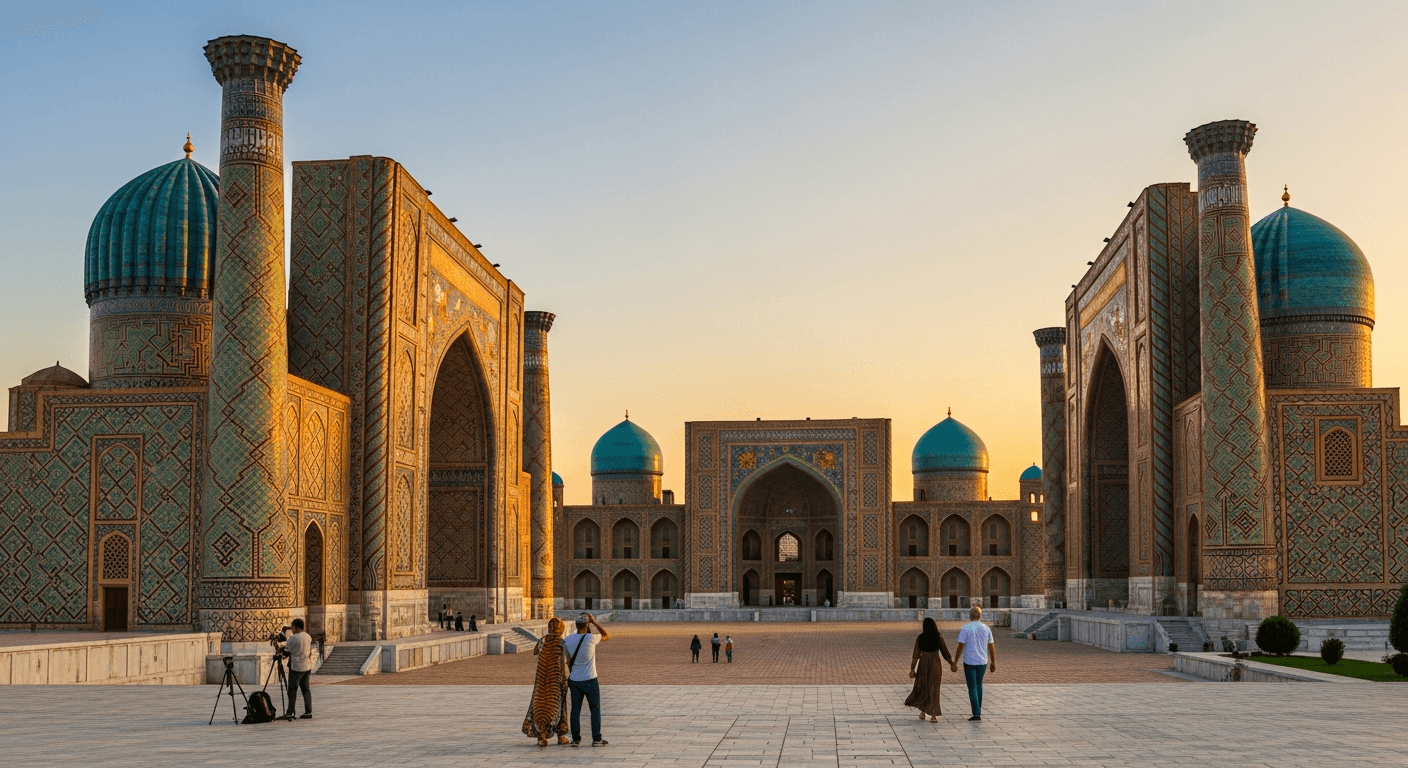
Uzbekistan: Why Travelers Keep Coming Back to These 20 Places
The first time you taste Soviet-era tea in a cramped samovar shop in Tashkent, or watch the light hit turquoise tilework at exactly 4 p.m., you understand why Uzbekistan has this peculiar gravity. It pulls travelers back. Not because of a checklist—though the checklist exists—but because of something quieter. A feeling that you've touched something authentic, a place where tourism hasn't yet calcified into performance.
Uzbekistan sits on the Silk Road like a jewel that keeps its secrets. Yes, the monuments are magnificent. But there's also the everyday magic: the way taxi drivers negotiate fares with the language of hands, how bazaars smell exactly the same as they did centuries ago, the patient faces of craftspeople who've spent decades perfecting a single technique. Come here once, and you'll plan your return before you've left.
1. Samarkand's Registan: Where Geometry Meets Obsession
There's a reason photographers arrive before dawn. The Registan—three madrassas arranged in a U-shape—doesn't teach patience; it demands it. The tilework here isn't merely decorative; it's a visual language of impossible precision, each ceramic piece placed by hands long gone. Watch how the blues shift as the sun moves. Morning yields pale turquoise; afternoon brings navy depths.
The experience intensifies in solitude. Arrive by 6 a.m., or risk navigating crowds that flatten the intimacy. The courtyard echoes differently when it's yours alone.
Best time: October or April, when light is forgiving and air is cool enough for lingering.
Insider note: The restorations are visible—some tiles are clearly recent. Rather than diminish the site, this honesty makes it feel alive, still being tended.
Photography moment: Shoot from the eastern corner at sunrise. The light rakes across the facade, revealing texture and depth that frontal angles miss.
Practical: Hire a guide who speaks slowly and knows the geometric symbolism. The patterns tell stories; you need an interpreter.
2. Bukhara's Old City: A Living Labyrinth
Bukhara doesn't perform for visitors—it simply continues. Women in jewel-colored robes navigate narrow bazaar corridors. Donkeys still carry loads. Artisans work in near-darkness, their hands more reliable than their eyes. This is what tourism often fails to capture: the mundane texture of a place that refuses to be simplified.
The old city is a maze that rewards getting lost. Every corner yields something unexpected—a caravanserai where men sip chai, a tiny gallery selling contemporary art in a 400-year-old building, a family workshop making metalwork using techniques unchanged since the Timur dynasty.
Best time: November through February. The heat that scatters crowds in summer is gone, but winter hasn't yet arrived.
Insider note: Speak quietly. Listen more. The city has its own rhythm; tourists who impose Western pace on Eastern time tend to miss everything.
Photography moment: The covered bazaars—particularly the tea market and cloth bazaar—offer low light and genuine activity. Shoot without asking permission; candid moments are the only honest ones here.
Practical: Wear comfortable shoes designed for standing, not walking. The real experience happens at rest, in tea houses and workshops.
3. Khiva's Itchan Kala: Stepping Into a Mirage
Khiva's walled inner city feels less like a historical site and more like a stage set that's somehow become real. Turquoise domes, terracotta walls, and narrow passages create an atmosphere of sustained otherworldliness. The lack of traffic amplifies this feeling—no engines, just footsteps and voices.
The trade-off is crowds. Khiva has become Instagram's favorite Uzbek destination, which means late afternoon brings a deluge. But visit at dusk, when tour groups have eaten dinner elsewhere, and you'll find pockets of genuine atmosphere.
Best time: May or September. Spring and early autumn offer the Goldilocks of tourism seasons.
Insider note: The city was deliberately preserved by the Soviet Union as a museum. Some criticize this choice, but it's also the reason Khiva exists at all—economic collapse often preserves more than prosperity ever could.
Photography moment: The Kalta Minor minaret—famously unfinished—glows pink and gold during the hour before sunset. Position yourself in the main square and wait.
Practical: Book accommodations inside the walls if possible. The experience of night in a city without outside noise is worth the premium price.
4. Tashkent's Independence Square: Power and Parkland
The capital rarely makes travelers' highlights, which is exactly why you should linger here. Independence Square is vast—purposefully so, built to commemorate the 1966 earthquake that destroyed the city. The monuments are serious, Soviet in their grandeur, but the experience is something else entirely.
Uzbek families claim the square on weekends. Children run between fountains. Couples sit in shadows. Street musicians play. This is Tashkent's heart, not because of history books but because of life as it's actually lived.
Best time: May through June. Spring has energy without the aggressive heat of July.
Insider note: The metro beneath the square is an artwork. Each station is a different design—some practically churches of tile and stone. Ride it simply to observe.
Photography moment: Position yourself for the 30-minute window when sunset catches both the monument and the surrounding gardens.
Practical: The square is surrounded by cafes. Choose one facing outward, order tea or plov, and watch. This is the best "getting to know" hour in the city.
5. Samarkand's Gur-e-Amir: The Quiet Tomb
While the Registan draws crowds, the Gur-e-Amir remains surprisingly intimate. This is Timur's tomb—the conqueror himself buried beneath that emerald dome. The interior is smaller than you'd expect, more contemplative. The light through the dome creates a naturally meditative space.
The emotional weight here is different from other sites. Standing above the grave of a man who reshaped continents, you feel the strange compression of centuries.
Best time: Late afternoon, when light enters through the dome at a particular angle and the few visitors have typically departed.
Insider note: Photography is prohibited inside, which forces genuine presence. Your phone becomes useless; you must actually look.
Photography moment: The exterior at golden hour offers the dome at its most luminous.
Practical: Bring socks. You'll remove shoes. The floor is beautifully worn from centuries of visitors doing exactly what you're doing.
6. Shakhrisyabz: Where Tourists End and Travelers Begin
Most visitors skip Shakhrisyabz. The route from Samarkand to Bukhara doesn't naturally include it. This is precisely why you should go. The 1.5-hour drive passes through farmland and small villages—the real Uzbekistan, not the curated version.
Shakhrisyabz was Timur's birthplace, and the ruins of his palace still convey power. But more compelling is the lack of infrastructure for tourism. You'll navigate using instinct and hand gestures. You'll eat in restaurants where no English menus exist. This is what travel once was.
Best time: Spring. The flowers and mild temperatures make the town almost vulnerable in their beauty.
Insider note: Very few Western travelers appear here. The kindness directed toward you isn't performative; it's genuine.
Photography moment: The palace ruins at sunrise, before the heat makes standing still uncomfortable.
Practical: Hire a driver from Samarkand for the full day. The journey itself is more interesting than the destination.
7. Fergana Valley: The Overlooked Heart
The Fergana Valley registers low on most itineraries—too far east, too removed from the famous triangle. For exactly this reason, it offers something rarer: the ability to exist in Uzbekistan without the weight of tourism infrastructure.
Margilan's silk factories still operate. Andijan's bazaar hums with commerce oriented toward locals, not visitors. Osh bazaar in Kyrgyzstan is a two-hour detour but worth it for the crossing itself—how borders work, how merchants navigate them, how communities exist across political lines.
Best time: September through October. The heat of summer has passed; winter hasn't begun.
Insider note: This region has a distinct identity separate from Samarkand-Bukhara tourism. Expect less English, more genuine curiosity about why you're here at all.
Photography moment: The silk-dyeing process in Margilan workshops. The colors are so vivid they seem impossible until you see workers coaxing them from pots.
Practical: Take the shared taxi (marshrutka) from Andijan. The experience of transport alongside locals is more valuable than any guide.
8. Samarkand's Shah-i-Zinda: A Street of Tombs
This avenue of mausoleums is quiet in a way the Registan cannot be. Each small tomb represents different periods and artisans, creating an accidental museum of tilework evolution. The intimacy comes from scale—these are personal monuments, not imperial statements.
Walking upward through the avenue, you ascend both physically and emotionally. The experience is meditative in a way that crowds usually prevent.
Best time: Morning, before the day's heat and tour groups.
Insider note: The restorations are ongoing. You're watching a site actively being preserved, which adds a layer of complexity absent from "completed" monuments.
Photography moment: The passages between tombs offer framing opportunities. Shoot through doorways to create depth.
Practical: Climb slowly. The narrow staircases are steep, and the payoff is in noticing details.
Getting Around Uzbekistan: The Practical Poetry
Uzbekistan's transport reveals something essential about the place: how the government has engineered control through infrastructure. The highways are excellent. Marshrutkas—shared minibuses—follow routes with the precision of trains. Taxis negotiate fares in a beautiful dance of expectation and realism.
Consider buses over flights when traveling between cities. The journey takes longer, but you'll pass through villages, rest stops, and landscapes that planes skip entirely. These transitions matter. They prepare your mind for the arrival.
In cities, walk when possible. Neighborhoods shift from tourist-focused to lived-in within minutes. The Turkisb bazaar in Tashkent or the craftspeople's quarter in Bukhara feel different because they haven't been packaged. Time your meals outside tourist restaurants—this isn't a safety concern but a flavor one. Street-food vendors and family-run cafes offer authenticity that no guide can prescribe.
Respect the quiet Fridays during prayer time. Mosques fill, shops close, the rhythm slows. Rather than fighting this, align with it. You'll understand the city more deeply by pausing than by pushing forward.
Mapping Your Path Through Uzbekistan
The beauty of Uzbek travel lies in how routes connect, how each place informs the next. Explore Touratu's interactive map to see how other travelers have woven these destinations together—which villages they passed through, which side routes they discovered, which moments they captured. The map reveals not the official tourist circuit but the actual paths people take, the detours that become the memory.
Why Travelers Return
Uzbekistan doesn't ask you to love it. It simply makes space for you to exist within it, and somehow, that absence of demand creates the deepest connection. You'll leave planning your return before you've truly arrived. Not because you've checked boxes, but because you've begun to understand a place—its geometry and soul, its markets and monuments, its quiet power to make the world feel both vast and knowable.
Loading activities…
