
Victoria Australia: Best Places to Visit Guide
Victoria, Australia: Beyond the Guidebook
The moment you step out of Melbourne's Flinders Street Station onto a rain-dampened pavement, you understand something about Victoria that no travel blog can convey: this state doesn't perform for visitors. It simply exists, quietly confident, with attractions that feel discovered rather than packaged.
I arrived on a Tuesday in autumn, expecting the usual suspects. What I found instead was a state that rewards curiosity more than a checklist mentality. Victoria isn't about one standout wonder. It's about rhythm—the way different regions speak to different moods and seasons, the way a single day can shift from city sophistication to alpine solitude to coastal wildness.
What Actually Happens When You Explore Victoria
Victoria occupies a peculiar space in Australian travel. It's overshadowed by its louder neighbours—Sydney's operatic grandeur, the outback's mythic vastness—yet it contains some of the country's most interesting geography compressed into a manageable size.
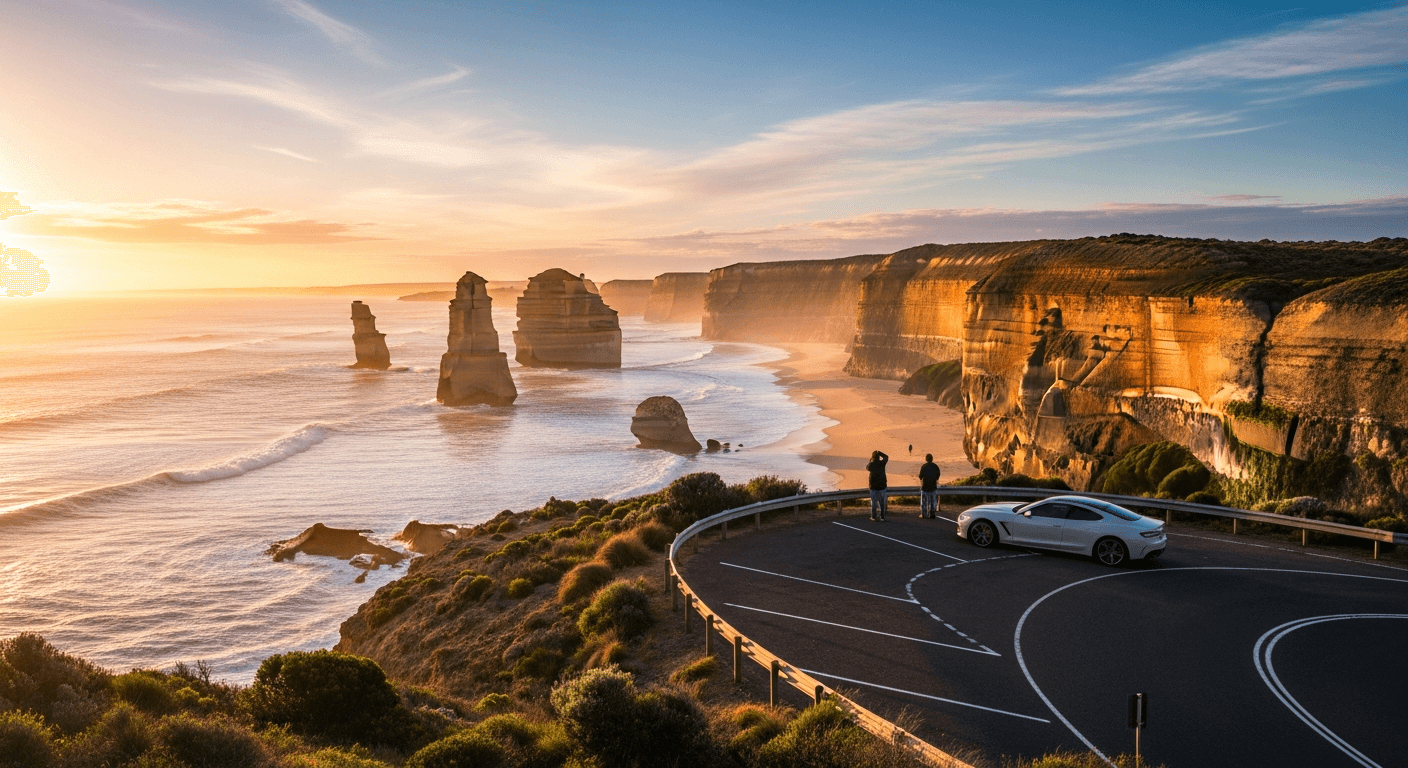
The Great Ocean Road is the most famous drawcard, and yes, it's worth the drive. But what genuinely stayed with me wasn't the Twelve Apostles formation itself (which is impressive, though less dramatic than photographs suggest). It was a morning stop at Lorne, an artsy beach town where I sat in a weathered café watching surfers move through grey-green water, the conversation around me drifting between property prices and local gossip. That's the real texture of Victoria—not monument-gazing, but inhabiting the rhythms of its towns.
The Dandenong Ranges offer something different: mountain air, fern gullies thick with moisture, and a handful of charming townships that attract weekend visitors without feeling overrun. Ferntree Gully and Belgrave have a nostalgic quality—they're the kind of places where locals know each other, where small galleries and second-hand bookshops outnumber chain stores. If you visit after rain, the forest smells like earth and renewal. This is Victoria at its most intimate.
Melbourne itself demands time. Not because every corner is Instagram-worthy, but because the city has actual layers. The central laneways between Swanston and Exhibition streets are genuinely interesting—not because they're secret (everyone knows about them), but because they've evolved organically. Street art, independent coffee roasters, vintage shops, and restaurants run by people who clearly care about their work. Spend a morning getting intentionally lost here, stopping when something catches your eye rather than consulting your phone every ten minutes.
If you move away from the obvious routes, Yarra Valley offers a quieter wine experience than more famous regions. The landscape is gently rolling, the cellar doors less crowded, and the quality genuinely good. I sat on a winery veranda with a glass of Pinot Noir watching vineyards fade into mist, and it felt less like a tourist activity and more like a normal Wednesday afternoon for someone who happens to live here.
The Mornington Peninsula flips between sophisticated and relaxed. The southern coast around Sorrento and Portsea has an upmarket beach-house quality; the bay side is where families and locals actually spend time, less polished but more genuine. The 1080 steps down to Sherbrooke Falls are a reminder that Victoria packs surprising biodiversity into unexpected places.
For something genuinely different, consider the Grampians (Gariwerd). The sandstone ranges create a landscape that feels almost otherworldly compared to coastal Victoria—dramatic ridgelines, Aboriginal cultural sites, and hiking trails that reward effort with real solitude. The drive from Melbourne takes three hours, which is precisely why fewer people make the journey.
What to Expect: The Practical Reality
Best time to visit: Autumn (March to May) gives you mild weather without summer crowds, and the light has a particular quality—clearer somehow, less harsh. Spring (September to November) is equally good, though more popular and occasionally rainy. Summer (December to February) brings intense heat and Melbourne's notorious humidity. Winter is mild but grey; you'll experience days where the sky and sea are indistinguishable.
How long to stay: Three days is the absolute minimum if you're visiting Melbourne only. Five to seven days lets you combine Melbourne with either the Great Ocean Road or the Mornington Peninsula without feeling rushed. Two weeks is ideal if you want to properly explore multiple regions without driving like you're late for something.
Transport: Rent a car if you want genuine flexibility beyond the coast. Melbourne's public transport is good within the city; regional travel becomes sporadic. If driving, Australian roads are well-maintained but distances deceive—what looks like an hour's drive often takes longer due to variable speed limits and terrain.
Crowds: Melbourne's laneways are constantly busy but not unbearably so. The Great Ocean Road is genuinely crowded from November through February, particularly on weekends. You'll share the experience with dozens of other tourists at the Twelve Apostles. Quieter periods are March to May and September to early November.
Nearby Places Worth Knowing About
Phillip Island: The penguin parade (small penguins returning to shore at dusk) attracts coach tours and families. It's efficient tourism—you watch penguins in about 90 minutes—but the penguin experience itself is charming and worth the drive if you're in the region. Plan for crowds and allow an extra hour for any delays.
Geelong: The waterfront precinct along Corio Bay has been significantly developed and is genuinely pleasant. The street art and cafés give it character beyond a transit stop. If you're driving the Great Ocean Road from Melbourne, stopping here for coffee before continuing is logical and rewarding.
Wilsons Promontory: South of Melbourne, this coastal park feels wilder and less managed than other major attractions. The granite peaks, rocky beaches, and hiking options appeal to people seeking actual nature rather than scenic viewpoints. The drive is long and the park itself is large—you need at least half a day to justify the journey.
Is It Worth Visiting?
Yes, with the right approach. Victoria rewards curiosity and time more than it rewards efficiency. If you arrive expecting dramatic scenery and tick-box experiences, you'll find them, but you'll miss the actual substance of the state.
The genuine appeal lies in the detail: the conversation with a barista in a Melbourne laneway, the quality of light across the Dandenong Ranges, the sudden wildness of the Grampians, the way a coastal town like Lorne functions as an actual place where actual people live, not just a photo stop.
Victoria is sophisticated enough for multiple visits without repeating yourself. It's close enough to Melbourne to build a varied trip without excessive driving. It's Australia without the outback stereotypes, which makes it perfect for people curious about Australian landscape and culture without the accessibility challenges of more remote regions.
It's not Instagram's favourite Australian state. That's partly why it's worth visiting.
Quick Facts
- State capital: Melbourne (population 5.4 million)
- Total area: 237,659 km²
- Best regions: Melbourne, Great Ocean Road, Mornington Peninsula, Dandenong Ranges, Yarra Valley, Grampians
- Key attractions: Great Ocean Road, Twelve Apostles, Dandenong Ranges fern gullies, Melbourne laneways, Yarra Valley vineyards
- Getting there: Fly into Melbourne Airport; domestic or international connections available
- Currency: Australian Dollars (AUD)
- Time zone: Australian Eastern Time (AEDT in summer, AEST in winter)
- When to visit: Autumn or spring for optimal conditions
Victoria doesn't need selling. It simply requires the kind of attention that reveals itself slowly—through conversation with locals, through morning walks before other tourists arrive, through driving roads without destination pressure, through staying in towns long enough that they begin to feel familiar rather than novel.
Use Touratu's interactive map to trace different routes through Victoria—from coastal drives to mountain routes—and explore travel videos that capture the actual texture of moving through these regions. The map lets you build a realistic itinerary based on distances, driving times, and seasonal conditions, turning research into genuine planning rather than Pinterest collecting.
Loading activities…
