Shri Kashi Vishwanath Temple: What to Expect
The Weight of Prayer: Inside Shri Kashi Vishwanath Temple
The morning bells haven't stopped ringing in three hours. You stand in a corridor so narrow that three people shoulder-to-shoulder would be a crowd, and you're one of maybe two hundred pressed into this space. The air tastes like incense and something older—centuries of devotion accumulated in stone and marble. A priest passes, his cotton dhoti brushing your leg. He doesn't apologize. Nobody does. This is Varanasi, and in Shri Kashi Vishwanath Temple, you're not a visitor. You're part of something that doesn't pause for outsiders.
The first time you understand why people call Varanasi sacred isn't when you read about it. It's when you stop trying to make sense of the chaos and let it absorb you instead.
Why This Temple Matters Beyond the Guidebooks
Shri Kashi Vishwanath isn't famous because it's architecturally revolutionary or because it sits in isolation on a mountain. It's famous because of what it represents to roughly 330 million Hindus who believe that dying here releases you from the cycle of rebirth. That's not mythology to the people praying here—that's certainty. The temple receives that weight every single day.
Built in 1776 by Ahilyabai Holkar (a widow who ruled an Indian kingdom and became one of history's more interesting figures), the temple is relatively young by Hindu standards. Its earlier versions were destroyed during various invasions, which is why there's no thousand-year-old structure to point at. What exists now is what the Maratha queen rebuilt, and what the community has maintained ever since.
The inner sanctum houses a black stone lingam—the symbolic representation of Shiva—that pilgrims believe contains divine energy. Whether that belief translates physically or spiritually depends entirely on what you bring to it. What's undeniable is the intensity of faith in this space. People don't visit Kashi Vishwanath the way they visit the Eiffel Tower. They arrive carrying loss, hope, fear, gratitude. It changes the atmosphere.
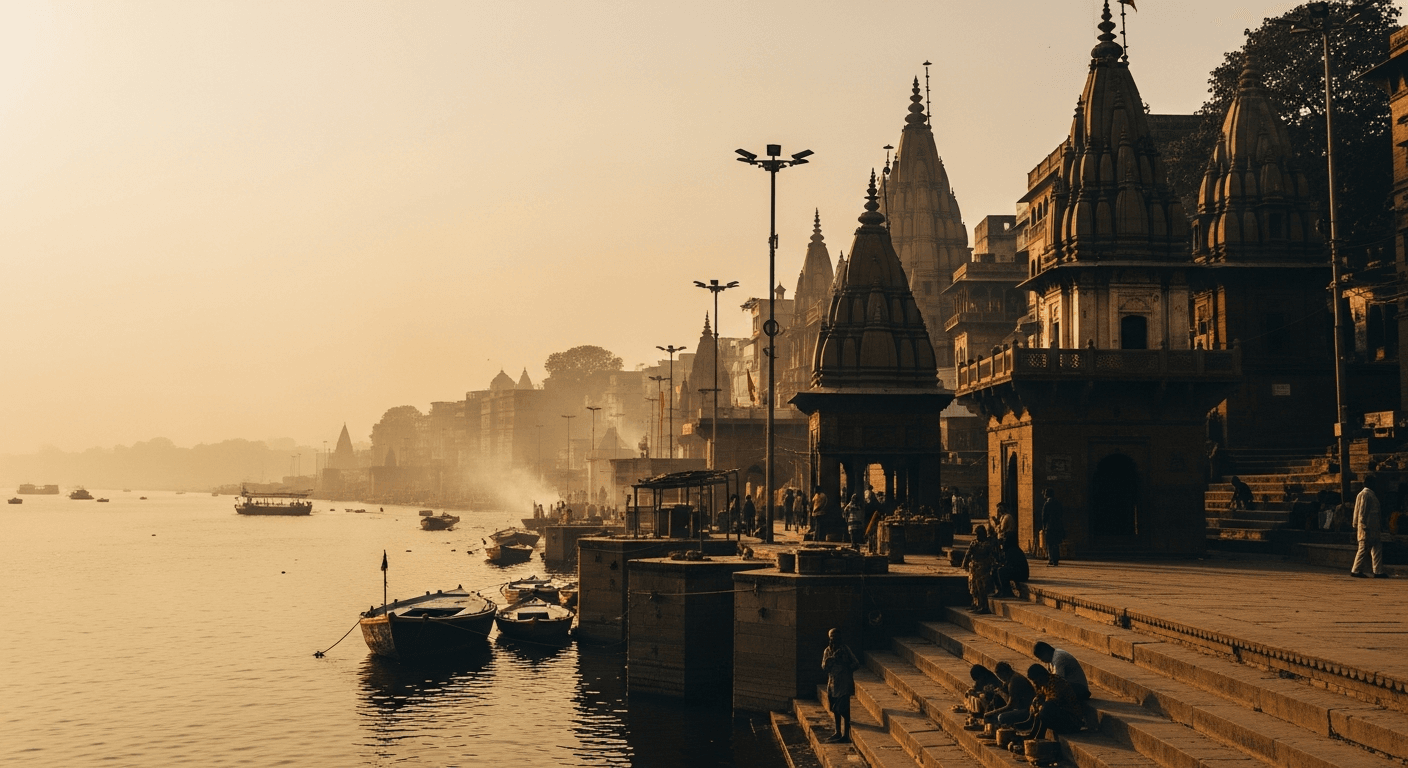
The temple sits directly on the Ganges' western bank, one of the river's most sacred points in Hindu cosmology. This isn't metaphorical proximity—the river's present shape and the temple's location are entangled. You can smell the river before you reach the temple, and once inside, you can hear it.
What Actually Happens When You Enter
The experience divides into stages, whether you're Hindu or just curious.
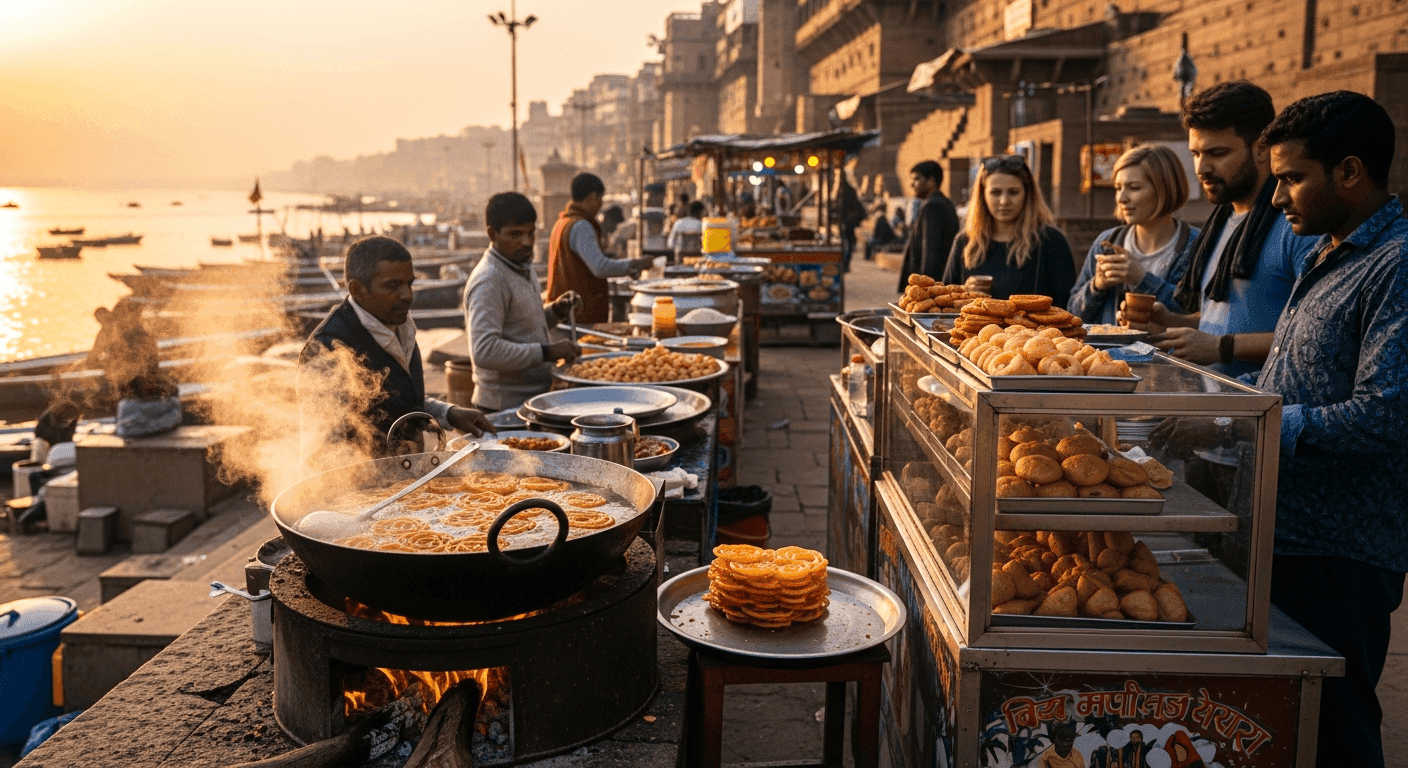
Getting to the entrance is your first test. The streets leading to the temple are congested with prayer shops, flower vendors, priests looking for donations, tourists with cameras, and locals moving with purpose. The disorder has a rhythm once you accept you won't understand it immediately. Give yourself 15-20 minutes to walk from the main road to the temple's outer walls, even if it's technically 300 meters.
At the security checkpoint, guards conduct pat-downs and bag checks. They're efficient and professional. You'll be asked about your footwear—shoes must be left at designated lockers. The system isn't always reliable, so consider wearing slip-ons and leaving valuables in your hotel. Once you've surrendered your shoes, you've truly committed to the experience.
The corridors narrow immediately. The temple's architecture prioritizes spiritual experience over comfort. Passages are deliberately confined, creating intimacy rather than grandeur. Marble floors are cool under bare feet. The air becomes dense with sandalwood, marigold, and the metallic warmth of oil lamps. Loudspeakers broadcast mantras and chants at a volume that initially seems oppressive but eventually becomes meditative.
Approaching the inner sanctum requires patience. Depending on the time of day and season, you might queue for 30 minutes or four hours. The queue moves in compressed groups—this isn't orderly. You're channeled with 50 other people into spaces designed for 10. There's pushing, but it's purposeful rather than aggressive. Older women pray while pressed against you. A man holds his child's hand while chanting. You become part of a collective action, which is partly the point.
The actual darshan (viewing of the deity) lasts 5-15 seconds. You reach the chamber where the lingam sits draped in flowers, behind a barrier, attended by priests in white. You have seconds to look, take in whatever you came for, and move. Some people press their foreheads to the barrier. Some just observe. Some cry. Then you're moving forward again, swept by the human current toward the exit.
After the inner sanctum, you can walk around the outer sanctum in a clockwise direction, a practice called pradakshina. This is where the tempo slows. You're still among crowds, but the frantic energy has dissipated. This is where you can breathe and actually absorb the weight of the space.
The entire experience—from security to exiting—typically takes 45 minutes to three hours, depending on crowds.
Planning Your Visit: The Practical Side
Best times to visit: Early morning (5 AM-7 AM) is genuinely less crowded, though "less crowded" here means manageable rather than peaceful. The temple is especially full during Hindu festivals—Mahashivratri draws enormous crowds in February/March. Evenings have special rituals but also more pilgrims. Monsoon season (July-September) sees fewer tourists but the streets become muddy and chaotic.
Duration: Allocate two hours minimum. If you're not Hindu and want to observe rather than pray, three hours lets you move slowly enough to actually see things.
Access: The temple sits in Varanasi's old city, about 2 km from the main Cantonment station. Auto-rickshaws are the primary transport; negotiate the fare beforehand (expect 50-100 rupees). Tell the driver the location clearly—he'll drop you at the temple's outer streets. Walking from there is mandatory and genuinely the better choice anyway, as you see the actual neighborhood.
Crowds: There's no secret bypass. This is a major pilgrimage site. If your goal is a solitary, meditative experience, this isn't it. The temple's power partly comes from its refusal to be exclusive.
Entry fees: There's no formal entrance fee. Donation boxes exist throughout, and priests will suggest donations (100-500 rupees is normal). This isn't obligatory, though the social pressure can feel strong.
Dress code: Conservative clothing (shoulders and knees covered) is expected. During festivals or Mahashivratri, enforcement is stricter. Remove your shoes, obviously.
Nearby Places Worth Time
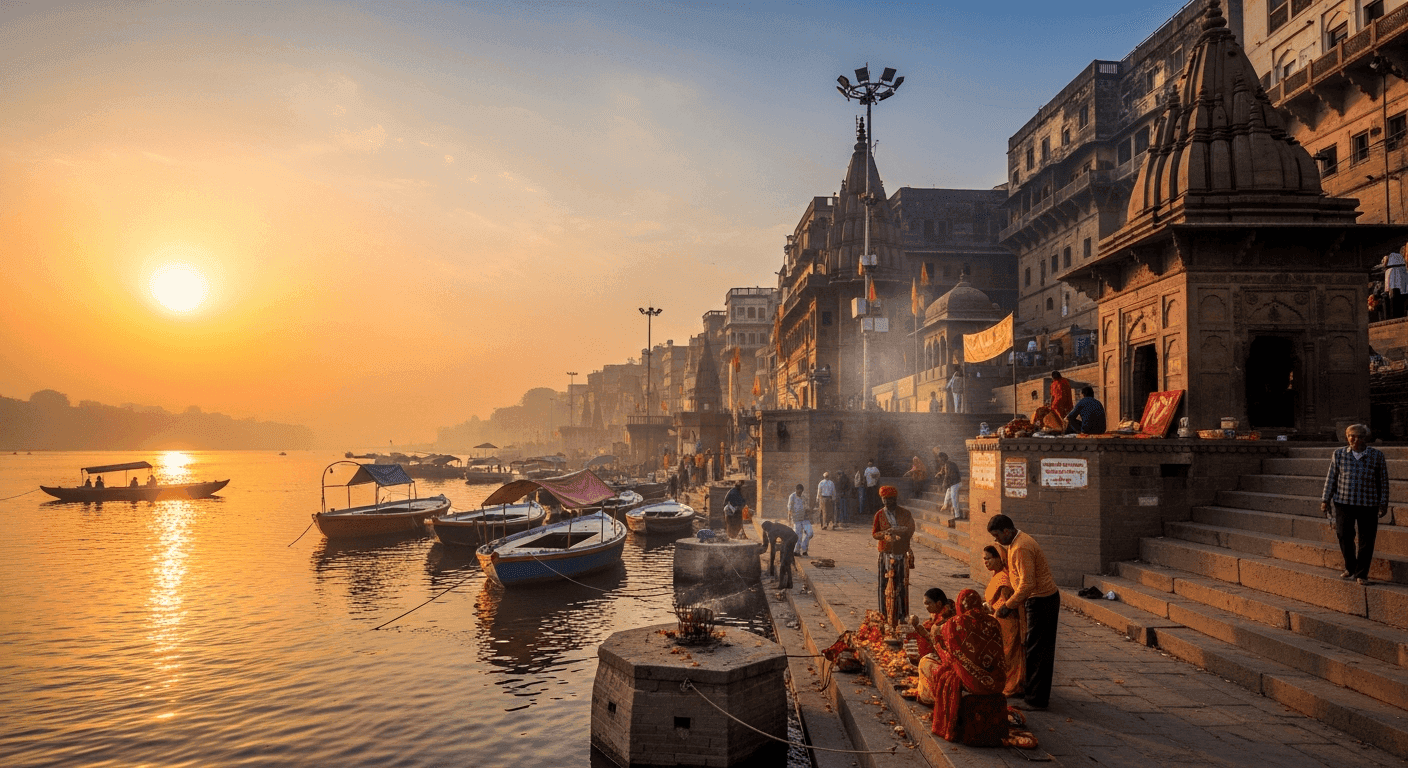
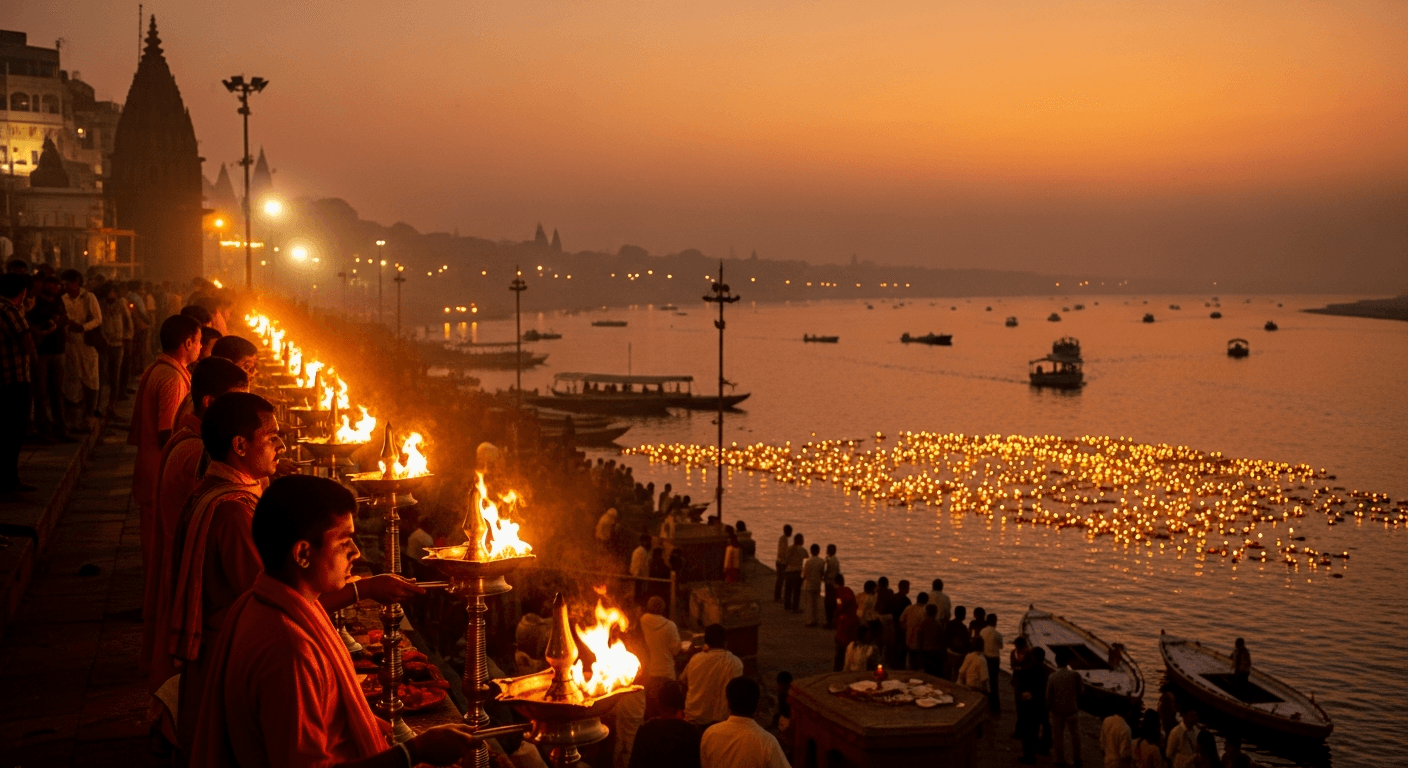
The Ganges at Dashashwamedh Ghat (200 meters away): This is where the Ganges' most visible activity happens—cremations, morning prayers, ritual bathing, laundry. It's confrontational to Western sensibilities but essential to understanding what Varanasi actually is. The boundary between death and daily life here is porous. Spend 30 minutes observing.
Vishwanath Gallery (inside temple complex, hard to find): A small museum documenting the temple's history and architecture. Most people miss it entirely. Worth 15 minutes if you want context beyond the experiential.
Annapurna Temple (400 meters away): A smaller shrine dedicated to the goddess of food and nourishment, less crowded than Kashi Vishwanath. The contrast shows how scale affects spiritual atmosphere.
Is It Worth Visiting?
Yes, but with clarity about what you're doing.
If you're expecting a beautiful temple with photo opportunities and a meditative atmosphere, you'll be disappointed. The temple is deliberately packed, architecturally modest, and specifically designed to prioritize pilgrims over aesthetics.
If you want to experience one of the world's most intense spiritual concentrations—a place where millions of people have come with genuine faith and desperation and hope for centuries—then yes, absolutely. You don't need to be Hindu to feel the presence of that collective intention. It's palpable.
The temple is also honest about what it is. It's not performing spirituality for tourists. The crowds, the noise, the chaos—that's all real. People come here to die. People come here desperate. People come here grateful. You're in a space where those emotions are undeniable.
Varanasi reveals itself differently to different people. For some, Kashi Vishwanath Temple is the emotional center of that revelation. For others, it's the Ganges at sunrise or a conversation with a boatman at dusk. But understanding Varanasi without entering this temple is like understanding music by reading about it.
Quick Facts
- Built: 1776 by Ahilyabai Holkar
- Deity: Shiva (represented as a lingam)
- Daily visitors: 3,000-15,000+ depending on the day
- Opening times: 3 AM-11 PM (though best visited 4 AM-9 PM)
- Best duration: 2-3 hours
- Distance from Varanasi station: 2 km
- Photography: Generally prohibited inside the inner sanctum
- Accessibility: Not wheelchair-friendly; involves narrow stairs and crowds
The weight you felt in those narrow corridors isn't just architecture or acoustics. It's the accumulated belief and grief and hope of centuries. You either recognize it or you don't. Either way, Varanasi insists you stay long enough to form an opinion.
To explore routes through Varanasi, visualize nearby temples, and watch videos of the city's spiritual landscape, check out Touratu's interactive map. It gives you context for planning a meaningful visit to this ancient city.